
Keep Your Patch Crisp: Cuffed Beanie vs Dad Hat
Pick a beanie for cold weather and winter layering. Pick a dad hat for everyday shade, low-effort style, and a relaxed logo look that works nine months of the year. A beanie is a brimless knit cap built for warmth; a dad hat is an unstructured cap with a soft crown and curved brim built for comfort, not insulation. If you only own one, the season you shop in should decide it.
TL;DR:
- Beanies are the better choice for extreme cold because they cover the ears and insulate with wool, fleece, or acrylic.
- Dad hats are suitable for mild weather, provide light shading, and are easier to wear year-round with casual outfits.
- Cuffed beanies in acrylic or organic cotton are ideal for displaying logos or fan art due to their flat and stable surface.
- A structured, unlined dad hat with a curved brim is best for subtle branding and can be worn comfortably indoors or in warmer seasons.
- Your climate and style preferences should guide whether you prioritize a thermal beanie or a versatile dad hat.
Table of Contents
- Beanie vs Dad Hat: A Quick Side-by-Side
- What Are the Main Beanie Styles and When Do You Wear Them?
- What Makes a Hat a “Dad Hat” Instead of Just a Cap?
- How Do You Decide Which One to Buy First?
- How Should You Wash and Store Beanies and Dad Hats?
- Where Did Beanies and Dad Hats Actually Come From?
- Why We Lean Into Cuffed, Themed Beanies
- Themed Cuffed Beanies Worth Adding to Your Rotation
- Sources
- FAQ
Beanie vs Dad Hat: A Quick Side-by-Side
The two hats solve different problems, and the shape gives it away before you even touch the fabric.
A beanie has no brim. It hugs the head and covers the ears, which is exactly why it reads as a cold-weather piece before you even feel the yarn. A dad hat has a curved brim and a soft, floppy crown that never holds a sharp shape, which is what gives it that lived-in, off-duty look people chase on purpose.
- Brim and crown: beanies are brimless and knit tight to the skull; dad hats have a curved brim and a loose, unstructured crown.
- Material and warmth: beanies run on acrylic, wool, or fleece for insulation; dad hats use cotton twill or chino, built for breathability, not heat retention.
- Style vibe: beanies lean streetwear, skate, and utility; dad hats lean casual Americana, vintage, and off-duty minimalism.
- Season fit: brimmed hats work year-round for sun coverage, while beanies earn their keep specifically in late fall and winter.
If your priority is blocking wind and keeping your ears warm, the beanie wins without much debate. If you want something you can throw on with shorts in June or jeans in October, the dad hat is doing more of the actual work.
What Are the Main Beanie Styles and When Do You Wear Them?
Beanies split into five recognizable shapes, and picking the right one changes how the whole outfit reads, not just how warm your head stays.
- Cuffed beanie: the classic double-layer roll at the bottom. It’s the most versatile shape and the one that gives embroidery or a patch a flat, stable surface to sit on.
- Slouchy beanie: loose knit, extra fabric pooled at the crown. Reads relaxed, a little skater or bohemian, and hides hat hair better than any other style.
- Fisherman beanie: short, tight, ribbed knit that sits high on the head. Popular in menswear circles for its clean, no-nonsense silhouette.
- Pom-pom beanie: a cuffed or slouchy base topped with a yarn ball. Softens the look and skews younger, more casual, sometimes deliberately playful.
- Skull cap: ultra-thin, close-fitting, minimal bulk. Built more for layering under a hood or helmet than for standing on its own as a style statement.
Material matters as much as shape. Ribbed acrylic holds its form and takes embroidery cleanly, which is why cuffed acrylic beanies are the default pick for anyone who wants a logo or patch to actually show up crisp instead of getting swallowed by loose knit. Wool or merino runs warmer for genuinely cold climates, and fleece adds wind resistance without much added bulk. If your face is rounder, a slouchy style adds visual length; if you have sharper features, a fisherman or cuffed beanie won’t compete with your bone structure the way a slouchy one can.
Pro Tip: If you’re buying a beanie specifically to show off a logo or fan art patch, go cuffed and go acrylic. The flat panel and stitch-friendly knit hold detail that slouchy or fisherman styles tend to blur.
What Makes a Hat a “Dad Hat” Instead of Just a Cap?
A dad hat is defined by its crown, not its closure. The soft, unstructured crown and curved brim are what make it a dad hat, whether it fastens with a strap, a buckle, or a cloth tie in the back.
That closure detail trips people up constantly. Shoppers assume a strap-back and a snapback are the same category of hat, but the mechanism at the back has nothing to do with the style itself. A structured, flat-brim cap with a snap closure is still a snapback. A soft-crowned, curved-brim hat with the exact same snap closure is still a dad hat. The crown structure is the entire story.
- Material: lightweight cotton twill or chino, occasionally washed cotton for a pre-softened, broken-in feel out of the box.
- Breathability: cotton weaves let air through, which is why dad hats show up constantly in spring and summer rotations, not just fall.
- Fit: the low, unstructured profile sits close without the stiff, boxy front panel of a baseball cap, which suits rounder or fuller face shapes better than rigid caps do.
- Styling: pairs naturally with graphic tees, hoodies, and denim, and tends to age into a worn, personal character over time that a stiff structured cap never really develops.
A dad hat beats a beanie any time the goal is subtle branding without visual weight. The curved brim gives light shade, the crown doesn’t crush your hair the way a tight knit can, and you can wear it indoors at a coffee shop without looking like you’re bracing for a blizzard.
How Do You Decide Which One to Buy First?
Work through this in order, and stop as soon as one factor makes the decision for you.
- Check your climate. If temperatures regularly drop below 40°F where you live, the beanie wins on function alone. If you’re mostly dealing with mild or warm weather, skip straight to the dad hat.
- Decide on silhouette. Want a close, streamlined look? Beanie. Want something with a brim that adds a bit of shape and shades your eyes? Dad hat.
- Match it to your wardrobe’s formality. Both skew casual, but a fisherman beanie or a clean cuffed style can pair with a slightly dressier winter coat. A dad hat stays firmly in weekend territory.
- Think about logo or branding needs. A cuffed acrylic beanie gives you the cleanest embroidery panel. A dad hat’s front panel works too, but the curved brim and softer crown mean slightly less flat real estate.
- Be honest about hat-hair tolerance. If flattened hair after a few hours bothers you, a dad hat’s loose crown breathes better than a tight knit ever will.
Scenario one: You live somewhere with real winters and want a hat that does actual work against the cold. Go beanie, and go wool or fleece over acrylic if wind is a factor.
Scenario two: You want a single hat to wear from March through November with jeans, tees, or hoodies, and you don’t want it screaming for attention. Go dad hat, in cotton twill, in a neutral color.
Pro Tip: Before buying either, try it on and tilt your head forward. A beanie that slides up off your ears or a dad hat brim that sits crooked instead of centered is a sizing problem, not a style you should force yourself to like.
How Should You Wash and Store Beanies and Dad Hats?
Knits and brimmed caps need almost opposite care, and treating them the same way is how both end up misshapen.
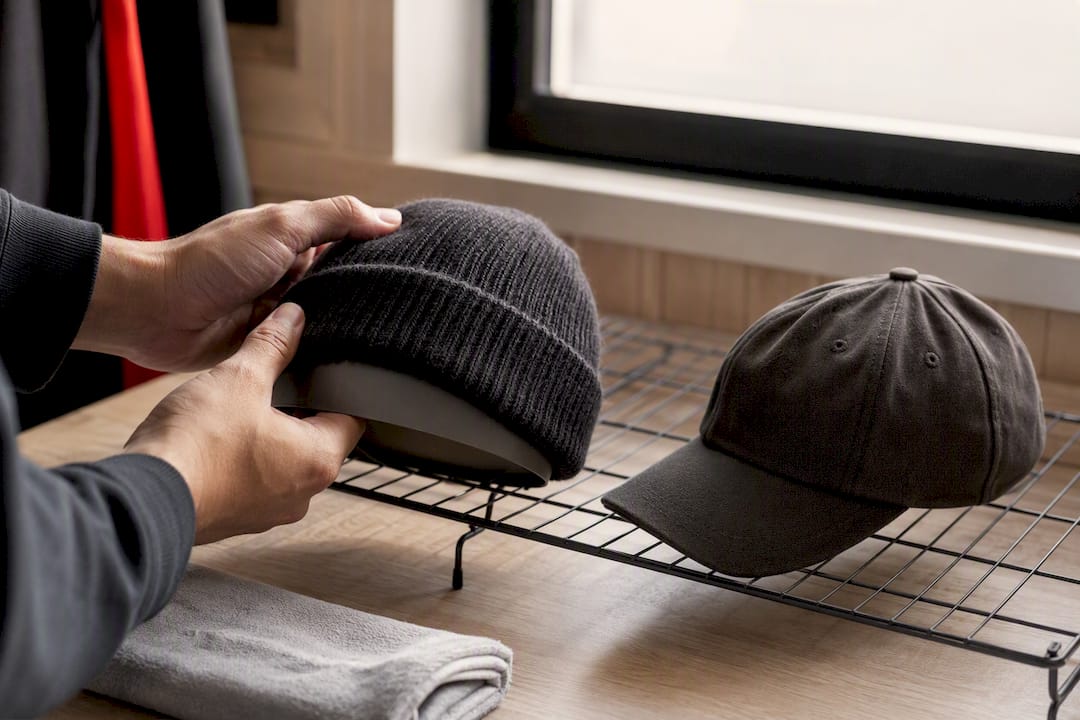
Hand wash beanies when you can, using cool water and a mild detergent. Machine washing on a gentle, cold cycle works in a pinch, but skip the dryer entirely. Reshape the knit while it’s still damp and let it dry flat on a towel rather than hanging it, since wet knit stretches under its own weight and dries into whatever shape gravity gives it.
Dad hats handle a light hand wash or a gentle spot clean better than a full machine cycle, since repeated washing can soften the brim’s structure over time. Storing brimmed caps flat or on a hat rack, rather than crushed in a drawer, keeps the curve from flattening out or warping sideways.
- Acrylic beanies: durable, machine-washable on gentle cycles, least prone to shrinking.
- Wool or merino beanies: hand wash only, air dry flat, avoid wringing.
- Cotton dad hats: spot clean when possible, air dry away from direct heat or sun to prevent fading.
- Fleece-lined pieces: wipe down rather than fully soak when you can, since fleece takes longer to dry through.
Where Did Beanies and Dad Hats Actually Come From?
Beanies trace back to European working-class headwear, worn originally by laborers, sailors, and factory workers who needed cheap, warm, brimless caps that wouldn’t catch on machinery or rigging. By the mid-20th century, skaters and snowboarders adopted the shape for practical reasons: it stayed on under a hood or helmet and didn’t flap around like a brimmed hat. From there, hip-hop and streetwear culture in the 1990s and 2000s turned the beanie into a style statement in its own right, no longer just cold-weather gear but a defining piece of an entire aesthetic.
Dad hats have a shorter, more specific origin story. The shape descends from mesh-back trucker caps and mid-century baseball caps, but it earned its name in the 2010s when the softer, unwashed, low-profile silhouette became associated with an unpretentious, almost deliberately uncool look: something a father might grab off a hook on his way out the door. That perceived lack of effort became the appeal. Streetwear brands and celebrities leaned into the irony, and the dad hat went from a throwaway shape to a wardrobe staple almost overnight. Both hats now sit at the intersection of function and fashion, but they got there from opposite directions: one from necessity, one from irony.
Why We Lean Into Cuffed, Themed Beanies
Beanies and dad hats aren’t competing for the same closet space, they’re solving different problems, and stocking both makes sense for exactly that reason. We focus heavily on cuffed, themed beanies because that shape gives fan art and parody designs the cleanest, most durable panel to live on. A cuffed knit holds its form wash after wash, and it’s the style most likely to still look sharp a year in. If you want a hat that says something specific about what you’re into, not just a blank knit cap, that’s the shape worth shopping first.
— Nicholas
Themed Cuffed Beanies Worth Adding to Your Rotation
Once you’ve decided a beanie fits your winter rotation, the next question is which one, and that’s where a themed piece earns its spot over a plain knit cap. Cuffed beanies are often built to hold detailed fan art and parody designs, so the embroidery or patch stays crisp instead of fading into a busy knit texture after a few wears.

Cuffed acrylic and organic cotton blends are common options in beanie lineups, allowing selection based on warmth needs or a preference for more sustainable materials. Cuffed styles remain a popular beanie shape, largely because that flat panel makes a design stand out instead of getting lost. The organic bar staff beanie is a solid example of a themed cuffed knit built with breathable, sustainably sourced fabric, while the Bay12 ribbed knit beanie shows off how a ribbed cuff holds detailed artwork through repeated wear. If you already know cold weather and a bit of fandom pride are both on your list this season, browsing the beanie collection is the easiest next step toward a hat you’ll actually reach for all winter.
Sources
- Beanie Types: The Complete Guide to Knit Caps, Toques & Watch Caps
- Dad Hat vs Snapback: A Complete Comparison Guide
- Types of Beanies: Complete Guide to Knit Caps
- Dad hat vs snapback explanation and closure note
FAQ
Is a Beanie Warmer Than a Dad Hat?
Yes. A beanie’s knit construction and full head coverage, including the ears, make it far warmer than a dad hat’s breathable cotton crown and open brim design.
Can You Wear a Dad Hat in Winter?
You can layer a dad hat under a hood for light coverage, but its cotton build isn’t designed for real insulation, so a beanie is the better cold-weather choice.
What’s the Best Beanie Style for Showing Off a Logo or Design?
A cuffed beanie in ribbed acrylic gives the flattest, most stable panel for embroidery or patches, which is why it’s the most common pick for themed or branded designs.
Does the Strap on a Dad Hat Change the Style Name?
No. The closure, whether it’s a strap, buckle, or clip, doesn’t define the hat; the soft, unstructured crown and curved brim are what make it a dad hat.
Which One Should I Buy First if I Only Want One Hat?
Base it on your climate: choose a beanie if you deal with real cold for several months, or a dad hat if you want something wearable across spring, summer, and fall.