

Statement Tees for Self-Expression: Curated Picks
The best statement tees for self-expression fall into three reliable categories: single-message slogan tees, artist-illustration tees, and parody/pop-culture tees. Each one works because it turns a garment into a conversation starter without requiring you to say a word. Before you buy, run through this quick checklist:
- Message clarity: Can someone read it from six feet away?
- Fit: Does the cut match how you actually dress (relaxed, fitted, oversized)?
- Fabric: Is the weight listed? Aim for at least 5.5 oz for structure and print longevity.
- Print method: Screen print or DTG for durability; heat transfer for budget pieces (expect fading faster).
- Licensing/sourcing: For pop-culture art, does the seller disclose original fan art or parody status?
- Purpose: Everyday wear, events, or gifting? That changes the durability bar you should set.
Table of Contents
- Why statement tees work as tools of identity and social signaling
- Key features to evaluate before you buy a statement tee
- A catalog of statement-tee archetypes and what each one signals
- How to style a statement tee so the message lands
- How to choose the right statement tee for your goal
- Real people, real tees: how statement tees work in practice
- Where to buy or commission statement tees in the U.S.
- What research says about authentic style and mental well-being
- Key Takeaways
- Why one intentional tee beats fifty trend-driven ones
- Mclarenteehub’s curated pop-culture statement tees
- Sources and further reading
Why statement tees work as tools of identity and social signaling
A tee is wearable speech. It combines visible messaging with everyday utility in a way that jackets, bags, or accessories rarely match for sheer legibility. Research from the University of the Arts London confirms that personal clothing style embodies the true, ideal, and creative self, reinforcing identity and supporting creative expression. That is not a soft claim. It means the shirt you choose is doing psychological work whether you intend it or not.
Fashion choices act as nonverbal language, revealing personality traits and even sensory preferences. Extroverts tend toward bold graphics; people who prioritize sensory comfort often gravitate toward simpler, high-quality base garments with a single strong message. Knowing which camp you fall into is the first step toward choosing a tee that feels like you rather than a costume.
Wearing something authentic also has a measurable emotional payoff. Authentic style choices link to increased confidence and better mood regulation in social interactions, which means the right tee is not just a fashion decision. It is a low-cost confidence tool.
Pro Tip: Before buying any statement tee, ask whether you would wear it on a day when you feel completely like yourself. If the honest answer is no, skip it. Trend-chasing creates a wardrobe full of clothes that feel like someone else’s identity.
Key features to evaluate before you buy a statement tee
Fabric, construction, and print method determine whether a tee remains durable over time or deteriorates quickly with use.
- Fabric weight and fiber: 100% ring-spun cotton at 5.5–6.0 oz is the sweet spot for structure and breathability. Tri-blends (cotton/polyester/rayon) are softer but can cause DTG prints to look slightly faded from day one due to the polyester content.
- Construction: Double-stitched hems and reinforced shoulder seams signal a quality blank. Single-stitch construction is a budget indicator and usually means the garment will distort after repeated washing.
- Cut and sizing: Unisex sizing runs large on most American blanks. Check the brand’s size chart against actual measurements, not just S/M/L labels.
- Print methods ranked by durability: Screen print lasts longest (the ink is pressed into the fiber), DTG is excellent for complex artwork, embroidery is virtually permanent, and heat transfer is the least durable option for frequent washing.
- Message legibility: High-contrast designs (dark ink on light fabric, or vice versa) read best at social distances of 5–10 feet, which is exactly where first impressions form.
Pro Tip: Hold a tee up to light before buying in person, or zoom into product photos online. If the print edges look jagged or the ink appears cracked before the first wash, the blank is cheap and the print will not survive regular laundering. Sellers who list fabric weight and print method in their product descriptions are almost always more trustworthy than those who do not.
A catalog of statement-tee archetypes and what each one signals
Fashion designers increasingly treat garments as storytelling devices that connect wearers to cultural history without requiring the piece to be autobiographical. Statement tees are the most accessible version of that idea. Here are the six archetypes that actually build a personal brand, and what each one communicates.
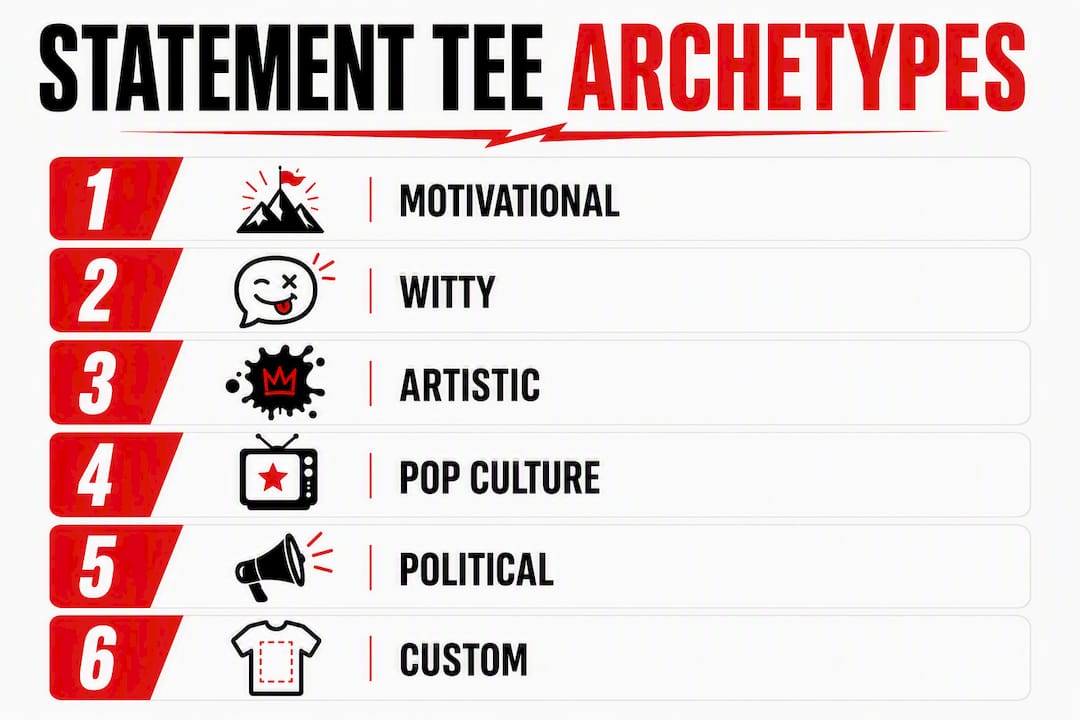
Motivational/affirmation tees carry short, declarative phrases (“I’m Not For Everyone,” “Be the Change”). They signal self-awareness and intentionality. Best worn in casual settings where the message can open a conversation.
Witty/sarcastic tees use humor as a social filter. GQ editors consistently highlight playful, tongue-in-cheek graphics as high-visibility styles that signal approachability and intelligence. These work at casual gatherings, creative workplaces, and anywhere a dry sense of humor is an asset.
Art/illustration tees feature original artwork, often abstract or character-driven. They signal taste and cultural awareness. A gallery opening, a creative studio, or an indie market is their natural habitat.

Pop-culture/quote tees reference movies, TV shows, anime, or gaming. They function as membership cards for specific fandoms. A well-chosen movie quote tee can spark an instant connection with a stranger who shares the reference.
Political/activist tees carry the highest social stakes. They signal conviction and invite debate. Best reserved for rallies, marches, or contexts where the wearer is prepared for that conversation.
Custom/commissioned tees are the most personal archetype. They can combine any of the above with a unique visual treatment, making them ideal for events, gifts, or building a genuinely one-of-a-kind wardrobe piece.
| Archetype | Best for connection | Subtlety level | Longevity |
|---|---|---|---|
| Motivational/affirmation | Moderate | High | High |
| Witty/sarcastic | High | Moderate | Moderate |
| Art/illustration | Moderate | High | High |
| Pop-culture/quote | Very high (within fandom) | Low to moderate | High |
| Political/activist | High (within community) | Low | Moderate |
| Custom/commissioned | Very high | Variable | High |
For a deeper look at how these types of graphic tees map to specific occasions, Mclarenteehub’s 2026 style guide breaks it down by context and audience.
How to style a statement tee so the message lands
Balance is the rule. The tee is the focal point; everything else in the outfit should support it, not compete with it.
Scale matters first. A large chest graphic needs breathing room, so pair it with slim or straight-leg pants and clean footwear. A small, centered message tee can handle more visual noise around it, like a patterned jacket or textured trousers.
For layering, an open button-down shirt worn over a statement tee frames the graphic without hiding it. This works especially well for smart-casual settings where a plain tee alone might read as too casual. Tuck the button-down loosely and leave it unbuttoned. The graphic stays visible; the overall look reads as intentional.
Color harmony is simpler than most people make it. If the tee’s graphic uses two or three colors, pull one of those colors into your footwear or a single accessory. That repetition ties the outfit together without any styling effort.
For event dressing, a bold graphic tee under a tailored blazer with dark jeans and leather sneakers is a reliable formula. The blazer signals effort; the tee signals personality. Neither cancels the other out.
Pro Tip: The single most common styling mistake with statement tees is over-accessorizing. A chunky necklace, a loud hat, and a graphic tee worn together create visual noise that buries the message. Pick one accessory maximum, and make it quiet. Let the tee do the talking.
For more outfit combinations, Mclarenteehub’s guide on mixing graphic tee outfits covers casual to smart-casual builds with specific examples.
How to choose the right statement tee for your goal
Follow this sequence before you add anything to cart.
- Define the message goal. Are you trying to make people laugh, signal fandom membership, start a political conversation, or simply feel more like yourself? The goal determines the archetype.
- Pick the archetype. Match your goal to the six archetypes above. If you want connection within a specific community, pop-culture or activist tees win. If you want broad approachability, witty or motivational tees are safer.
- Check material and print. Confirm fabric weight (5.5 oz minimum for everyday wear), fiber content, and print method. If the product page does not list these, treat that as a red flag.
- Verify fit. Cross-reference the size chart with your actual chest and body length measurements. A tee that fits poorly undermines the message before anyone reads it.
- Confirm seller transparency. Look for clear shipping timelines, a stated return policy, and for pop-culture art, a disclosure that the design is original fan art or parody. Vague licensing language on pop-culture pieces is a significant red flag.
Red flags to avoid: print edges that look frayed or cracked in product photos; no fabric weight listed; “inspired by” language with no further licensing disclosure; suspiciously low prices with no blank brand mentioned.
Quick decision guide: If durability is the priority (everyday wear, a piece you want to keep for years), invest in screen-print on a quality cotton blank. If novelty is the priority (a gift, a one-time event, a trend-driven piece), DTG on a lighter blank is fine.
Mclarenteehub’s pop culture buying guide walks through these checks with specific product examples.
Real people, real tees: how statement tees work in practice
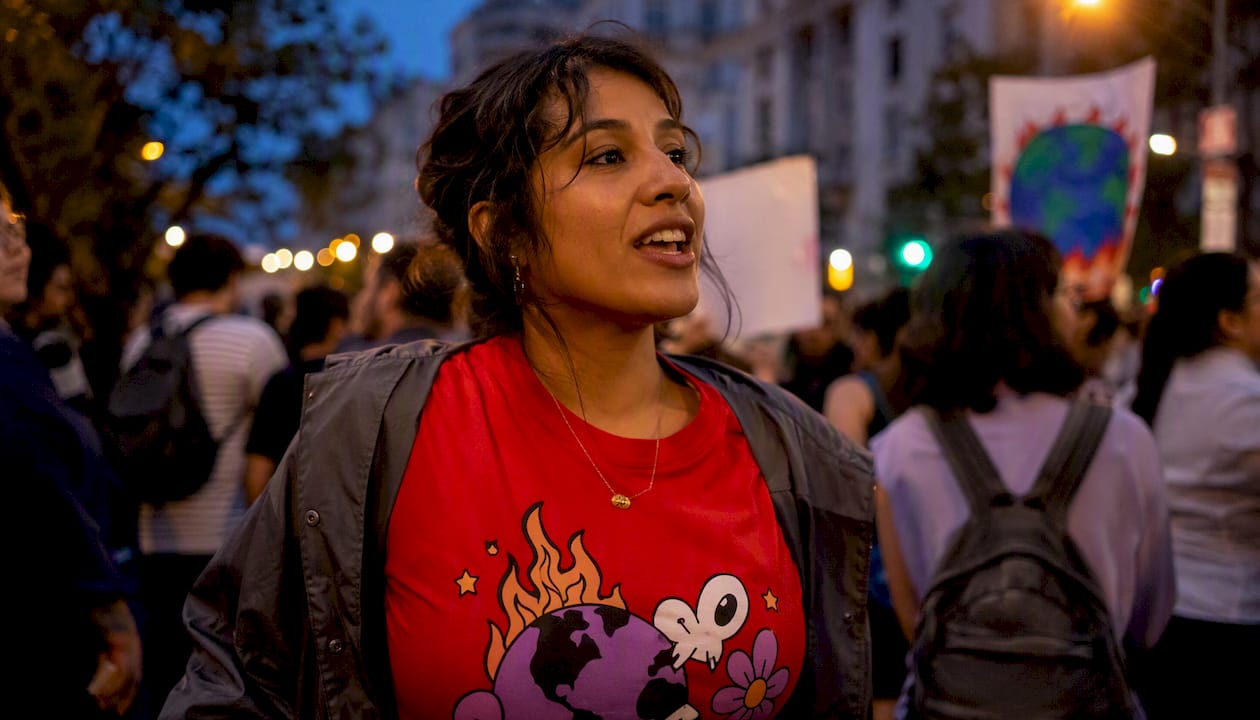
The rally-goer. A climate activist wears a bold, high-contrast slogan tee to weekend marches. The message is readable from 20 feet away, which matters in a crowd. She pairs it with durable canvas pants and boots. The tee becomes a visual anchor in group photos and a conversation starter with fellow attendees. Archetype: political/activist. Priority: message legibility and durability over fashion.
The gallery regular. A graphic designer wears an original illustration tee to art openings. The piece features a local artist’s work, which signals taste and community investment without saying a word. He keeps the rest of the outfit neutral: dark jeans, white sneakers, no accessories. Archetype: art/illustration. Priority: design quality and blank quality over message boldness.
The subtle fan. A film lover wears a parody Pulp Fiction tee under a blazer to a casual Friday at a creative agency. The reference is specific enough that only fellow fans catch it, which is exactly the point. When a colleague notices, the conversation runs for 20 minutes. Archetype: pop-culture/quote. Priority: specificity of reference and print clarity.
The gift-giver. A parent commissions a custom tee featuring their kid’s favorite anime character for a birthday. The tee is produced via print-on-demand with a mockup approval before printing. It arrives in time, fits correctly, and gets worn every weekend. Archetype: custom/commissioned. Priority: accurate sizing, proof approval, and reliable lead time.
Where to buy or commission statement tees in the U.S.
Three seller models dominate the U.S. market, and each has a different value proposition.
Print-on-demand retailers (like Mclarenteehub) produce each item after the order is placed, which means no inventory risk and a wide design catalog. Turnaround is typically 3–7 business days before shipping. The tradeoff is that per-unit cost is higher than bulk printing, but for buyers who want unique designs without minimum order quantities, it is the right model.
Small-batch indie printers run limited runs of screen-printed tees, often through their own storefronts or platforms like Faire. Quality is often exceptional, but availability is limited and restocks are not guaranteed.
Artist direct commissions give you the most control over the final design. Expect a 2–4 week lead time, a mockup approval step, and pricing that reflects the artist’s time. For a truly one-of-a-kind piece, this is the route.
When evaluating any seller, look for:
- Fabric weight and fiber content listed on the product page
- Print method disclosed (screen print, DTG, embroidery, or heat transfer)
- Care instructions included (machine wash cold, inside out, tumble dry low is the standard for print longevity)
- Clear return and exchange policy
- For pop-culture designs: a statement that the art is original fan art, parody, or a licensed tribute
Mclarenteehub’s shirt ideas guide is a useful starting point if you need commissioning prompts or motif ideas for a custom piece.
What research says about authentic style and mental well-being
Authentic clothing choices link to higher confidence and lower social anxiety. That is the consistent finding across multiple lines of research, and it has a direct implication for how you shop for statement tees.
UAL research establishes that personal style embodies the true, ideal, and creative self, reinforcing self-concept and supporting resilience. The Slow Fashion Movement’s analysis adds that self-awareness is the prerequisite: without knowing who you are, clothing choices risk becoming conformity rather than identity. And Counseling Now’s review of style and mental well-being finds that choosing a single, intentionally themed item can reduce appearance-related anxiety and help reclaim personal agency.
Research insight: Choosing even one intentional, authentic clothing item, such as a statement tee that reflects a genuine interest or value, can reduce appearance-related anxiety and improve mood in social settings.
The practical implication: you do not need to overhaul your wardrobe. One tee that genuinely reflects something you care about does more for your confidence than ten trend-driven pieces that feel borrowed from someone else’s identity. Small, distinctive details like parody tees and unique cultural references often outperform trend-driven spending for building a personal brand. Garments function as visual storytelling devices that communicate who you are before you speak, which is why the specificity of your choice matters more than the price tag.
Key Takeaways
The most effective statement tees for self-expression are the ones that reflect a genuine interest or value, chosen with attention to message clarity, fabric quality, and print durability.
| Point | Details |
|---|---|
| Match archetype to goal | Pop-culture tees build fandom connections; motivational tees signal self-awareness; activist tees invite debate. |
| Prioritize fabric and print | Aim for 5.5 oz cotton minimum and screen print or DTG for everyday durability. |
| Authentic beats trendy | One intentional tee that reflects a real interest does more for confidence than a trend-driven wardrobe. |
| Vet your seller | Look for fabric weight, print method, care instructions, and a clear return policy before buying. |
| Mclarenteehub for pop-culture picks | Mclarenteehub offers original fan art and parody tees with product specs and transparent shipping. |
Why one intentional tee beats fifty trend-driven ones
The conventional wisdom in fashion content is that more options equal more expression. It does not. A wardrobe full of trend-chased pieces is a wardrobe that expresses the algorithm’s taste, not yours.
What actually works is specificity. A single tee that references a film you have watched 20 times, a cause you have worked for, or an artist whose work genuinely moves you carries more communicative weight than a rack of pieces chosen because they were popular that season. That specificity is also what makes a tee memorable to the people around you. Nobody remembers the generic slogan. They remember the Pulp Fiction parody that started a 20-minute conversation.
The research backs this up. Integrating unique pop-culture references or parody tees is more effective for identity signaling than trend chasing. And designers themselves treat garments as storytelling devices that connect wearers to culture without requiring the piece to be a literal autobiography. The best statement tee you own is probably the one that took you 30 seconds to decide on because it was obviously, undeniably you.
That is the editorial standard Mclarenteehub applies to its pop-culture catalog: pieces that are specific enough to mean something, built on original fan art and parody tributes that hold up to scrutiny. Browse with that lens, and you will spend less and wear more.
Mclarenteehub’s curated pop-culture statement tees
If you have worked through this guide and know the archetype you want, Mclarenteehub is a direct next step. The store specializes in original fan art and parody tributes across movies, TV, anime, sci-fi, and horror, with product pages that list fabric specs, print method, and care instructions alongside clear shipping and return policies.
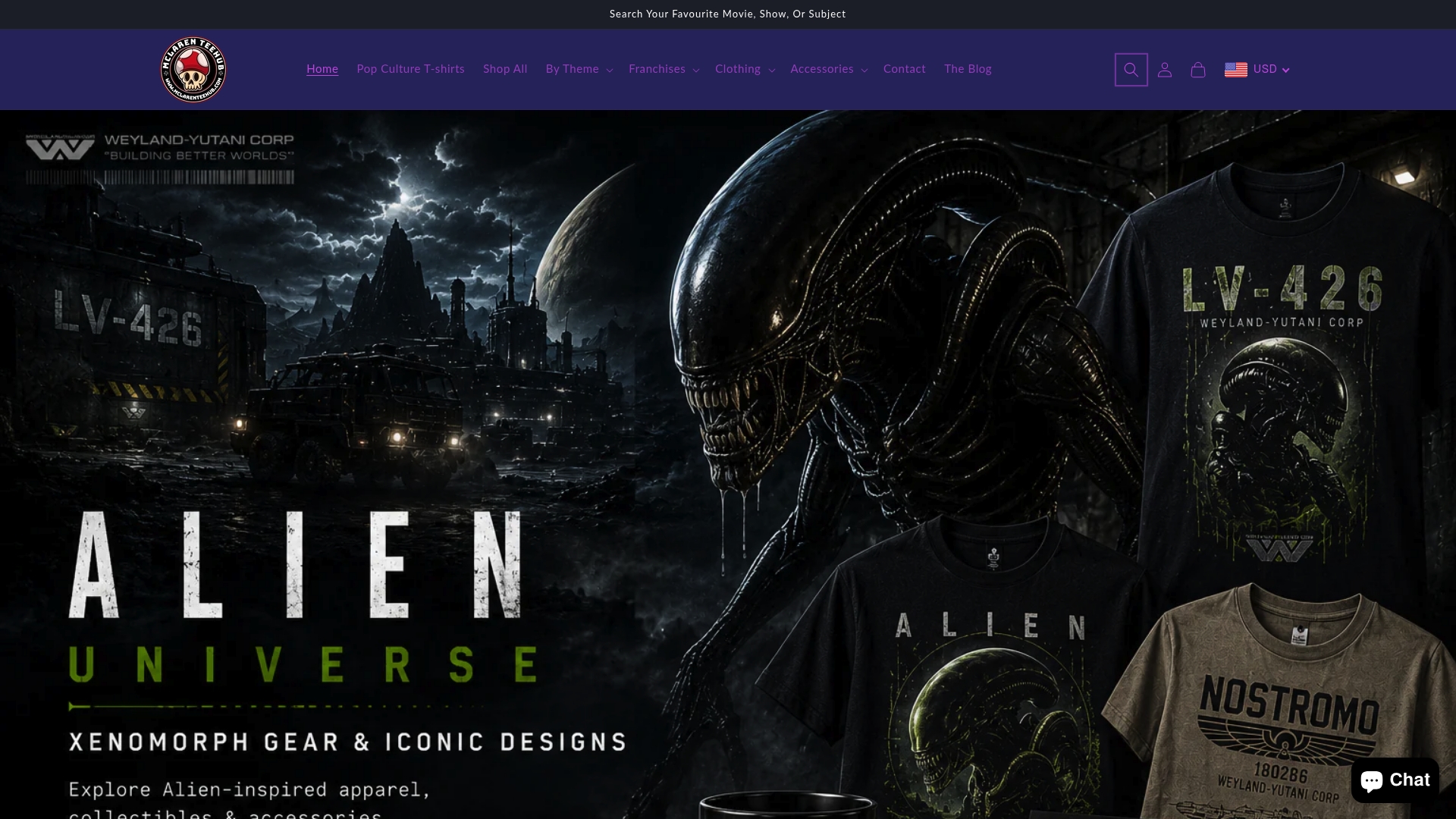
The Pulp Fiction-style Morning tee is a strong example of the pop-culture/quote archetype done right: a specific reference, bold enough to read clearly, and specific enough to filter for the right audience. Browse the full catalog at mclarenteehub.com to find the tee that fits your goal, your fit, and your fandom.
Sources and further reading
- Personal clothing style and self-concept: Embracing the true, the ideal and the creative self — University of the Arts London
- Fashion self-expression: What do your clothes reveal about who you are? — Slow Fashion Movement
- How Personal Style and Self-Expression Can Improve Confidence and Mental Well-Being — Counseling Now
- Meet the fashion designers specialising in the art of self-expression — Vogue
- The Graphic Tees GQ Editors Are Buying This Summer 2026 — GQ
- Why visual storytelling drives fashion brand success — Visual Identity Studio
- Tee Shirts and T-Shirts: The Ultimate Guide to the Grid of Modern Style — Mclarenteehub
- How to Mix Graphic Tees Outfits Like a Pro — Mclarenteehub
- 50+ High-Octane Shirt Ideas: The Ultimate Pop Culture Style Guide for 2026 — Mclarenteehub
- Types of Graphic Tees: The 2026 Style Guide — Mclarenteehub
- Pop Culture Graphic Tees: The High-Octane Buying Guide for 2026 — Mclarenteehub
Recommended
- Tee Shirts and T-Shirts: The Ultimate Guide to the Grid of Modern Styl – McLaren Tee Hub
- 50+ High-Octane Shirt Ideas: The Ultimate Pop Culture Style Guide for – McLaren Tee Hub
- Pop Culture Graphic Tees: The High-Octane Buying Guide for 2026 – McLaren Tee Hub
- Types of Graphic Tees: The 2026 Style Guide – McLaren Tee Hub