

4 Checks to Spot Truly Eco-Friendly Graphic Tees
An eco-friendly graphic tee comes down to four checkable facts: organic fiber content, a real third-party certification, water-based ink printing, and a production model that doesn’t overproduce. Before buying, scroll to the product page and confirm the material label, look for a certification you can verify (not just a badge image), and check how the item is made. If any of those three things are missing or vague, treat the “sustainable” label with suspicion.
TL;DR:
- Verified certifications like GOTS or OCS are essential, with a clear license number, to confirm a shirt’s organic fiber content and production standards.
- Water-based or discharge inks are preferable for printing, as they are softer and less toxic than plastisol, which relies on harmful PVC-based additives.
- Made-to-order models significantly reduce overproduction waste, but organic cotton shirts generally have a higher water footprint compared to recycled polyester options.
- Durable construction features such as double-needle stitching, self-fabric necks, and embedded prints extend the lifespan of a tee, making it more environmentally sustainable over years of wear.
- Expect to pay a premium for certified organic, well-constructed, made-to-order tees, which often outweighs fast-fashion options through longer lifespan and verified eco-friendly materials.
Table of Contents
- What Makes a Graphic Tee Truly Eco-Friendly?
- How Do You Spot Greenwashing on a Product Page?
- Do Made-to-Order Tees Actually Cut Down on Waste?
- Which Construction Details Make a Tee Last Longer?
- What Should You Expect to Pay for a Sustainable Tee?
- Why I Think Buyers Should Prioritize Durability Over Buzzwords
- Find Pop-Culture Graphic Tees With Real Production Details
- Sources
- FAQ
What Makes a Graphic Tee Truly Eco-Friendly?
The fabric is where it starts. Organic cotton is grown without synthetic pesticides or fertilizers, and the strongest proof of that is a GOTS (Global Organic Textile Standard) or OCS (Organic Content Standard) certification tied to the specific product, not just the brand’s homepage. A tee listed at 100% organic cotton with a stated fabric weight, usually listed with a fabric weight specification, tells you more than a vague “eco cotton blend” claim ever will. Heavier GSM generally means a thicker, longer-wearing shirt; lighter GSM means a softer drape that wears out faster under repeated washing.
Certifications each cover a different piece of the puzzle. GOTS addresses organic fiber production plus social criteria during processing, OCS verifies the organic content percentage, and OEKO-TEX checks for harmful substances in the finished textile rather than how it was grown. None of them, on their own, tells you how the shirt was printed.
That’s the printing question, and it matters more than most shoppers realize. Water-based inks soak into the fabric fibers and stay soft to the touch, while plastisol inks sit on top as a plastic layer that cracks and peels over time and relies on PVC-based additives. Low-impact dyes reduce the toxic runoff associated with conventional dyeing.
- Fabric: 100% organic cotton, GOTS or OCS verified, GSM listed
- Certification: check for a specific license number or link, not just a logo image
- Printing: water-based or discharge inks over plastisol
- Packaging: recycled or compostable mailers instead of virgin plastic poly bags
Certifications cover different things. GOTS = organic fiber plus labor standards in processing. OCS = organic content verification only. OEKO-TEX = chemical safety of the finished product. A shirt can pass one and fail to even attempt the others.
How Do You Spot Greenwashing on a Product Page?
Run through this before you add anything to your cart:
- Find the certification, not just the claim. A real GOTS or OCS certificate usually links to a license number you can look up. A green leaf icon with no link behind it is decoration.
- Look for a traceability statement. Brands that mean it usually name the country of fabric origin or the mill, not just “ethically sourced.”
- Check for factory information. Audited facilities are sometimes referenced against standards like SA8000, which covers worker conditions and labor practices. Its presence is a good sign; its absence isn’t automatically damning, but it’s worth noting.
- Confirm production lead time is stated. Made-to-order items take longer to ship. If a site promises instant shipping on a “sustainable, made-to-order” tee, something doesn’t add up.
- Scan for consistent specs. GSM, fiber percentage, and print method should match across the product description, the size chart, and any care label shown in photos.
Red flags worth walking away from: language like “eco-conscious” or “planet-friendly” with zero backing detail, a certification logo that doesn’t match any real registry, or fiber content that changes between the title and the description.
Pro Tip: Search the certifying body’s own database (GOTS and OEKO-TEX both maintain public license lookups) rather than trusting a badge pasted into a product photo. It takes thirty seconds and settles the question for good.
Do Made-to-Order Tees Actually Cut Down on Waste?
Yes, and the mechanism is simple: nothing gets printed until someone buys it. Traditional apparel runs work in bulk, betting on demand months in advance, and unsold inventory ends up discounted, landfilled, or incinerated. Print-on-demand manufacturing avoids that bet entirely by producing one unit per order, which removes the overproduction risk baked into forecast-based manufacturing.
Material choice adds a second layer to the waste conversation. Recycled polyester diverts plastic bottles and industrial scrap from landfills, but it sheds microplastics in the wash and doesn’t biodegrade the way organic cotton does. Organic cotton avoids that shedding problem but carries a heavier water footprint during growing. Neither material is a clean win; it’s a tradeoff, and brands that blend the two are usually chasing softness and durability rather than an environmental edge.
Circular strategies close the loop further:
- Take-back programs that accept worn-out shirts for recycling or repurposing
- Repair services or patch kits offered instead of encouraging a replacement purchase
- Remanufacturing old garments into new fiber, a practice detailed in the Ellen MacArthur Foundation’s circular design framework
If a brand mentions any of these on its site, it’s usually thinking past the sale.
Which Construction Details Make a Tee Last Longer?
Longevity is arguably the biggest sustainability lever a shopper actually controls. A shirt that lasts five years instead of one cuts its per-wear environmental cost dramatically, more than most differences in how the fiber itself was grown. That makes construction details worth checking as closely as the fabric label.
Look for:
- Double-needle topstitching on the hems and sleeves, which resists unraveling far longer than a single seam
- Self-fabric neck tape instead of a flimsy printed collar, since it keeps the neckline from stretching out after repeated wears
- Print bonded into the fibers, not sitting as a raised plastic layer that will crack after a few dozen washes
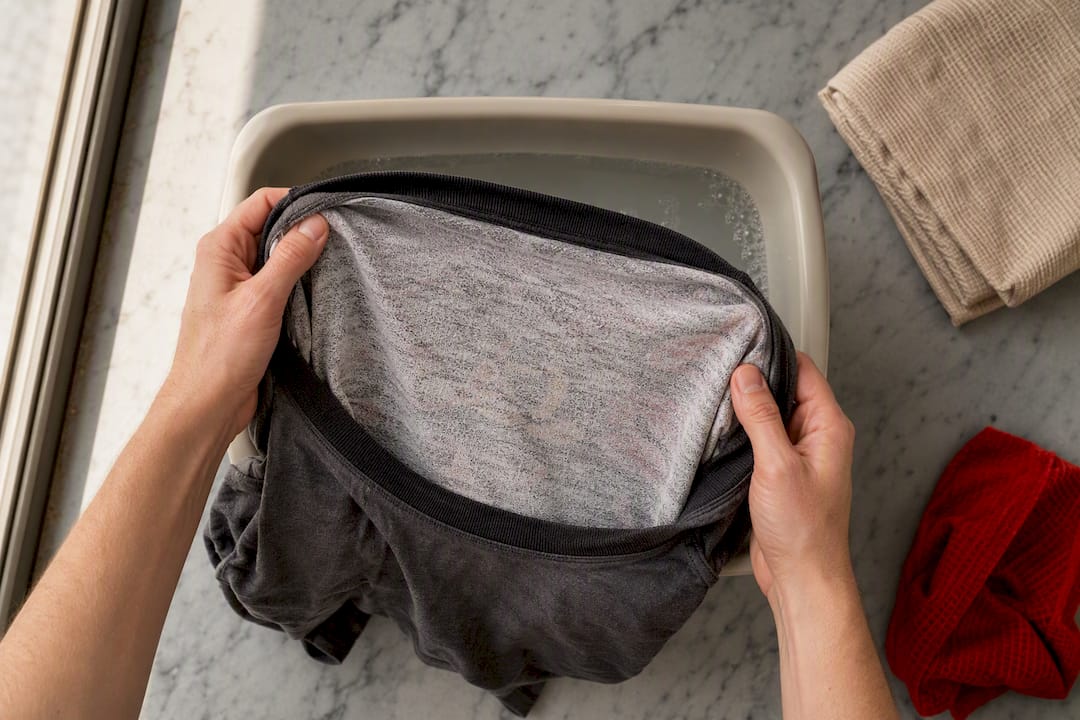
Care matters just as much as construction. Wash graphic tees inside out in cold water to protect the print, skip the dryer’s high heat setting when possible, and air dry flat to prevent the kind of stretching that ruins a fit permanently. When a small hole or loose seam shows up, a quick patch or hand stitch extends the shirt’s life another year or two before it needs replacing or routing into a take-back program.
Pro Tip: Turn every graphic tee inside out before it goes in the wash. It’s the single easiest habit that protects a print for years instead of months, and it costs you nothing.
For a deeper look at how construction affects fit and lifespan across different tee styles, this guide to graphic tee types breaks down the differences.
What Should You Expect to Pay for a Sustainable Tee?
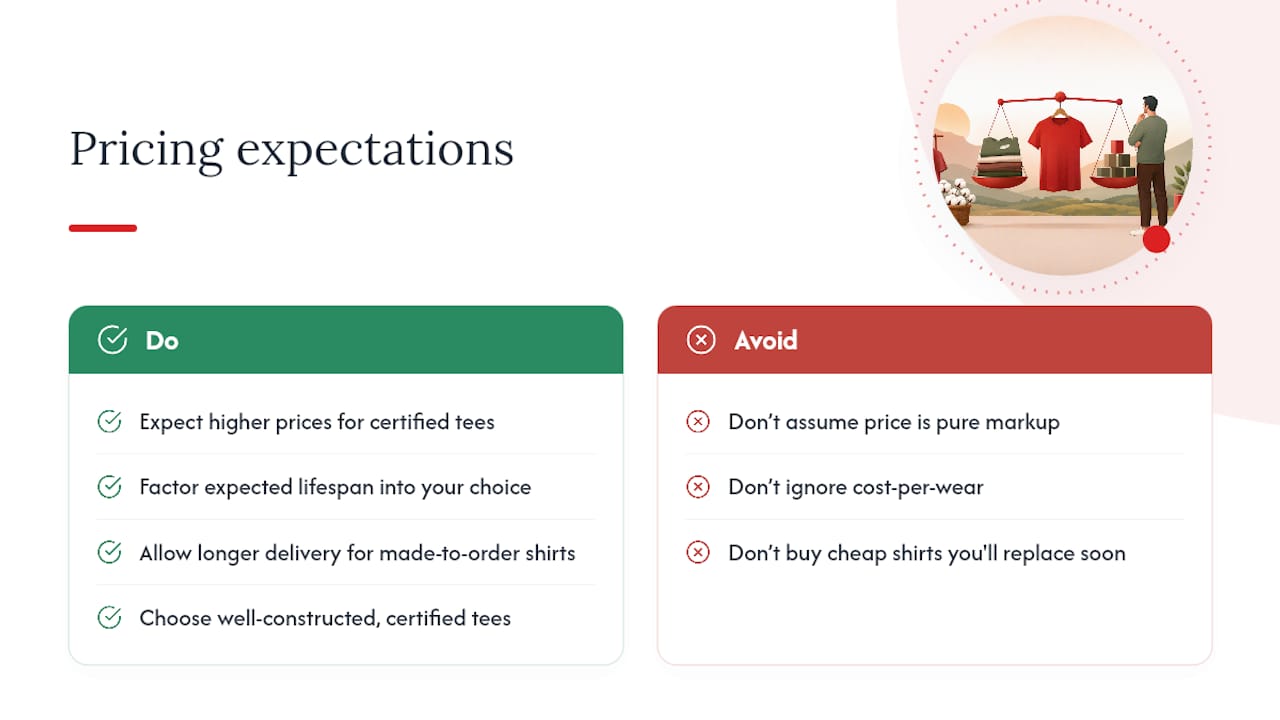
Certified organic graphic tees typically run higher than conventional fast-fashion shirts, and industry roundups of sustainable brands show that gap reflects real cost differences in organic farming, certification audits, and smaller production runs rather than pure markup.
Made-to-order tees also take longer to arrive than a shirt already sitting in a warehouse, since printing doesn’t start until you place the order. That tradeoff is the point: no order means no shirt gets made, which is exactly what keeps unsold inventory out of a landfill. When you’re weighing price against a cheaper alternative, factor in expected lifespan. A well-constructed tee worn for years, with verifiable certification behind it, usually beats a discount shirt replaced every few months on both cost per wear and actual environmental impact.
Why I Think Buyers Should Prioritize Durability Over Buzzwords
Most sustainability marketing in apparel leans on vague adjectives because vague adjectives are cheap and unfalsifiable. What actually separates a genuinely lower-impact tee from a greenwashed one is boring, verifiable detail: a certification number, a stated GSM, a named print method. As someone who covers graphic tees and pop-culture apparel for a living, I’ve noticed the shirts that hold up in someone’s rotation for years almost always share the same quiet traits: reinforced seams, ink that doesn’t crack, and a brand willing to say plainly how the thing was made. If you want styling ideas once you’ve found a tee worth keeping, our guide to mixing graphic tees into outfits is worth a look. McLaren Tee Hub’s take is simple: prioritize durability and transparent sourcing over any single certification logo, because a tee you wear for three years does more for the planet than one you replace every season no matter how it was labeled.
— Nicholas
Find Pop-Culture Graphic Tees With Real Production Details
This store runs on a made-to-order model, so shirts get printed after you order rather than sitting stacked in a warehouse waiting to be discounted or tossed. That’s the practical difference from a lot of fast-fashion pop-culture merch: less overproduction, no guessing on sizes you’ll never wear.

Every product page lists what you need to check before buying: material makeup, print method, and sizing details, the same specifics this guide just walked you through. Take this Pulp Fiction inspired tee as an example of how that information shows up on the page. Read the specs the same way you’d read them anywhere else, then decide if it earns a spot in your closet. Browse the current lineup and check a product page’s material details before you add anything to your cart.
Sources
- Circular design — Ellen MacArthur Foundation
- SA8000 standard — Social Accountability International
- Sustainable shirts — Real Thread blog
FAQ
Is Organic Cotton Always Better Than Recycled Polyester?
Not universally. Organic cotton avoids microplastic shedding but uses more water to grow, while recycled polyester reuses plastic waste but sheds microfibers in the wash, so the better choice depends on which tradeoff matters more to you.
Does GOTS Certification Cover the Printing Process?
No. GOTS covers organic fiber production and social criteria during processing, but printing method is a separate question you need to check independently on the product page.
Why Do Made-to-Order Tees Take Longer to Ship?
Made-to-order tees aren’t printed until you place the order, which avoids overproduction but adds a production window before the shirt ships, generally longer due to production after ordering.
What’s the Fastest Way to Check if a Tee Is Actually Eco-Friendly?
Look for three things on the product page at once: a named organic fiber percentage, a certification you can verify through the certifier’s own registry, and a stated print method like water-based ink.
Are Higher Prices on Sustainable Tees Justified?
Usually yes. Organic farming, third-party audits, and smaller production batches all add real cost, and a well-built tee that lasts years typically costs less per wear than a cheap shirt replaced repeatedly.