

The Right Hoodie Style for Every Season
The short answer: reach for a lightweight French terry or tri-blend pullover in spring, a UPF-rated sun hoodie or ultra-light jersey in summer, a midweight French terry or cotton-blend zip-up in fall, and a brushed heavyweight fleece in winter. Those four picks cover the full year.
A few reasons those choices hold up:
- Fabric weight drives comfort more than any other factor. A 300gsm fleece in July is miserable; a thin jersey in January is useless.
- Breathability vs. insulation is the core tradeoff. Lighter, open-weave fabrics cool you down; denser, brushed fabrics trap warmth.
- Layering role shifts by season. In spring and fall, a hoodie is often the outer layer. In winter, it works best as a midlayer under a coat.
Fit and color choices adapt these picks to your activity and local climate. Hoodie season is better defined by daytime temperatures than by calendar dates, with the practical sweet spot sitting around 50°F–65°F. Check your commute temps, not the month.
Key Takeaways
A small, role-focused hoodie rotation covering lightweight, midweight, and heavyweight options handles every season better than a drawer full of similar pieces.
| Point | Details |
|---|---|
| Spring: lightweight and layerable | Choose French terry or tri-blend (240–270gsm) and layer under a bomber for variable temps. |
| Summer: construction over UPF number | A vented, quick-dry polyester sun hoodie in a light color outperforms cotton in direct sun. |
| Fall: zip-up for temperature control | Midweight zip-ups (280–320gsm) handle 20-degree daily swings better than pullovers. |
| Winter: fit seals in warmth | Heavyweight fleece worn fitted at waist and cuffs retains heat; avoid oversized silhouettes. |
| Mclarenteehub for statement pieces | Pop-culture themed hoodies from Mclarenteehub work as the seasonal accent in a neutral-based rotation. |
Table of Contents
- What hoodie styles work best in spring?
- When does a hoodie make sense in summer?
- How do you layer a hoodie for fall weather?
- Which hoodies actually keep you warm in winter?
- What materials and hoodie styles should you actually know?
- How do you pick the right hoodie fast?
- Hands-on research: sun hoodies we tested and when to choose them
- Key takeaways: one-sentence rules for every season
- The part most hoodie guides get wrong
- Pop-culture hoodies that work across every season
- Sources
What hoodie styles work best in spring?
Spring is the hardest season to dress for. Mornings can sit in the low 40s while afternoons push into the 60s, and a heavy hoodie that felt right at 7 AM becomes a burden by noon.
Recommended styles:
- Lightweight French terry (240–270gsm): soft, breathable, and just warm enough for cool mornings
- Tri-blend (cotton/polyester/rayon): drapes well, resists wrinkles, dries faster than pure cotton
- Thin zip-up: lets you vent quickly when temps climb without removing a layer
For fit, lean slightly slimmer in spring. A fitted silhouette layers cleanly under a light jacket and doesn’t bunch. Look for a hood that sits flat when down, since you’ll wear it down most of the day.
Three spring outfit formulas:
- Commute: Slim tri-blend pullover + chinos + white sneakers. Throw a light bomber over it for the morning, peel it off by lunch.
- Weekend errands: French terry zip-up + straight-leg jeans + clean white tote. Zip down as the day warms.
- Trail hike: Thin zip-up over a moisture-wicking base layer + trail pants + hiking boots. The zip gives you ventilation on the climb.
For color, spring rewards neutrals (oatmeal, sage, slate gray) with one seasonal accent, a dusty rose or soft olive, to keep things fresh without committing to a trend you’ll regret by June.
When does a hoodie make sense in summer?
More often than you’d think. Three situations call for a hoodie even in July: direct sun exposure on a long outdoor day, cool evenings on a patio or at an outdoor concert, and aggressively air-conditioned spaces (offices, movie theaters, long flights).
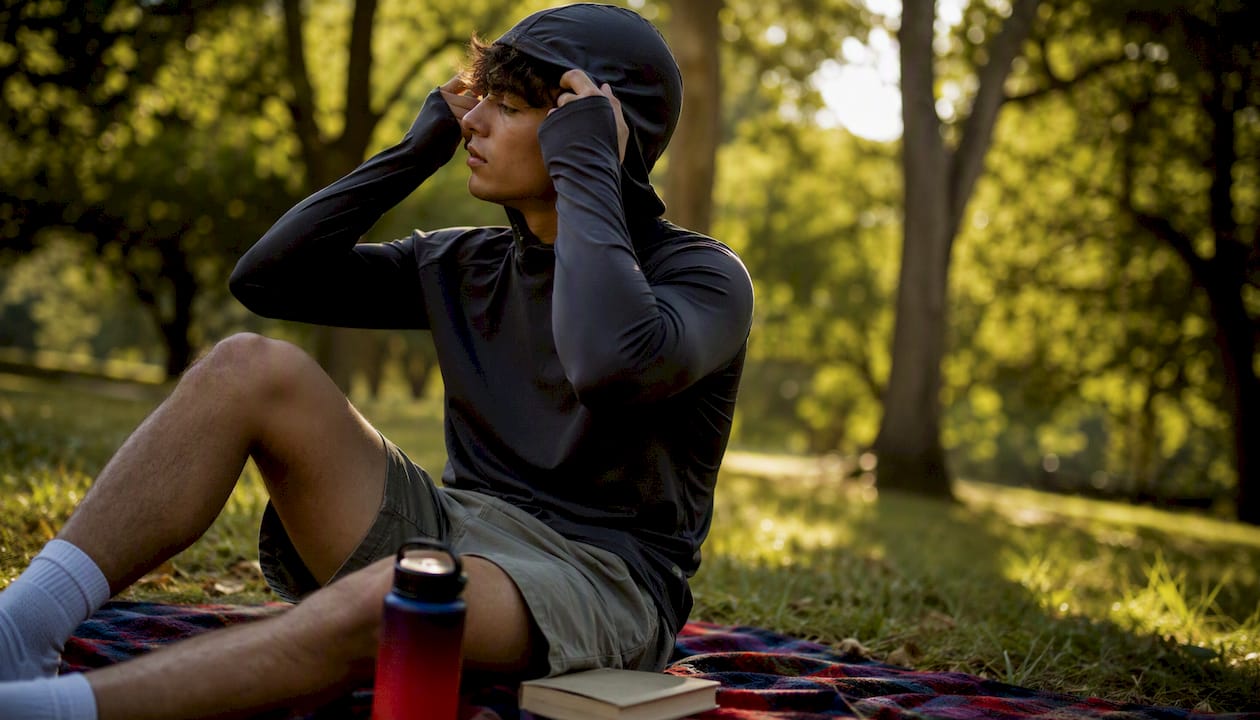
The key is choosing the right fabric. Cotton breathes well but dries slowly and offers lower inherent UPF compared with polyester performance blends, which dry quickly and can carry meaningful UPF ratings. For summer, that difference matters.
What to look for in a summer hoodie:
- UPF rating (15–50) for sun protection during outdoor activities
- Quick-dry polyester or recycled polyester blend
- Mesh panels or underarm venting for airflow
- Loose fit to allow air circulation
- Packability, so it folds into a bag when you don’t need it
Light colors are a practical choice here, not just an aesthetic one. Testing shows light-colored fabrics reflect more solar radiation and feel measurably cooler in direct sun than dark ones.
Pro Tip: Thumbholes and cape venting (a back vent that opens when you lean forward) are the two features that separate a genuinely functional sun hoodie from one that just has a UPF tag sewn in. Prioritize those over the number on the label.
How do you layer a hoodie for fall weather?
Fall is where hoodies earn their reputation. Midweight options, roughly 280–320gsm, hit the sweet spot between a spring layer and a winter coat. They’re warm enough for crisp mornings but don’t trap heat when the afternoon sun appears.
Best fall styles:
- Midweight French terry pullover: the workhorse. Comfortable, structured enough to look intentional.
- Brushed-cotton blend: softer hand feel, slightly more insulation than standard French terry
- Zip-up: better temperature control on days that swing 20 degrees between morning and afternoon. Zip-ups give better ventilation during transitional weather than pullovers, which trap more warmth.
Three fall layering formulas:
- Weekend: Midweight pullover + dark slim jeans + Chelsea boots. Add a canvas tote. Done.
- Office-casual: Zip-up hoodie over a collared shirt + chinos + leather sneakers. Zip it halfway for a polished, relaxed look.
- Evening out: Hoodie as a midlayer under a structured bomber or overshirt jacket + straight-leg pants + clean white kicks. The bomber does the styling work; the hoodie adds warmth.
Fall color pairings that work: earth tones (rust, camel, forest green) against neutral hoodies (charcoal, cream, washed black). Avoid matching your hoodie exactly to your outer layer; contrast reads better.
Which hoodies actually keep you warm in winter?
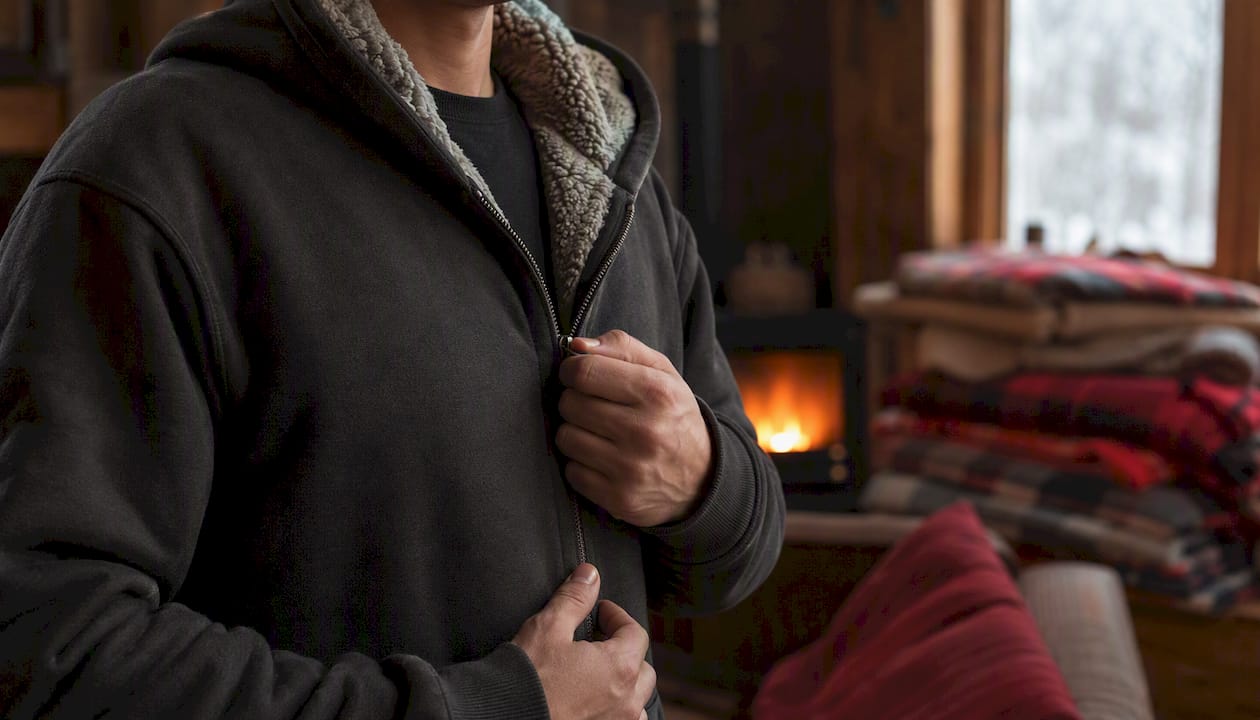
In genuine cold, a hoodie works two ways: as a standalone outer layer on milder winter days (35°F–45°F with no wind), or as an insulating midlayer under a coat when temperatures drop below freezing.
Recommended winter styles:
- Brushed heavyweight fleece pullover (350gsm+): the warmest standalone option
- Lined or sherpa-lined hoodie: adds significant insulation without bulk
- Ribbed-cuff, thick-hem construction: seals heat at the wrists and waist
Features that matter most in winter:
- Hood fit: a deep, structured hood that covers your ears without falling forward
- Snug cuffs: loose cuffs bleed warmth fast
- Kangaroo or zip pockets: hand warmth is underrated
- Durable flatlock seams: they lie flat under a coat and don’t create pressure points
Pro Tip: Avoid oversized silhouettes in winter. A hoodie that gaps at the waist or neck lets cold air funnel in. Aim for a fit that skims the body without restricting movement, especially if you’re wearing it under a coat.
A small, role-focused hoodie rotation covering lightweight, midweight, and heavyweight options handles year-round needs better than a drawer full of similar pieces.
What materials and hoodie styles should you actually know?
| Fabric | Best Season(s) | Key Pros | Key Cons |
|---|---|---|---|
| Brushed heavyweight fleece | Winter | Excellent warmth, soft | Slow to dry, bulky under coats |
| French terry | Spring, Fall | Breathable, structured, versatile | Less insulation than fleece |
| Jersey (cotton or slub) | Spring, Summer | Lightweight, breathable | Low UPF, slow dry if pure cotton |
| Tri-blend (cotton/poly/rayon) | Spring, Summer | Drapes well, faster dry than cotton | Moderate warmth only |
| Performance polyester (UPF) | Summer | Quick-dry, UPF-rated, packable | Can feel synthetic against skin |
| Sherpa/lined | Winter | High insulation, cozy | Heavy, not packable |
Style types and when they fit:
- Pullover: Maximum warmth retention. Best for winter and cold fall days when you won’t need to vent.
- Zip-up: Flexible temperature control. Best for spring, fall, and layering under a coat.
- Sun hoodie (sleeveless or lightweight hooded shirt): Built for UV protection and active summer use.
- Raw-seam/streetwear: Oversized, fashion-forward. Works year-round as a statement piece; pair with fitted bottoms to balance the volume.
Care notes that affect longevity:
- Wash in cold water to prevent shrinkage and color fade
- Turn inside out before washing to reduce pilling on the outer face
- Skip the dryer for fleece and French terry when possible; air dry flat to preserve shape
- Avoid fabric softener on performance polyester blends; it degrades moisture-wicking properties
How do you pick the right hoodie fast?
Run through this checklist before buying:
- Temperature range: What’s the coldest temp you’ll wear this in? That sets your minimum fabric weight.
- Activity: Active use (hiking, running) needs quick-dry and venting. Casual wear can prioritize softness.
- Layering role: Will this go under a coat? Size up one. Wearing it as the outer layer? True-to-size or slightly relaxed.
- Fabric fiber: Cotton for casual comfort; polyester blend for active or summer use; fleece for warmth.
- Hood shape: Deep hood for winter coverage; flatter hood for spring/fall when you’ll mostly wear it down.
- Cuffs and hem: Ribbed and snug for winter; open or relaxed for summer.
- Pocket style: Kangaroo pockets for warmth; zip pockets for security during activity.
- Zip vs. pullover: Zip for variable temps; pullover for consistent cold.
On sizing: if you plan to layer a shirt or base layer underneath, go up one size. If the hoodie is your outer layer and you want a clean silhouette, stay true-to-size or go slightly relaxed, not oversized.
Pro Tip: Build your everyday hoodie rotation around versatile neutrals (charcoal, navy, oatmeal, washed black). Reserve graphic or statement pieces, like a pop-culture themed hoodie, for seasonal accents. Neutrals layer with everything; statements need more deliberate outfit planning.
Hands-on research: sun hoodies we tested and when to choose them
Sun hoodies divide opinion. Some people swear by them for summer hiking; others find them stuffy. The reality depends almost entirely on construction.
Field testing in hot, humid conditions found that sun hoodies using thin, breathable polyester blends with venting features remained comfortable and protective, especially when slightly damp from sweat or water. The fabric’s quick-dry properties meant that dampness cooled rather than clung.
What worked in testing:
- Lightweight recycled polyester with perforations or mesh underarm panels
- Light colors (white, pale blue, sand) that reflected rather than absorbed heat
- Thumbholes that kept sleeves in place during movement
- Packable designs that compressed into a chest pocket
Practical caveats:
- Dense UPF 50 fabrics often sacrifice airflow. UPF 15–30 tends to offer a better balance of sun protection and breathability for most outdoor users than the maximum-rated options.
- A sun hoodie in a dark color with no venting performs worse than a light-colored cotton tee in direct sun.
- They’re not a replacement for sunscreen on exposed skin (face, neck, hands).
A well-constructed sun hoodie in a breathable polyester blend with venting can outperform a cotton tee for all-day outdoor comfort in summer, but only if the construction is right. The UPF number alone tells you almost nothing about how it will actually feel at 90°F.
Key takeaways: one-sentence rules for every season
- Spring: Choose a lightweight French terry or tri-blend hoodie (240–270gsm) and layer it under a bomber for morning chill.
- Summer: Go for a UPF-rated sun hoodie in a quick-dry polyester blend with venting features; light colors only.
- Fall: A midweight zip-up (280–320gsm) gives you the temperature control you need for 20-degree daily swings.
- Winter: Heavyweight brushed fleece or a sherpa-lined hoodie, worn fitted at the waist and cuffs, keeps heat in whether you’re layering under a coat or wearing it solo.
- Year-round rule: Define your hoodie season by local commute temperatures (50°F–65°F daytime highs), not by what month it is.
The part most hoodie guides get wrong
Most seasonal hoodie content treats fabric weight as a binary: heavy for cold, light for warm. That framing misses the real variable, which is construction. A 280gsm French terry with an open-loop back breathes better than a 240gsm tightly-woven jersey. GSM alone doesn’t tell the story.
The other thing guides consistently underserve is summer. The advice usually stops at “wear a lighter hoodie,” which isn’t useful. The sun hoodie category exists precisely because standard cotton hoodies fail in direct sun and heat. A well-built performance sun hoodie with venting, thumbholes, and a light color does something a cotton hoodie physically cannot: it protects your skin from UV while actively cooling you through moisture management. That’s a different garment with a different job.
What I’d push back on hardest is the impulse to buy a new hoodie for every season. A four-piece rotation, one lightweight, one midweight, one heavyweight, and one statement piece you actually love, covers every scenario the year throws at you. The styling formulas for retro and themed hoodies work across seasons when you treat the hoodie as the focal point and keep everything else simple. Most people own six mediocre hoodies when two great ones would serve them better.
Pop-culture hoodies that work across every season
If you’ve read this far, you know the practical side. Here’s where Mclarenteehub fits in. The store carries pop-culture themed hoodies built around original fan art and parody tributes from movies, TV, anime, horror, and sci-fi. These are the statement pieces that anchor a rotation, not replace it. Pair a graphic hoodie with the neutral basics this article recommends and the outfit works. Wear it as your one bold piece against charcoal chinos and white sneakers in fall, or layer it under a bomber on a cool spring evening.

Browse the full collection at Mclarenteehub and pick the piece that fits your rotation.
Sources
- When Does Hoodie Season Start and End? Complete Guide - weXournal
- Best Sun Hoodies For Hiking & Backpacking 2026
- Do Sun Hoodies Work in the Summer Heat? Our 6 Picks
- Hoodies In Every Season: The All Year Comfort Guide
Recommended
- How to Style Your Halloween Hoodie Like a Pro: The Ultimate 2026 Guide – McLaren Tee Hub
- How Hoodies Became Mainstream Fashion: A Cultural History – McLaren Tee Hub
- Movie Franchise Hoodie Styles Fans Will Love – McLaren Tee Hub
- Horror Hoodie Guide 2026: Killer Looks for the Ultimate Pop-Culture Fa – McLaren Tee Hub