

How Film Quotes Appear on Clothing: The 2026 Guide
TL;DR:
- Film quote apparel uses advanced printing technology to transform cinematic dialogue into wearable art.
- Choosing the right quote and styling it properly enhances emotional impact and audience resonance.
Film quote apparel is defined as clothing that reproduces iconic cinematic dialogue as a primary design element, combining typography, printing technology, and cultural symbolism into a single wearable statement. Understanding how film quotes appear on clothing means tracing a path from script page to fabric, through design decisions, Direct-to-Film (DTF) printing, and copyright awareness. The result is not merchandise in the traditional sense. It is wearable culture, and in 2026, the craft behind it has never been more precise or more personal.
How film quotes appear on clothing: printing technology explained
The printing method determines everything. A quote that reads beautifully on screen can look flat and lifeless on a shirt if the reproduction technology is wrong.
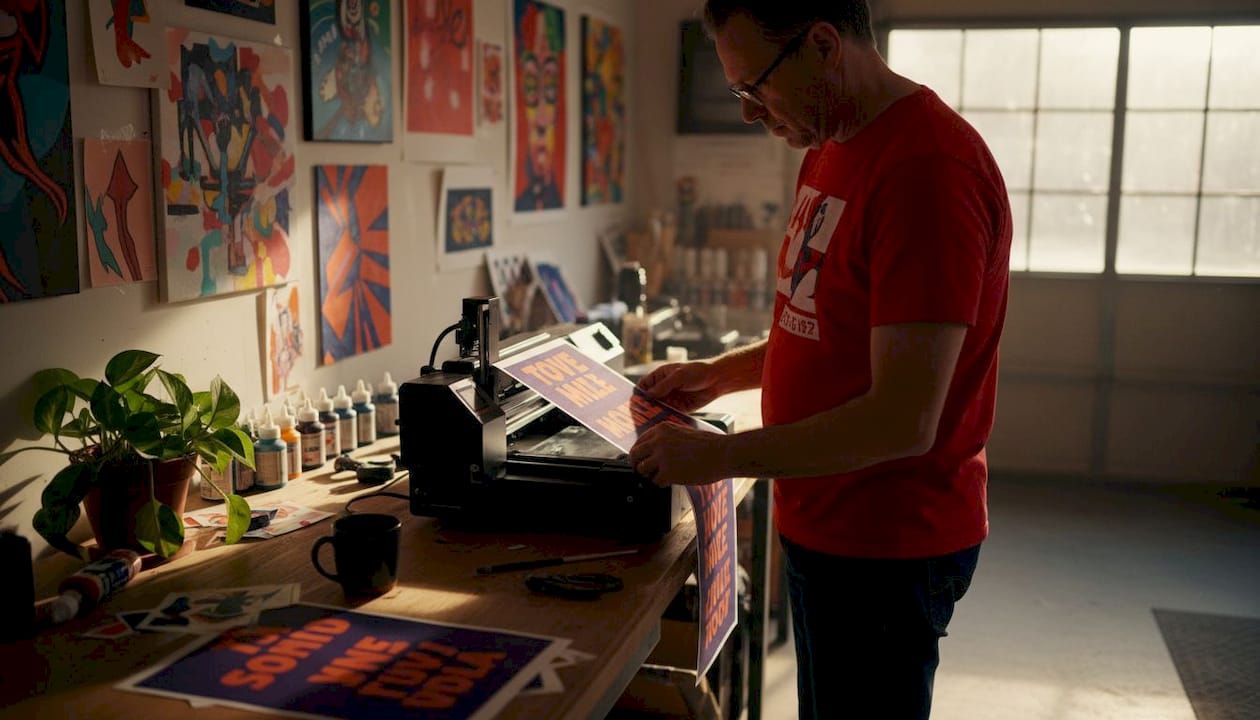
Direct-to-Film technology leads the apparel industry in 2026 for reproducing movie-inspired designs with photorealistic quality and a soft fabric feel. DTF works by printing a design onto a special film sheet, then heat-transferring it onto fabric with an adhesive layer. The result is a print that captures gradients, fine typography, and cinematic textures at a level older methods simply cannot match.
Screen printing, the dominant method for decades, requires a separate screen for each color. That process works well for bold, simple graphics but breaks down with complex film compositions, subtle shadows, or detailed lettering. DTF eliminates those constraints entirely.
Key technical factors that separate great film quote apparel from mediocre prints:
- Print density: Too low and the design looks washed out. Too high and it cracks after washing. The right density preserves shadow detail and mood.
- Mirror orientation: DTF files must be printed in reverse before transfer. Skipping this step flips the text and ruins the design.
- Color matching: Cinematic color palettes often include muted, desaturated tones. Accurate color matching preserves the emotional atmosphere of the original film.
- Fabric compatibility: DTF bonds well to cotton, polyester, and blends, making it the most versatile option for t-shirts, hoodies, and accessories.
Pro Tip: When reviewing a DTF print proof, check the darkest shadow areas first. If those details survive the transfer, the rest of the design will hold up through repeated washing.
Precise control over print density and mirror orientation is not optional. Poor adjustments produce flat prints that strip the cinematic atmosphere from the original artwork. The technical discipline behind DTF is what separates film quote apparel that feels like art from apparel that feels like a novelty item.
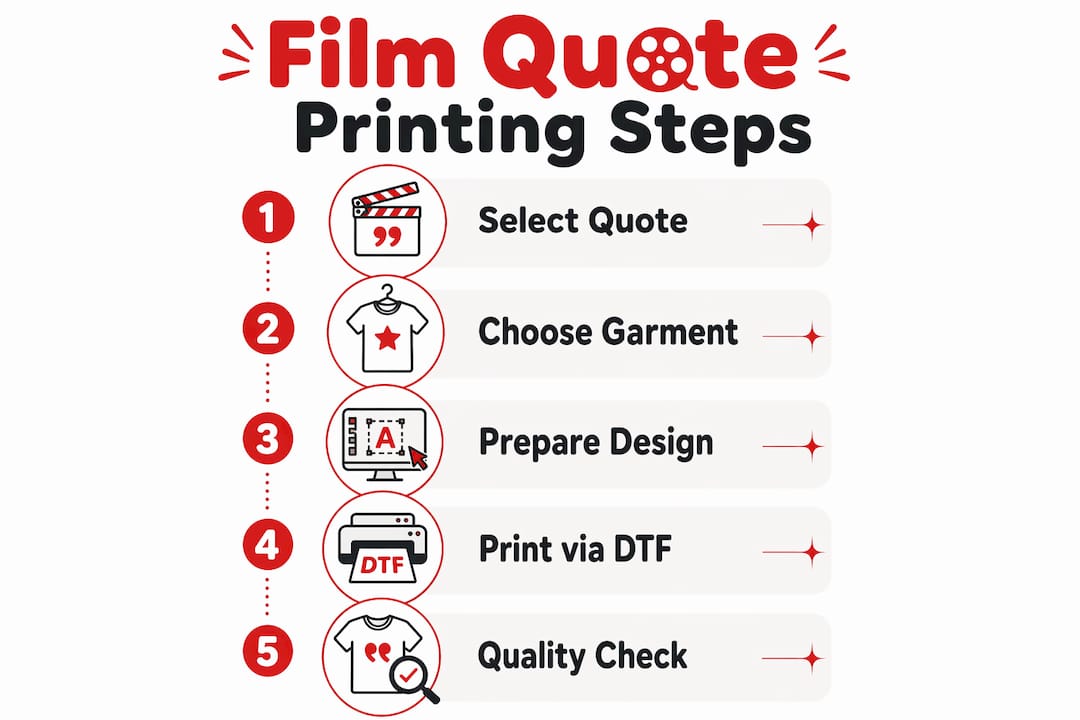
How do designers select and adapt film quotes for clothing?
Quote selection is the first creative decision, and it carries more weight than most people realize. The wrong quote produces a shirt that only makes sense to someone who has seen the film three times. The right quote works on the street, in a coffee shop, and on social media, all at once.
Quote selection favors simple diction with rhythmic cadence to enhance shareability and independent impact. Clear subjects, active verbs, and memorable imagery allow a quote to function outside its original film context. “You can’t handle the truth” works on a shirt because it is a complete emotional statement without needing the scene around it.
The design adaptation process follows a clear sequence:
- Identify the emotional core. The best quotes carry a feeling, not just information. Designers ask: does this line make someone feel something without the film playing behind it?
- Match typography to film tone. A horror film quote printed in a cheerful sans-serif font creates cognitive dissonance. The typeface should echo the film’s visual identity.
- Choose between minimalism and cinematic complexity. Minimalist single-font styles prevail in e-commerce, while grainy, atmospheric designs connect more deeply with dedicated fanbases. Neither is wrong. They serve different audiences.
- Consider placement and scale. A quote centered on a chest reads as a statement. The same quote placed small near a hem reads as a detail for those who look closely. Both are valid design choices with different social effects.
- Adapt for copyright safety. Paraphrasing a quote slightly, or choosing an obscure line over a famous catchphrase, reduces legal exposure without sacrificing cultural resonance.
Pro Tip: Test your chosen quote by reading it aloud to someone unfamiliar with the film. If they find it interesting or funny without context, it will work on apparel. If they look confused, the quote is too film-dependent.
Film quote designs need to balance originality with cultural resonance, ensuring the apparel feels like a genuine extension of the movie fandom rather than a copy. That balance is the designer’s core challenge, and the best film-themed hoodies and shirts solve it by treating the quote as a starting point, not a finish line.
What are the legal and cultural nuances of using film quotes on clothing?
Copyright law does not automatically prohibit short quotes on clothing, but the legal picture is more specific than most people assume. The risk level depends heavily on what kind of quote you use and how you use it.
Obscure movie quotes without explicit film references face significantly lower copyright risks for apparel use. Legal challenges arise mostly with famous, trademarked phrases or logos. A line that only hardcore fans recognize carries far less legal weight than a phrase that has been trademarked as part of a franchise’s commercial identity.
The practical rules for navigating this space:
- Avoid trademarked catchphrases. Phrases that studios have registered as trademarks are off-limits without a license. These are typically the most famous lines associated with a franchise.
- Do not reference film titles explicitly. Printing a quote alongside the film’s title or logo compounds the legal risk by creating a clear commercial association.
- Separate text from protected imagery. A standalone quote carries different legal weight than the same quote placed next to a character’s likeness or a film’s logo.
- Consider geographic jurisdiction. Copyright law varies by country. A design that is legally safe in the United States may face different rules in the European Union or the United Kingdom.
- Use paraphrase strategically. Altering a quote slightly while preserving its emotional meaning is a common and effective way to reduce legal exposure.
The cultural dimension matters just as much as the legal one. Fan communities have strong opinions about what constitutes authentic tribute versus cheap exploitation. Apparel that feels like a genuine celebration of a film earns loyalty. Apparel that feels like it is cashing in on a franchise without understanding it earns backlash. Lifestyle apparel that builds community succeeds precisely because it reflects shared values, not just shared references.
How to style film quotes on clothing for maximum impact
Wearing film quote apparel well is a skill. The design on the shirt is only half the equation. How you wear it determines whether it reads as a fashion statement or an afterthought.
Effective styling starts with matching the design’s mood to the garment’s color. Dark, atmospheric quotes from thriller or noir films land harder on black or charcoal fabric. Lighter, comedic quotes breathe better on white or natural tones. The color of the shirt is part of the composition, not a neutral background.
Practical styling principles for different design types:
- Minimalist quote shirts: Pair with tailored trousers or dark denim. Let the shirt be the focal point. Keep accessories simple.
- Cinematic, graphic-heavy designs: Wear with solid-color bottoms and neutral outerwear. Competing patterns dilute the visual impact.
- Poster-style framing: Designs that mimic movie poster layouts work well as standalone statement pieces. Avoid layering them under open shirts or jackets that cover the composition.
- Hoodies with quote designs: Best styled with joggers or slim-fit jeans for a casual fan look, or with a structured coat for a more deliberate fashion statement.
| Design style | Best garment | Occasion |
|---|---|---|
| Minimalist single quote | White or black t-shirt | Everyday casual, social media |
| Cinematic grainy print | Dark hoodie or sweatshirt | Fan events, film screenings |
| Poster-style layout | Heavyweight cotton tee | Collector wear, conventions |
| Typography-only design | Any color, light or dark | Streetwear, daily wear |
Simplifying complex film compositions ensures readability and emotional resonance on apparel. A design that tries to include too much from a film loses the clarity that makes quote apparel powerful. The strongest pieces distill a film’s entire emotional identity into a single line and a single visual choice. For fans who want to explore this further, classic film inspired clothing that turns heads consistently applies this principle.
Key Takeaways
Film quote apparel succeeds when advanced DTF printing, deliberate quote selection, legal awareness, and mood-matched styling work together as a single design system.
| Point | Details |
|---|---|
| DTF printing sets the standard | Direct-to-Film technology reproduces cinematic textures and typography with photorealistic accuracy in 2026. |
| Quote selection drives impact | Choose quotes with simple diction and rhythmic cadence so they communicate independently of the film. |
| Legal risk is manageable | Obscure quotes without film title references carry significantly lower copyright exposure than trademarked catchphrases. |
| Mood matching is non-negotiable | Pair garment color, typography, and design complexity to the emotional tone of the source film. |
| Fan authenticity matters | Apparel that feels like a genuine tribute builds community loyalty; apparel that feels commercial earns skepticism. |
Why film quote clothing is more than a trend
I have watched the film apparel space shift dramatically over the past several years, and the change that stands out most is not the technology. It is the expectation. Fans no longer accept a blurry iron-on transfer of their favorite line. They expect the shirt to feel like the film itself, which means the craftsmanship has to match the art they love.
What I find genuinely interesting is how DTF printing has turned movie merchandise into wearable storytelling. That phrase sounds like marketing, but it is accurate. When a print captures the exact grain and shadow of a film’s visual identity, wearing it is a different experience than wearing a logo. You are not just signaling that you saw the movie. You are carrying a piece of its atmosphere.
The part most people miss is the legal and cultural discipline required to do this well. Anyone can slap a famous line on a shirt. The designers who build real fan loyalty are the ones who choose the quote that only true fans recognize, render it with technical precision, and style it in a way that feels intentional. That combination is rare, and when it works, the shirt becomes a conversation starter rather than a piece of merchandise.
The future of this space belongs to brands that treat film quote apparel as a design problem, not a licensing shortcut. Technology will keep improving. Fan expectations will keep rising. The brands that invest in both craft and cultural understanding will be the ones still relevant five years from now.
— Nicholas
Film quote apparel worth wearing, from Mclarenteehub
Mclarenteehub brings together the design principles and printing quality discussed throughout this article in a catalog built for genuine film fans.
The Pulp Fiction style quote tee is a strong example of how a bold cinematic line translates into a wearable statement when the typography and garment color work together. Beyond t-shirts, Mclarenteehub carries hoodies, mugs, and accessories that apply the same attention to film-inspired design. The Die Hard style quote mug shows how iconic movie dialogue extends naturally beyond clothing into everyday objects. Every piece in the collection is built for fans who want their love of film to show up in what they wear and use daily.
FAQ
What printing method is best for movie quote shirts?
Direct-to-Film (DTF) printing is the leading method in 2026 for movie quote apparel. It reproduces fine typography, gradients, and cinematic textures with photorealistic accuracy on cotton, polyester, and blended fabrics.
Are film quotes on clothing legal to sell?
Short, obscure film quotes without explicit film title references or trademarked catchphrases carry lower legal risk. Famous branded phrases and quotes paired with character likenesses or film logos require licensing clearance.
What makes a film quote work well on a t-shirt?
Quotes with simple diction, active verbs, and rhythmic cadence work best on apparel because they communicate a complete emotional idea without requiring the viewer to know the film.
How do I style a movie quote shirt for everyday wear?
Match the shirt’s design mood to its garment color, keep the rest of the outfit simple, and let the quote be the focal point. Minimalist designs pair well with tailored pieces; cinematic prints work best with solid-color bottoms.
Does DTF printing hold up after washing?
DTF prints maintain color and detail through repeated washing when print density is correctly calibrated during production. Incorrect density settings cause cracking or fading after the first few wash cycles.
Recommended
- The Ultimate Movie T-Shirt Guide: Building a High-Performance Fan Ward – McLaren Tee Hub
- Minimalist Film Shirts: The Sleekest Way to Rep Your Favorite Movies i – McLaren Tee Hub
- How Film-Themed Hoodies Are Designed for Fans – McLaren Tee Hub
- Find Classic Film Inspired Clothing That Turns Heads – McLaren Tee Hub