

Best Teepublic.com Alternatives for POD Artists in 2026
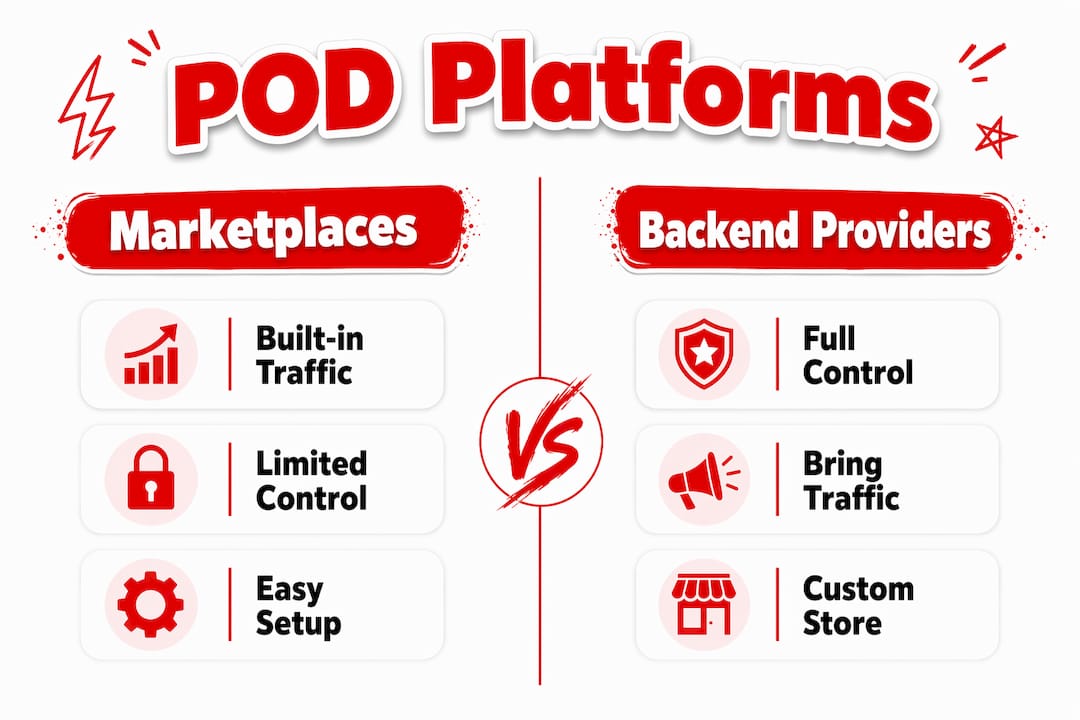
The strongest teepublic.com alternatives split into two distinct camps: marketplaces with built-in buyer traffic (Society6, Zazzle, Threadless, Spreadshirt, Amazon Merch on Demand) and POD backend providers that hand you full brand control (Printful, Printify, Fourthwall, Gelato, Merchize). Which camp you belong in depends entirely on where you are in your business, not which platform has the most buzz.
Here is the honest breakdown before you read further:
- Marketplaces with built-in traffic: Society6, Zazzle, Threadless, Spreadshirt, Design By Humans, Fine Art America, Saatchi Art, CafePress, Displate, Spring, Amazon Merch on Demand. You upload, they handle production and customer service, you earn a royalty. Low effort, low control.
- POD backend providers (bring your own storefront): Printful, Printify, Gelato, Gooten, Printaura, Podbase, Viralstyle, Sellfy, Merchize, Custom Ink. You own the store, set your prices, keep the margin. High control, high marketing effort.
- Hybrid platforms: Fourthwall bundles a branded storefront, POD production, digital products, and memberships. Threadless offers both a marketplace and artist shops. Spring blends social commerce with a creator storefront.
The core trade-off is exposure versus control. Marketplaces get your designs in front of buyers on day one. POD providers let you build something that actually belongs to you. Most serious artists end up running both, treating marketplaces as discovery channels while building an owned store on the side.
TeePublic’s bulk-upload workflow is genuinely easy, but that convenience limits pricing and brand control the moment you want to grow. That is the wall most artists hit, and why they start looking.

Best teepublic.com alternatives compared side by side
Each platform below is evaluated on the dimensions that actually matter for POD artists: whether it brings its own buyers, what you earn per sale, what products it supports, and how much control you keep.

| Platform | Built-in Traffic | Royalty / Commission | Product Types | Seller Control | Best For |
|---|---|---|---|---|---|
| Printful | No | You set price; pay base cost | Apparel, home, accessories | High | Brand builders on Shopify/Etsy |
| Printify | No | You set price; pay supplier cost | — | High | Cost-focused sellers needing variety |
| Society6 | Yes | ~10% royalty (artist-set on some) | Wall art, decor, apparel | Very low | Illustrators targeting home decor buyers |
| Zazzle | Yes | 5% royalty (artist-set) | Gifts, apparel, stationery | Low | Customizable gifts and event products |
| Displate | Yes | ~25% royalty tiers | Metal posters only | Low | Artists targeting art collectors |
| Threadless | Yes | Artist-set margin on Artist Shops | Apparel, accessories | Medium | Community-driven artists and contest participants |
| Fine Art America | Yes | Artist-set markup | Fine art prints, canvas, framed | Medium | Professional fine artists and photographers |
| Amazon Merch on Demand | Yes (massive) | Royalty per tier/price point | Apparel, accessories | Very low | High-volume sellers leveraging Amazon traffic |
| Fourthwall | No (bring audience) | You set price; pay base cost | Merch, digital, memberships | High | Creators with an existing audience |
| Spreadshirt | Yes | Artist-set margin | Apparel, accessories | Medium | Apparel-first creators, European reach |
| Design By Humans | Yes | Artist-set royalty | Apparel, accessories | Medium | Gaming and pop culture artists |
| Spring | Limited | You set price; pay base cost | Apparel, accessories, mugs | Medium | Social media creators |
| Gelato | No | You set price; pay base cost | Apparel, wall art, stationery | High | International sellers needing fast local shipping |
| Sellfy | No | You set price; subscription fee | Digital + physical + POD | High | Artists wanting an all-in-one storefront |
| Gooten | No | You set price; pay base cost | 150+ products | High | Developers needing API-level integration |
| Saatchi Art | Yes | 35% commission to platform | Original art, prints | Medium | Fine artists selling originals and limited editions |
| CafePress | Yes | Artist-set markup | Apparel, gifts, home | Low | Casual sellers wanting easy entry |
| Viralstyle | Limited | You set price; pay base cost | Apparel, accessories | Medium | Influencer-driven campaign sellers |
| Printaura | No | You set price; pay base cost | Apparel, accessories | High | Multi-platform integration sellers |
| Podbase | No | You set price; pay base cost | Phone cases, niche products | High | Boutique sellers prioritizing quality |
| Custom Ink | Yes | Custom quote pricing | Apparel, bulk orders | Medium | Artists needing both POD and bulk runs |
| Merchize | No | You set price; pay base cost | Apparel, accessories, home | High | Sellers wanting in-house production + global shipping |
Detailed profiles of the leading platforms
POD backend providers: full control, you bring the traffic
Printful is the most recognized name in POD fulfillment, and for good reason. It integrates directly with Shopify, Etsy, WooCommerce, and over 20 other platforms. You set your own prices, keep the margin above Printful’s base cost, and your branding appears on every package. The product catalog covers apparel, home goods, and accessories, and the global fulfillment network means orders ship from facilities in the US, Europe, and beyond. The trade-off is real: Printful, Printify, and Fourthwall require you to manage your own marketing while offering greater margin and brand control in return.
Printify takes a different angle. Instead of owning its production facilities, it connects you to a network of print providers, which means you can shop for the best combination of price and quality for each product. The catalog runs deep, and the cost per item is often lower than Printful’s. The downside is that quality can vary between suppliers, so testing before you scale matters.
Gelato is the pick for sellers with international customers. It produces orders locally in over 30 countries, which cuts shipping times and costs compared to shipping everything from a single US warehouse. Sustainability-minded sellers also appreciate the reduced carbon footprint from local production.
Sellfy suits artists who want a complete storefront without the complexity of Shopify. It handles digital downloads, physical products, and POD in one dashboard, with built-in email marketing and discount tools. Plans are subscription-based rather than per-transaction.
Gooten is built for developers and high-volume operations. Its API lets you automate product creation, order routing, and fulfillment across a catalog of over 150 products. Not the right fit for a solo artist uploading ten designs, but powerful for anyone building a multi-channel operation.
Printaura focuses on flexible integrations and print quality, connecting to Etsy, Shopify, and WooCommerce. Podbase specializes in phone cases and niche accessories, with customer service tailored to independent artists running small batches. Viralstyle adds influencer marketing tools to its POD backend, making it useful for artists who already have relationships with content creators.
Merchize combines in-house production with a global fulfillment network, which gives it tighter quality control than marketplace-style providers. It integrates with Shopify, Etsy, and Amazon, and suits sellers who want to scale without outsourcing production entirely.
Marketplace alternatives: built-in buyers, limited brand ownership
Society6 positions itself firmly in the wall art and home decor space. If your work leans toward detailed illustration, photography, or fine art prints, the platform’s buyer base is a stronger match than TeePublic’s apparel-heavy audience. Design niche influences platform success; Society6 and Threadless favor detailed art, while Amazon Merch on Demand suits high-volume pop culture sellers.
Zazzle offers one of the widest product catalogs of any marketplace, covering gifts, stationery, event products, and apparel. Artists set their own royalty rate, which is a genuine differentiator. The platform’s strength is personalization: buyers can customize products, which drives a different kind of purchase than a standard POD sale. Zazzle provides wide product catalogs but can feel complex for rapid testing, so it rewards sellers who invest time in their listings.
Threadless runs both a community marketplace and individual Artist Shops. The community side features contests and curated drops, which can generate exposure for newer artists. Artist Shops give you a branded URL and more control over your product mix, sitting somewhere between a full marketplace and an owned store.
Amazon Merch on Demand is the highest-traffic option on this list by a wide margin. Selling on Amazon Merch on Demand offers access to a huge buyer base but comes with tier limits, strict rules, and reduced control over merchandising. You start at a low tier with limited upload slots and work your way up based on sales velocity. For pop culture and trend-driven designs, the traffic is hard to match. For brand building, it offers almost nothing.
Fine Art America serves professional artists and photographers who want their work reproduced as gallery-quality prints, canvas, framed art, and more. The buyer base skews toward collectors rather than casual shoppers, and the markup system lets artists set their own prices above the base cost.
Saatchi Art goes further into the fine art space, handling original paintings, sculptures, and limited-edition prints. The platform takes a 35% commission, which is steep, but the buyer audience is genuinely high-end. For artists selling originals alongside POD prints, it fills a gap no apparel marketplace can.
Displate is the only platform on this list built entirely around metal posters. The product is distinctive and the collector community is active. Royalty tiers increase with sales volume, rewarding artists who build a following on the platform.
Design By Humans caters specifically to gaming, anime, and pop culture artists. The community skews younger and the product mix reflects that, with apparel and accessories built around bold, graphic-heavy designs.
Spreadshirt operates both a marketplace and Spreadshop, a free branded storefront. Its logistics and customer base are strongest in Europe, making it the natural pick for artists targeting that market. US sellers can still use it, but the traffic advantage is more pronounced overseas.
Spring (formerly Teespring) connects directly to YouTube, Twitch, and other creator platforms, letting you sell merch from within your content. If you have an active social media audience, the integration reduces friction between your content and your store. Spring and TeePublic are distinct platforms with different business models and marketing approaches, despite the name similarity that confuses some artists.
CafePress is one of the oldest names in custom merchandise. The upload process is straightforward and the product range is broad, but the platform has lost ground to newer competitors. It suits casual sellers who want a no-fuss entry point rather than artists building a serious POD operation.
Custom Ink stands apart from every other platform on this list because it handles both POD and bulk custom orders. If you sell to groups, teams, or organizations alongside your regular POD catalog, Custom Ink covers both workflows.
Fourthwall deserves a separate mention because it does not fit neatly into either camp. It gives creators a branded storefront, POD production, digital product sales, and membership tiers in one platform. You bring your own audience, and Fourthwall handles the rest. For a YouTuber or Twitch streamer with an existing fanbase, it is the closest thing to a complete creator commerce solution currently available.
How to choose the right platform for your POD business
The decision starts with one honest question: do you have an audience, or are you building one?
If you are starting from zero, a marketplace gets your designs in front of buyers without requiring you to run ads or build an email list. Redbubble, Society6, and Threadless are the fastest paths to your first sale. The cost is that you never own the customer relationship, and the platform can change its algorithm, run sitewide discounts, or bury your listings at any time.
Pro Tip: Test your designs on one or two marketplaces first. If a design sells consistently, that is your signal to build it out on an owned store where you keep more of the margin.
If you already have followers on YouTube, Instagram, or Twitch, a POD backend paired with your own storefront is the stronger move. Artists transitioning from marketplaces to brand-owning storefronts often choose Fourthwall, Printful, or Printify for greater control over branding and pricing. You bring the traffic; the platform handles production.
Watch out for these common mistakes:
- Opening an owned store before you have tested products. An empty store with untested designs produces nothing. Validate on a marketplace first.
- Treating a single marketplace as your whole business. Artists who rely solely on platform SEO and marketplace traffic risk unstable earnings; building owned customer relationships is critical for long-term brand success.
- Migrating platforms without a traffic plan. Shifting from TeePublic to self-managed POD requires readiness to invest in marketing, traffic generation, and product listing management. The designs do not bring themselves.
- Spreading across too many platforms at once. Two or three well-managed channels outperform ten neglected ones every time.
The most practical approach is a two-layer system: one or two marketplaces for discovery and passive sales, plus one owned storefront for brand building and better margins. Start with the marketplace layer, find what sells, then build the owned layer around proven designs.
Niche targeting and building your brand beyond marketplaces
Your design niche determines which platform actually works for you, and most artists underestimate how much this matters. A detailed botanical illustration will find its audience faster on Society6 or Fine Art America than on Amazon Merch on Demand. A bold pop culture graphic built around a trending meme will do the opposite.
Once you know your niche, the path to brand ownership becomes clearer. Marketplaces provide passive exposure but limited brand control; moving beyond TeePublic requires active marketing and storefront management. The shift is not just technical. It is a mindset change from “upload and wait” to “build and drive.”
Owning your storefront means owning your customer data. You can run email campaigns, retarget past buyers with ads, and build loyalty programs. None of that is possible when your customers belong to Redbubble or TeePublic. The fandom-driven merchandise trends shaping 2026 reward artists who can move fast on a niche and own the customer relationship from the first sale.
Pricing control is the other major advantage. On most marketplaces, the platform sets base prices and runs discounts without your input. On an owned store, you decide when to discount, how to bundle products, and what your margins look like. Over time, that control compounds into a real business asset rather than a royalty stream you do not control.
For artists in specialized niches, consider pairing a niche marketplace with an owned store. A fine art photographer might sell prints on Fine Art America for discovery while running a Printful-connected Shopify store for collectors who want custom sizes and framing options. A gaming artist might use Design By Humans for community exposure while building a Fourthwall store for fans who want exclusive drops and digital content.
How platform integrations and ease of use differ
The gap between platforms on integration and setup is wider than most artists expect.
Printful and Printify connect to Shopify, Etsy, WooCommerce, Wix, and several other storefronts through native apps. Setup takes minutes, and orders sync automatically. Gelato follows the same model with strong Shopify and Etsy integrations. Gooten goes further with a full API, which is overkill for most solo artists but essential for developers building multi-channel operations.
Fourthwall is the easiest all-in-one setup on this list. You get a storefront, POD production, and digital product sales without connecting multiple services. The trade-off is that you are locked into Fourthwall’s ecosystem rather than building on a platform like Shopify that you fully own.
Sellfy is similarly self-contained. Its dashboard handles digital downloads, physical products, and POD in one place, with built-in email marketing. Artists who want to avoid the complexity of Shopify plus a separate POD app will find Sellfy’s single-dashboard approach refreshing.
Marketplace platforms like Society6, Zazzle, and Threadless require no integration at all. You upload designs through their own interfaces, and the platform handles everything else. The simplicity is real, but so is the ceiling: you cannot connect these marketplaces to an external CRM, email tool, or analytics platform in any meaningful way.
Amazon Merch on Demand has its own upload portal and no external integrations. Spring connects natively to YouTube and Twitch, which is its primary integration advantage. Spreadshirt offers Spreadshop as a free embeddable storefront you can add to an existing website, which is a useful middle ground between a full marketplace and an owned store.
Print quality and fulfillment speed: what to expect
Print quality varies more across platforms than the marketing suggests, and fulfillment speed depends heavily on where your customers live.
Printful consistently ranks among the highest for print quality, particularly on direct-to-garment (DTG) apparel. Its US and European facilities mean most domestic orders arrive within 5–7 business days after production. Printify’s quality depends on which supplier you select; the best suppliers match Printful’s output, but the worst fall short. Always order samples before committing a design to a supplier.
Gelato’s local production model is its biggest practical advantage. An order placed by a customer in Germany gets produced in Germany, not shipped from the US. That cuts delivery times to 2–5 business days in most markets and reduces the risk of customs delays.
Marketplace platforms like Society6 and Fine Art America are known for high-quality art prints and canvas reproductions. Both use professional-grade printing equipment for wall art, which is where their product focus lies. Apparel quality on these platforms is more variable.
Amazon Merch on Demand production quality is generally solid for basic apparel, but you have no control over the print provider or the production process. Displate’s metal posters are a genuinely premium product with a distinctive finish that no other platform on this list replicates.
CafePress and Zazzle have faced criticism over the years for inconsistent print quality on some product categories. Both have improved, but ordering samples before promoting products to your audience remains good practice on any platform.
Customer support and seller resources
The difference in seller support between platforms is stark, and it matters most when something goes wrong with an order.
Printful offers 24/7 live chat support for sellers, along with a detailed knowledge base, video tutorials, and a dedicated seller community. For a POD backend provider, this level of support is genuinely useful when you are troubleshooting an integration or a production issue. Printify’s support is solid but slightly less responsive during peak periods.
Gelato provides seller support through email and chat, with response times that vary by region. Its help center is well-organized and covers most common issues. Fourthwall has built a reputation for responsive support among creators, which matters given that its users tend to be running active audiences who notice problems quickly.
Marketplace platforms are more inconsistent. Society6 and Threadless have seller help centers but limited direct support channels. Amazon Merch on Demand is notoriously difficult to reach for seller issues; most communication happens through a ticket system with slow response times. Fine Art America and Saatchi Art offer more personalized support, reflecting their focus on professional artists rather than mass-market sellers.
Zazzle has an active seller forum and a reasonably detailed help center. Spreadshirt provides seller resources in multiple languages, which is useful for its European user base. Spring’s seller support has been a recurring complaint in creator communities, particularly around payment timing and account issues.
For artists building a serious POD operation, the quality of seller support is a practical business consideration, not a nice-to-have. A production error on a high-volume day can cost real money, and a platform that responds in hours beats one that responds in days.
Marketing and promotional tools on each platform
Most marketplace platforms offer limited marketing tools because they control the discovery experience themselves. What you get varies significantly.
Zazzle lets artists set their own royalty rates and run promotions through the platform’s coupon system. Threadless Artist Shops support basic promotional tools including discount codes and featured product placements. Spreadshop lets you embed your store on any website and supports basic SEO customization for your shop page.
POD backend providers give you more marketing flexibility because you own the storefront. Printful and Printify integrate with email marketing tools like Klaviyo and Mailchimp through Shopify. Sellfy includes built-in email marketing, upsells, and cart abandonment tools without requiring third-party apps. Fourthwall supports email newsletters, membership tiers, and direct fan communication, which is a meaningful advantage for creators with engaged audiences.
Spring’s core marketing advantage is its native integration with YouTube and Twitch, letting creators display merch directly on their channel pages. For a creator with a large subscriber base, that placement drives sales without any additional marketing effort.
Amazon Merch on Demand relies entirely on Amazon’s search and recommendation algorithms. You have no ability to run ads for your Merch listings through Amazon’s standard advertising platform, and no way to contact buyers after a sale. The traffic is enormous, but the marketing tools are essentially nonexistent.
Fine Art America and Saatchi Art both offer basic promotional tools for artists, including the ability to share listings on social media and participate in platform-level promotions. Neither offers the kind of direct marketing control you get with an owned storefront.
Pro Tip: If you are running a marketplace alongside an owned store, use the marketplace as a top-of-funnel discovery tool and drive repeat buyers to your owned store through packaging inserts or social media links. Most platforms do not prohibit this, and it is the fastest way to start building an email list from marketplace traffic.
Copyright and legal protections across platforms
Copyright protection is an area where most POD platforms have clear policies but inconsistent enforcement.
Every major platform on this list prohibits the upload of copyrighted material you do not own. Printful, Printify, and Gelato place the legal responsibility squarely on the seller: if you upload a design that infringes a trademark or copyright, you are liable, not the platform. Their terms of service are explicit about this, and accounts can be suspended for violations.
Amazon Merch on Demand has the strictest content review process of any platform on this list. Designs go through an automated and manual review before going live, which catches many infringement issues but also rejects legitimate designs that trigger keyword filters. The review process is opaque, and appeals can take weeks.
Society6, Threadless, and Zazzle all have DMCA takedown processes for rights holders to report infringing content. These platforms respond to takedown notices but do not proactively screen uploads at the same level Amazon does. Fine Art America and Saatchi Art, given their focus on original artwork, tend to attract fewer infringement issues by design.
For artists protecting their own work, most platforms offer no active monitoring for unauthorized use of your designs by other sellers. You are responsible for finding infringement and filing takedown requests yourself. Tools like Google Reverse Image Search and TinEye can help, but the monitoring burden falls on you regardless of which platform you use.
Fourthwall and Sellfy, as storefront platforms rather than open marketplaces, have fewer third-party sellers uploading content, which reduces the risk of your designs being copied within the same platform. That is a practical advantage for artists who have built a recognizable visual style.
Key Takeaways
The best strategy for POD artists in 2026 is to treat marketplaces as discovery channels and build an owned storefront around proven designs, not the other way around.
| Point | Details |
|---|---|
| Marketplace vs. POD provider | Marketplaces offer built-in traffic but limit brand control; POD providers give full ownership but require your own marketing effort. |
| Design niche drives platform fit | Society6 suits detailed illustration and decor art; Amazon Merch on Demand favors high-volume pop culture designs. |
| Validate before you migrate | Test designs on a marketplace first; move proven sellers to an owned store for better margins and customer ownership. |
| Multi-platform is the real strategy | Running one or two marketplaces alongside an owned storefront covers both discovery and brand building without overextending. |
| Mclarenteehub as a sales channel | For pop culture and bold graphic designs, Mclarenteehub offers a curated storefront with t-shirts, mugs, hoodies, and gifts as a complementary channel. |
The platform choice most artists get wrong
The conventional wisdom says: pick the platform with the most traffic and upload everything there. That advice made sense in 2015. It does not hold up now.
The artists I see building durable POD businesses in 2026 are not the ones who found the best marketplace. They are the ones who stopped treating the platform as the business and started treating it as a channel. There is a real difference. A channel serves your business. A business is something you own.
The mistake most artists make is staying in marketplace mode too long. Marketplaces are genuinely useful for testing designs and finding what resonates with buyers. But the moment you have a design that sells consistently, you are leaving money on the table by keeping it only on a platform that controls your pricing, owns your customer data, and can change its algorithm without warning.
The other mistake is the opposite: opening an owned store too early, before you have tested products or a clear niche. An owned store with no traffic is just an expensive hobby. The sequence matters. Marketplace first, proof second, owned store third.
What actually works is building a compact system: a few tested designs, one or two marketplace channels for passive discovery, and one owned storefront where you control the pricing, the branding, and the customer relationship. That system is not glamorous, but it compounds. Every sale on your owned store builds an asset. Every sale on a marketplace builds the platform’s asset.
The platforms on this list are tools. The business is yours to build.
Mclarenteehub: pop culture merchandise with a distinct edge
If your designs live in the bold, irreverent space where pop culture meets graphic art, Mclarenteehub is worth a look as a complementary sales channel alongside the platforms covered above. While Printful and Printify give you production infrastructure and marketplaces give you discovery traffic, Mclarenteehub offers something different: a curated storefront already built around the aesthetic that pop culture fans actually buy.
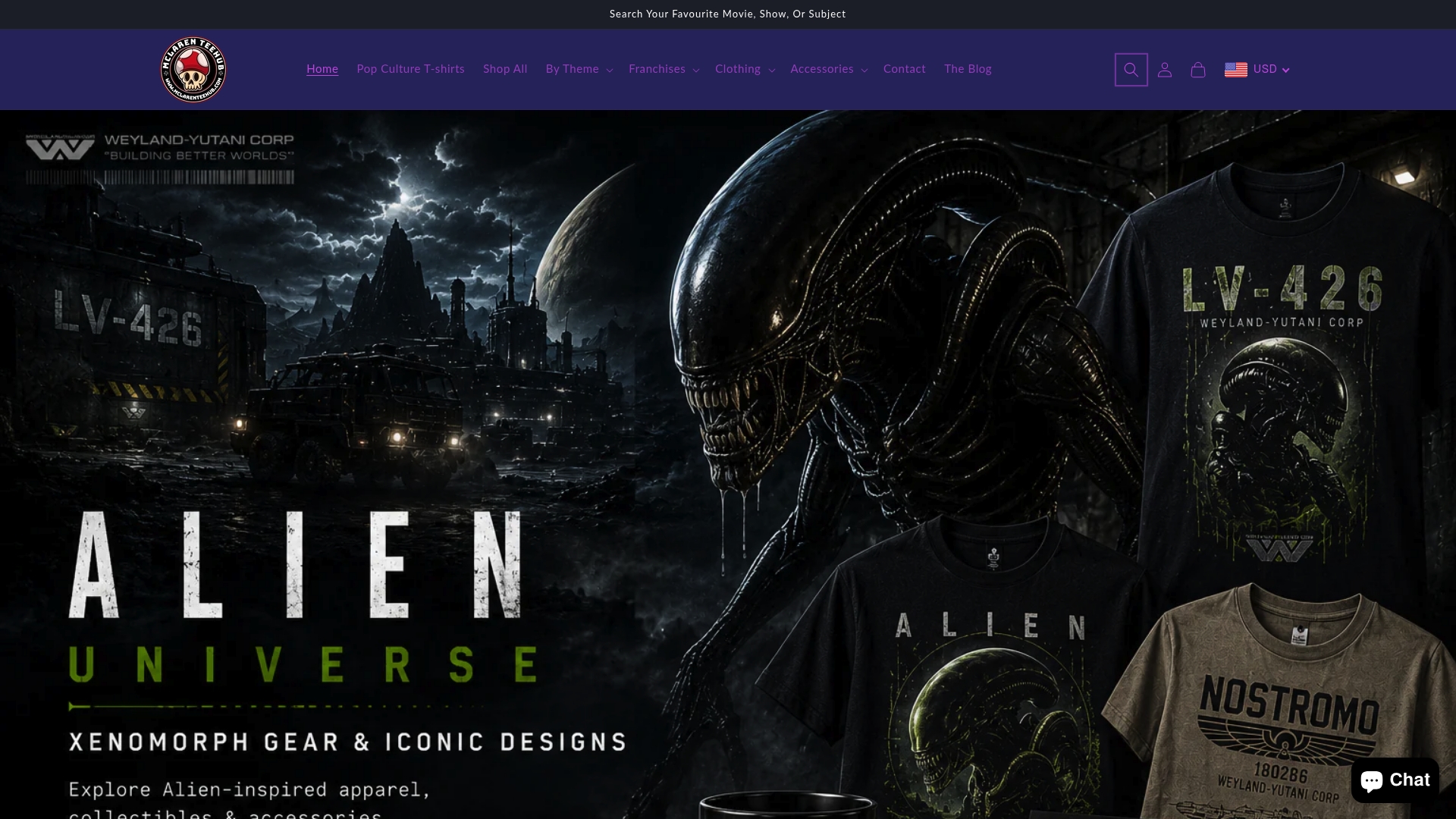
The product range covers pop culture t-shirts, hoodies, movie-themed mugs, shoes, and gifts, all built around the kind of striking, high-contrast visuals that resonate with younger audiences who want their merch to say something. For artists whose work fits that aesthetic, Mclarenteehub represents a channel where the audience is already primed for exactly that style. It is not a replacement for the platforms above. It is a focused alternative for the pop culture niche specifically.
Recommended sources and further reading
These resources go deeper on the platform comparisons and strategic decisions covered above:
- TeePublic Alternatives for POD Sellers (2026) covers the workflow perspective in detail, with a focus on building scalable POD systems beyond single marketplaces.
- Best TeePublic Alternatives: Marketplaces and POD Providers Compared at Bootstrapping Ecommerce breaks down the marketplace vs. owned store decision with practical guidance for artists at different stages.
- 10 TeePublic Alternatives for Selling Your Art from the Fourthwall blog covers the creator-commerce angle, particularly for artists with existing audiences.
- Selling on Marketplaces vs. Your Own Website is the clearest treatment of the exposure-versus-control trade-off available online.
- The Merchize TeePublic alternatives guide adds a production-focused perspective useful for artists thinking about scaling.
- For pop culture merchandise trends shaping buyer behavior in 2026, the Mclarenteehub piece on fandom merchandise trends is worth reading alongside the platform comparisons above.
- The 80stees.com merchandise alternatives roundup covers specialty retail options for artists working in retro and nostalgia-driven niches.
- Reddit’s r/printondemand community surfaces real seller experiences across platforms that no official guide will tell you. Search for platform-specific threads before committing to any new channel.