

Protect Collector Prints: Wash Graphic Tees by Weight, Not Color
Turn the shirt inside out, wash it cold on the gentle cycle with a mild HE detergent, skip the fabric softener and chlorine bleach, then air-dry it or tumble on low heat only when necessary. That single routine protects the vast majority of printed cotton tees from cracking, peeling, and fading. Always check the garment care label first, since fiber blends and print methods can change what’s actually safe.
TL;DR:
- Washing graphic tees in cold water on a gentle cycle preserves prints and reduces cracking caused by heat and friction.
- Turning tees inside out, fastening zippers, and avoiding overloading the washer significantly extend print longevity.
- Hand washing fragile or vintage shirts in cool water with mild detergent is the safest method, especially for delicate finishes or limited editions.
- Air-drying inside out or using a low-heat dryer minimizes heat damage and shrinkage, preventing print cracking and color fading.
- Sorting shirts by weight rather than color and skipping fabric softener helps protect prints from abrasion and chemical buildup over time.
Table of Contents
- Machine Washing Graphic Tees the Right Way
- The Best Way to Hand-Wash a Delicate or Vintage Tee
- Should You Air-Dry Graphic Tees or Use the Dryer?
- Pretreating Stains and Using Bleach Safely on Prints
- Picking the Right Detergent for Printed Shirts
- How to Remove Wrinkles Without Cracking the Print
- How Often Should You Wash a Graphic Tee?
- Quick Checklist: Dos and Don’ts for Every Wash
- Why Trust McLaren Tee Hub’s Care Advice
- Should You Wash a New Graphic Tee Before Wearing It?
- Sorting by Weight Matters More Than Sorting by Color
- Want Tees Built to Handle All This Washing?
- Sources
- FAQ
Machine Washing Graphic Tees the Right Way
Cold water is doing most of the work here. Heat softens the adhesive layer under screen prints and vinyl transfers, which lets them crack, peel, and pill against other fabric in the drum. A gentle or delicate cycle keeps the drum’s spin speed and agitation low enough that the print isn’t grinding against zippers, buttons, or rough seams for 40 minutes straight.
Before anything goes in the machine, flip every tee inside out and fasten any snaps, hooks, or zippers on nearby garments. That one move shields the printed surface from the abrasion of the wash itself. If you own an HE washer, use an HE-labeled detergent. Regular detergent oversuds in low-water machines, and that residue settles right into the fibers around a print.
- Wash cold, gentle or delicate cycle
- Turn tees inside out and fasten closures on other garments first
- Use HE detergent only in HE machines
- Slip fragile, vintage, or limited-run tees into a mesh laundry bag
- Sort by weight and abrasion, not just color, keeping denim and hardware-heavy items in a separate load
- Leave room in the drum so clothes can tumble freely instead of clumping
That last point about sorting matters more than most people think. A black concert tee and black jeans look like a natural pairing by color, but the jeans’ rivets and stiff seams can rub and physically wear down the print over a handful of washes. Group your graphic tees with other soft, similar-weight items instead.
Pro Tip: Overloading the washer is the most common mistake people don’t even notice they’re making. If the drum is packed tight, clothes can’t move independently, and the friction between them is exactly what cracks a print faster than any detergent choice.
The Best Way to Hand-Wash a Delicate or Vintage Tee
Some tees are worth the extra five minutes. A discontinued print, a decades-old band shirt, or anything with a puff or foil finish holds up far longer with a hand wash than a spin in the machine.
- Fill a sink or basin with cool water and a small amount of mild detergent.
- Submerge the shirt and gently press and swirl it through the water. Don’t scrub, especially over the printed area.
- Let the detergent sit on any visible stains for a few minutes before moving on.
- Rinse thoroughly under cool running water until no suds remain.
- Press or roll the shirt in a clean towel to push out excess water. Never wring it.
- Lay it flat or hang it in the shade to dry, away from direct sunlight.
This method mirrors what the Utah State University Extension recommends for delicate fabrics generally, and it’s the gentlest option available short of not washing the shirt at all. Wringing feels efficient, but it stretches the fabric and puts uneven stress on the seams and the print itself, damage that shows up weeks later as a slightly warped design.
Should You Air-Dry Graphic Tees or Use the Dryer?
Air-drying inside out is the safer default for almost every graphic tee. Heat is the real enemy of a printed shirt, not water. Dryer temperatures routinely climb high enough to soften plastisol ink and shrink cotton fibers, and the two problems compound each other: a shrinking shirt drags a print that can no longer flex with it, which is exactly how you get cracking.
If you need the dryer for time’s sake, there’s a reasonable middle ground.
- Keep the shirt inside out through the entire dry cycle
- Choose the lowest heat or “delicate” setting your dryer offers
- Pull the shirt out while it’s still slightly damp rather than running a full cycle
- Finish drying flat or on a hanger indoors
Hanging heavier cotton tees by the shoulders can stretch the neckline over time, so laying them flat on a drying rack is usually the better call for anything you care about keeping in shape. Direct sunlight is its own separate hazard. UV exposure fades both the fabric dye and the printed ink, so dry tees in shade or indoors whenever possible.
One more thing worth building into the routine: inspect for stains before any heat touches the shirt, machine or dryer. Heat sets stains permanently in a way that makes them almost impossible to lift out later, so a stain that looked faint going in can become a permanent mark coming out.
Pretreating Stains and Using Bleach Safely on Prints
Treat stains the moment you notice them. A fresh grease spot or ink smear comes out far more easily than one that’s had a week to bond with the fabric. Apply a mild stain remover directly to the spot, work it in gently, then launder the shirt according to its care label before it ever sees a dryer.
Bleach is where most printed tees actually get ruined, and the confusion between the two types matters.
- Oxygen (color-safe) bleach is the gentler option and safe for most washable fabrics, but it needs warm-to-hot water to actually work, and printed areas should get a patch test first
- Chlorine bleach is generally unsafe for colored prints and many fabric blends
- Only reach for chlorine bleach if the garment’s care label explicitly says it’s allowed
- Never dry a stained shirt until you’ve confirmed, in good light, that the stain is fully gone
That warm-water requirement for oxygen bleach catches people off guard, since everything else about washing a graphic tee points toward cold water. The American Cleaning Institute’s bleach guidance is clear that oxygen bleach performs best in warm-to-hot conditions, so it works better as a targeted pretreatment step than a laundry-day default. Confirming a stain is gone before drying isn’t optional, either. The Institute’s stain removal guide notes that heat can lock a stain in place permanently, turning a fixable mistake into a lost shirt.
Picking the Right Detergent for Printed Shirts
The detergent aisle offers a lot of unnecessary risk for graphic tees. Heavy-duty formulas built for grease and mud often carry brighteners and enzymes that are harsher than a print needs, and fabric softener is arguably worse. It coats fibers in a waxy residue that can build up right on the printed surface, dulling colors and making the ink feel stiff over time.
- Choose a mild, low-pH, or delicate-labeled detergent when you can
- Match HE detergent to HE machines specifically
- Skip fabric softener entirely on printed shirts
- Reach for liquid detergent on oily or greasy stains, and powder for ground-in dirt, if the care label allows both
- Measure to the dose the bottle actually recommends
HE detergents are formulated for low-water washers, and using a regular detergent in one produces excess suds that don’t rinse cleanly. That leftover film sits against the print with every wear. Overdosing any detergent, HE or otherwise, causes the same buildup even in a standard washer, so following the bottle’s measurement line matters more than most people assume.
How to Remove Wrinkles Without Cracking the Print
Ironing a graphic tee is the fastest way to melt a print that took years to look right in the first place. If you’re going to iron at all, turn the shirt inside out and either iron the reverse side directly or lay a thin pressing cloth over the design on low heat.
- Steamers are generally the safer tool since they relax fibers without direct contact or high surface heat
- Never run an iron directly over plastisol ink or raised puff prints
- Hang the shirt in a steamy bathroom as a low-effort wrinkle fix
- When in doubt, reshape the damp shirt by hand and let it air-dry smooth
Pro Tip: A shirt straightened while still damp from the wash rarely needs ironing at all. Smooth out the shoulders and hem by hand before it dries, and gravity does most of the work for you.
How Often Should You Wash a Graphic Tee?
Wash after visible soil or heavy sweating. Otherwise, you’re better off stretching the interval, since every wash cycle, however gentle, adds a small amount of cumulative wear to both fabric and ink. That’s especially true for limited-run or discontinued designs you can’t simply reorder.
- Rotate your favorite tees instead of wearing and washing the same one on repeat
- Fold graphic tees for storage rather than hanging them, since hangers stretch out the shoulders and collar over months
- Keep stored shirts out of direct sunlight to prevent slow fading even in a closet
- Use a quick sniff test and a visual check before assuming a shirt needs a full wash
Reducing wash frequency for the shirts you care about most preserves print integrity longer than any detergent or cycle choice, provided you’re not skipping washes when the shirt is genuinely dirty. Hygiene still comes first.
Quick Checklist: Dos and Don’ts for Every Wash
| Do | Don’t |
|---|---|
| Turn tees inside out before washing | Use chlorine bleach on colored prints |
| Wash cold on a gentle cycle | Iron directly on top of the print |
| Use mild HE detergent | Overload the washer drum |
| Use a mesh bag for fragile or vintage prints | Use fabric softener |
| Inspect stains before drying | Assume every stain is gone while the shirt is wet |
Print method and fabric blend still change some of these details shirt to shirt, which is exactly why the garment care label should always have the final say over any general rule, this one included.
Why Trust McLaren Tee Hub’s Care Advice
This online pop culture apparel retailer specializes in printed t-shirts, hoodies, and gifts across fandoms from horror to anime, which means print longevity is a key concern. This guide was put together by contributor Nicholas.
For deeper reading on how fabric choice affects wash performance, see our breakdown of cotton versus polyester graphic tees and our vintage film tee care guide.
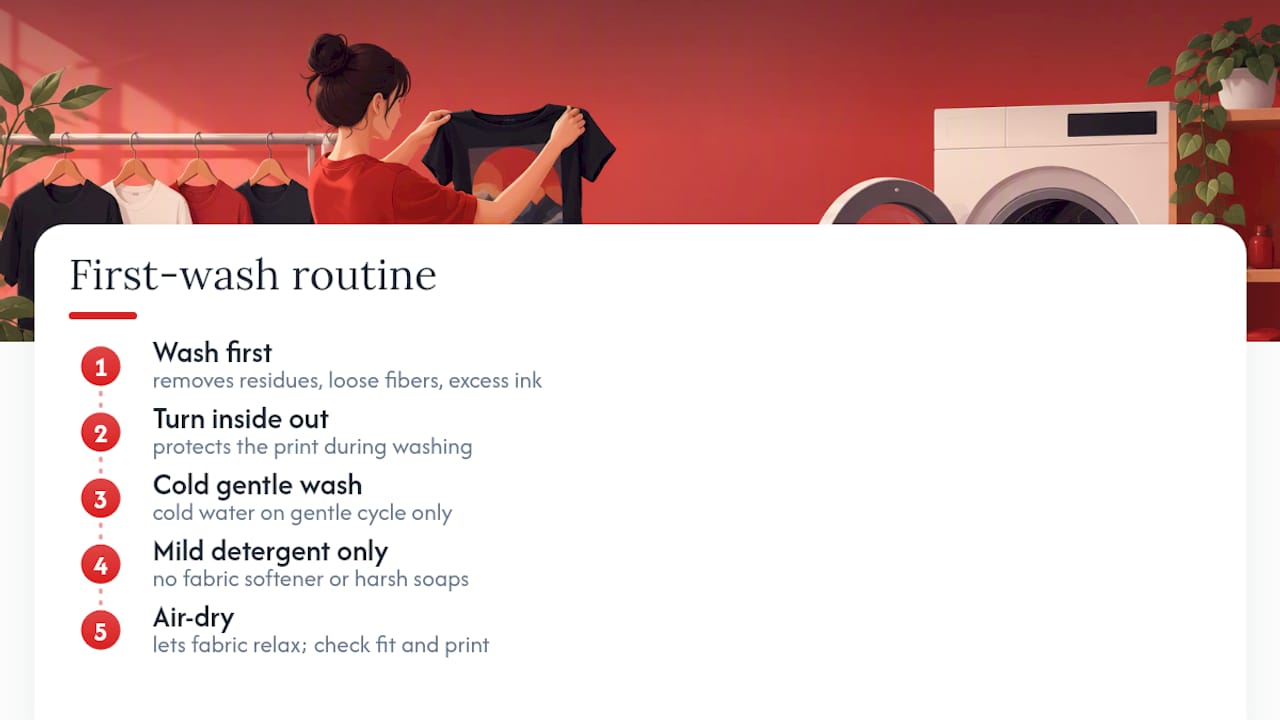
Should You Wash a New Graphic Tee Before Wearing It?
Yes, and it’s worth doing even though the shirt looks perfectly clean straight out of the packaging. New tees carry residue from manufacturing, dyeing, and shipping, including loose fibers, sizing agents, and occasionally excess ink from the printing process that hasn’t fully cured against the fabric.
Follow the exact same gentle routine on a first wash that you’d use on any other wash: inside out, cold water, gentle cycle, mild detergent, no fabric softener. Skip the temptation to use hot water because the shirt “just needs a good clean.” Hot water on a brand new print is actually riskier than on an older one, since fresh screen prints and heat-transfer designs haven’t gone through repeated wear cycles yet, and the ink hasn’t fully set into the weave.
Air-dry that first wash if you can, rather than tossing it straight into the dryer. It gives you a chance to check the fit and the print placement once the fabric relaxes into its true shape, which matters more than people expect since prints can shift very slightly during the manufacturing process. If you’re unsure how a specific print holds up, our style guide covering different print types breaks down which methods (screen print, DTG, vinyl) tend to need extra caution on that first cycle.
Sorting by Weight Matters More Than Sorting by Color
Most laundry advice stops at “wash darks with darks,” and that’s simply not enough for anyone who owns more than a couple of printed shirts. Abrasion, not color bleeding, is what actually kills a graphic print over time. A soft cotton tee thrown in with rigid denim or a hoodie zipper takes a beating no detergent can prevent.
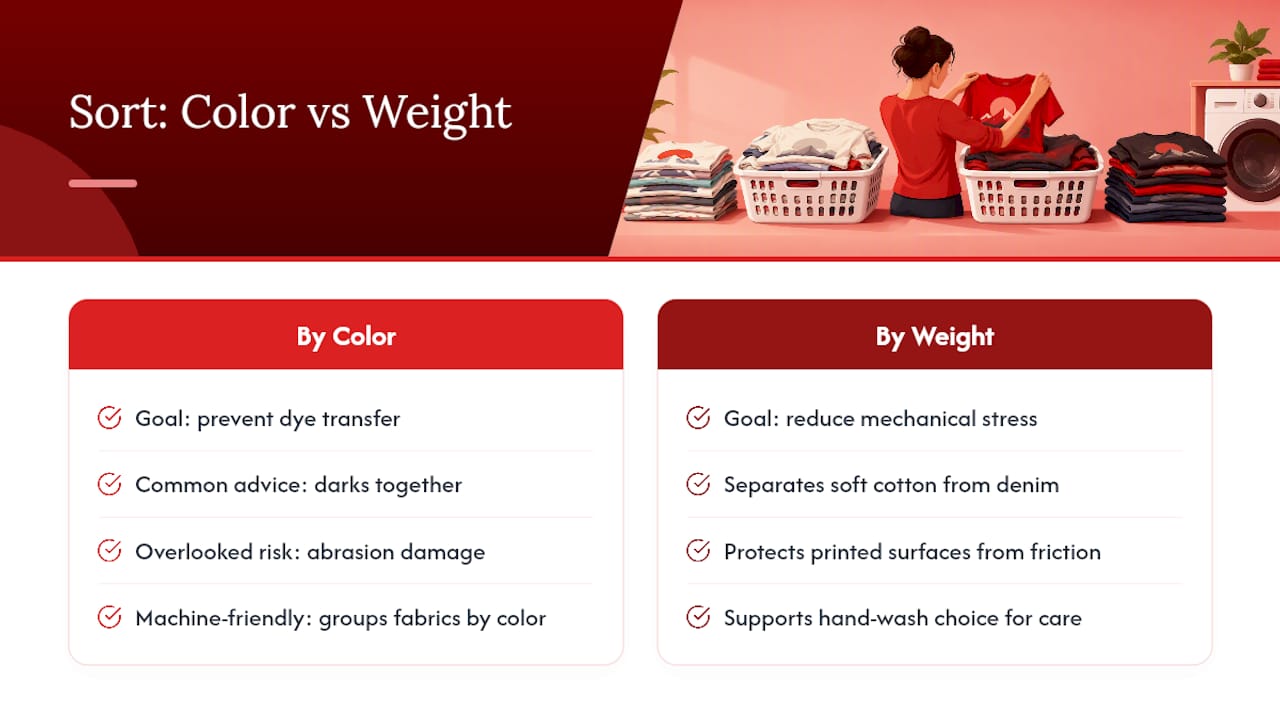
Hand washing deserves more credit than it usually gets, too. It’s not just for delicate lingerie or wool sweaters. Any tee tied to a limited print run, a discontinued design, or genuine vintage stock is worth the extra five minutes at the sink rather than a spin in the machine. The math is simple: you can’t reorder a shirt that no longer exists, so the wash method with the least mechanical stress wins every time for those pieces.
What gets overlooked most is that both of these judgment calls happen before the wash even starts. Sorting decisions and the machine-versus-hand-wash choice are where print longevity actually gets decided, not in which detergent brand sits on the shelf.
— Nicholas
Want Tees Built to Handle All This Washing?
Quality construction makes every one of these steps easier. A well-printed tee on solid cotton holds up to a cold gentle wash and an occasional dryer cycle far better than a bargain print that was cracking after the third wash anyway. This retailer offers original fan art and parody designs across movies, anime, and horror printed on shirts meant to survive your actual laundry routine, not just look good in a product photo.

If you’re restocking your rotation or replacing a shirt that didn’t survive the wash, browse the Pop Culture T-shirts collection for designs across genres, from sci-fi to slasher classics. Pair a new tee with a matching hoodie for cooler weather, and follow the same cold-wash, inside-out routine on both. Pick a design, add it to your cart, and check out; that’s the whole next step.
FAQ
Can I Wash Graphic Tees in the Washing Machine?
Yes, machine washing is fine for most graphic tees as long as you turn the shirt inside out, use cold water, and select the gentle or delicate cycle. Skip fabric softener and avoid overloading the drum so the print isn’t grinding against other clothes.
How Do I Wash Graphic Tees Without Cracking the Print?
Cracking usually comes from heat and friction, not from washing itself. Wash cold, dry on low heat or air-dry, and sort tees away from denim or hardware-heavy garments that can abrade the printed surface during the cycle.
Is Oxygen Bleach Safe for Graphic Tees?
Oxygen (color-safe) bleach is generally safer than chlorine bleach for printed shirts, but it needs warm-to-hot water to work effectively, which runs counter to the usual cold-wash rule for prints. Patch-test a hidden area first, and always check the garment’s care label before using any bleach at all.
Should Graphic Tees Be Washed Inside Out?
Yes, turning a graphic tee inside out before every wash is one of the simplest ways to protect the print from direct abrasion against other clothes and the machine drum. It also helps preserve the outer fabric color, since the printed surface takes less direct contact with detergent and friction throughout the cycle.
How Often Should I Wash a Graphic Tee?
Wash after visible soil or heavy sweat, but there’s no need to wash a lightly worn shirt just because it’s been worn once. Stretching the interval between washes for your favorite or limited-run tees reduces the cumulative wear that eventually leads to fading and cracking.