

Why Streetwear Culture Is Growing So Fast
TL;DR:
- Streetwear culture has become a dominant global industry driven by Gen Z’s preference for comfort, authenticity, and community. Social media influencers and scarcity tactics like limited drops fuel trend acceleration and brand loyalty. This movement reshapes fashion by promoting inclusivity, cultural expression, and democratic access to style.
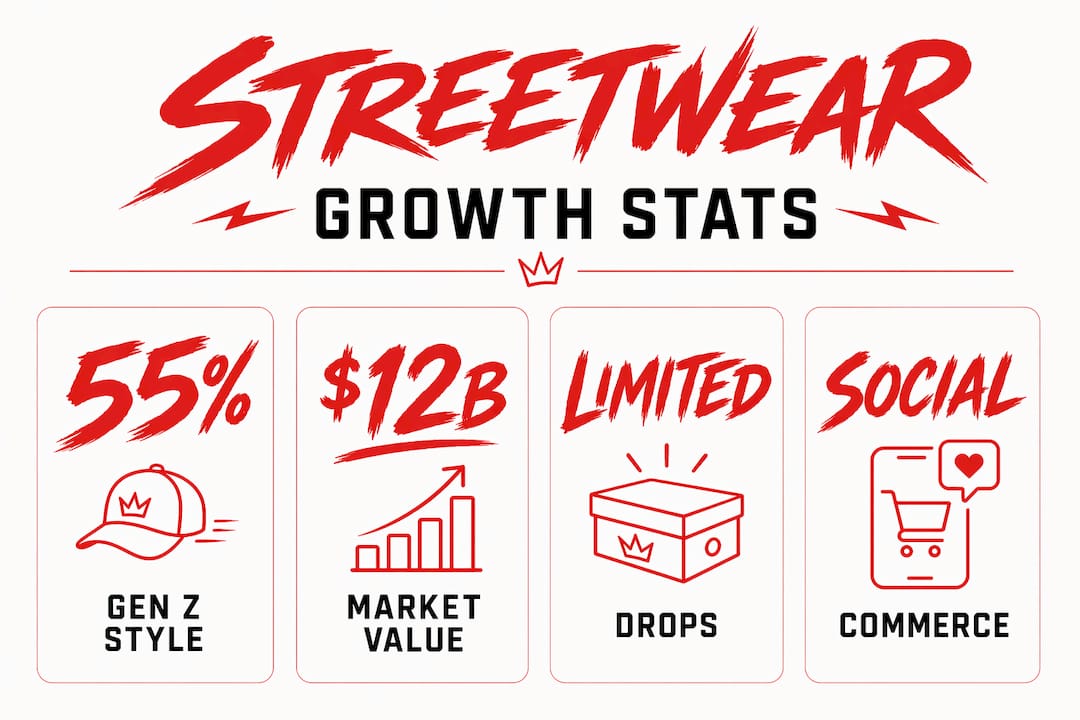
Streetwear culture is defined as a fashion movement built on comfort, authenticity, self-expression, and community, and it now functions as one of the most powerful forces in global fashion. The reasons why streetwear culture growing into a dominant industry are rooted in demographics, digital technology, and commercial strategy working together. 78% of Gen Z members identify streetwear as a key part of their cultural identity. That statistic alone explains why brands, luxury houses, and retailers are all chasing the same consumer. Streetwear’s cultural capital has been valued at $12 billion, a figure that reflects its reach far beyond clothing into music, art, and social identity.
Why is streetwear culture growing so fast?
Gen Z is the primary engine behind streetwear’s rise. 55% of Gen Z cite streetwear as their primary fashion style, not just a casual preference but a core identity marker. That is a generational shift, not a trend cycle.

Older generations treated fashion as a signal of status through formal dress codes and brand logos tied to wealth. Gen Z flipped that model. For this generation, authenticity and comfort outrank formality. 77.7% of consumers under 25 prioritize comfort when buying streetwear, and 67% emphasize quality. Those numbers show that the appeal is practical as much as it is cultural.
Urban youth communities across Los Angeles, New York, Tokyo, and London built streetwear from the ground up. The style absorbed influences from skateboarding, hip-hop, basketball, and graffiti art. That multicultural DNA gives streetwear a global fluency that few other fashion movements can match. A kid in Seoul and a kid in Chicago can share the same aesthetic language through a hoodie or a graphic tee.
- Comfort as a value: Streetwear rejects the idea that style requires discomfort. Oversized fits, breathable fabrics, and functional silhouettes are non-negotiable for Gen Z.
- Individuality over uniformity: Mixing brands, eras, and references is the norm. No two fits look identical.
- Community belonging: Wearing a specific brand or drop signals membership in a cultural group, not just a fashion preference.
- Global diversity: Streetwear absorbs local culture and feeds it back into a global conversation, making it perpetually fresh.
Pro Tip: If you want to understand a city’s streetwear scene, skip the mall and find the local skate shop or record store. That is where the real aesthetic is being built.
How has social media changed streetwear’s reach?
Social media did not just accelerate streetwear. It restructured who gets to set trends. 82% of consumers are influenced in their purchasing decisions by social media influencers. That figure makes traditional advertising look like a rounding error.
TikTok and Instagram changed the mechanics of trend propagation. A “fit check” video or a “Get Ready With Me” clip can turn a niche graphic tee into a sold-out item within 48 hours. Micro-influencers drive over 53% of Gen Z purchasing decisions, which means a creator with 20,000 followers can move product faster than a billboard in Times Square.
“Viral moments through TikTok and Instagram fit checks can propel streetwear designs from niche to global staples instantly, bypassing traditional channels and budgets entirely.”
The democratization of trendsetting is the real story here. Before social media, fashion gatekeepers controlled what became mainstream. Editors, buyers, and PR firms decided what reached consumers. Now a teenager filming in their bedroom can launch a silhouette that gets copied by major brands within a season. That power shift is permanent.
- A creator posts a “fit check” featuring an obscure graphic tee.
- The video reaches 500,000 views in 24 hours through the algorithm.
- Search traffic for the brand spikes. The item sells out.
- The brand restocks with a new colorway and announces it on Instagram Stories.
- The cycle repeats, each time building more brand equity and community loyalty.
Social commerce, where consumers buy directly through Instagram, TikTok Shop, or Pinterest, has collapsed the distance between inspiration and purchase. Streetwear brands that understood this early built direct-to-consumer pipelines that bypass traditional retail entirely. That is a structural advantage that compounds over time.
What business strategies keep streetwear demand high?
Scarcity is the most powerful commercial tool in streetwear. Limited-edition drops create billion-dollar sales events and transform ordinary product releases into cultural moments. When a brand announces a drop with a 48-hour countdown, it is not selling a hoodie. It is selling the experience of competing for something rare.
The collaboration model amplifies this further. Luxury fashion houses adopted streetwear tactics because they had no choice. Pairing a high-fashion label with a streetwear brand produces a product that neither could create alone: the credibility of the street combined with the prestige of the atelier. Understanding how luxury meets affordability in these crossover moments helps explain why consumers at every price point feel included in the conversation.
| Strategy | How it works | Effect on demand |
|---|---|---|
| Limited drops | Timed releases with capped inventory | Creates urgency and FOMO |
| Luxury collaborations | Pairing street brands with high-fashion labels | Expands audience and raises perceived value |
| Community storytelling | Brand narratives built around culture, not product | Builds loyalty that survives trend cycles |
| Resale market integration | Accepting and even encouraging secondary market activity | Sustains hype and brand equity long after the drop |
The resale market functions as a parallel economy. The streetwear resale market is worth billions, driven entirely by scarcity and brand loyalty. When a sneaker or jacket sells for three times its retail price on the secondary market, it signals to the primary market that the brand is worth pursuing. Resale prices are, in effect, free advertising.
Pro Tip: Track resale prices on secondary platforms to gauge which brands are genuinely building cultural heat versus which ones are just spending on marketing. Price premiums do not lie.
Community building is the strategy that outlasts every trend. Brands that tell authentic stories, support local artists, and engage directly with their audience create loyalty that no algorithm change can erase. That community becomes a distribution network, a focus group, and a marketing engine all at once.
How is streetwear reshaping fashion and culture broadly?
Streetwear’s influence on broader fashion is structural, not cosmetic. Luxury houses now use drop mechanics, limited quantities, and social media countdowns because streetwear proved those tactics work. The role of affordable luxury in 2026 reflects exactly this crossover: consumers expect both cultural credibility and accessible price points from the brands they follow.
Authenticity, inclusivity, and sustainability are the three values streetwear has pushed into the broader fashion industry. Youth consumers demand that brands take positions on environmental responsibility and social equity. Streetwear brands that built their identity around these values are now setting the standard that mainstream fashion scrambles to meet.
| Cultural domain | Streetwear’s influence |
|---|---|
| High fashion | Drop mechanics, oversized silhouettes, and sneaker culture adopted industry-wide |
| Music | Hip-hop and R&B artists function as brand ambassadors and creative directors |
| Art | Graphic design, graffiti, and illustration are central to streetwear identity |
| Social activism | Brands use limited drops to fund causes and amplify community voices |
Streetwear also functions as pop culture merchandise in its purest form. A graphic tee referencing a film, a music era, or a cultural moment is not just clothing. It is a statement of belonging. That is why the line between streetwear and pop culture apparel has essentially dissolved for Gen Z consumers.
The $12 billion cultural capital figure is not just an economic measurement. It reflects the fact that streetwear now sets the terms for how youth culture communicates identity, values, and community membership across every creative field.
Key Takeaways
Streetwear culture is growing because it fuses Gen Z identity, social media power, scarcity-driven commerce, and authentic community storytelling into a single, self-reinforcing system.
| Point | Details |
|---|---|
| Gen Z drives adoption | 78% of Gen Z identify with streetwear as a cultural identity, not just a fashion choice. |
| Social media is the engine | Micro-influencers drive over 53% of Gen Z purchases, making digital presence non-negotiable. |
| Scarcity creates demand | Limited drops and luxury collaborations turn product releases into high-stakes cultural events. |
| Cultural capital is real | Streetwear’s cultural influence is valued at $12 billion, spanning music, art, and activism. |
| Authenticity sustains growth | Brands that build genuine community and promote inclusivity outlast those chasing trends. |
Streetwear is not a trend. It is a new fashion language.
I have watched fashion cycles come and go for years, and most movements peak, get absorbed by the mainstream, and fade. Streetwear has not followed that arc. Every time the mainstream absorbs it, streetwear mutates and finds a new edge. That adaptability is not accidental. It is baked into the culture’s DNA.
What strikes me most is how streetwear solved a problem that high fashion never could: it made exclusivity feel accessible. You do not need to spend $3,000 on a jacket to feel part of the culture. A well-chosen graphic tee, a limited beanie, or a pair of clean sneakers does the same work. That is a genuinely democratic proposition, and it is why the culture keeps pulling in new participants.
The challenge going forward is authenticity at scale. As more brands chase streetwear’s commercial success, the risk of dilution grows. The brands that survive the next decade will be the ones that stay genuinely connected to community, not just the aesthetic. Trend cycles in streetwear have shortened dramatically, rising or stalling in weeks rather than seasons. That pace rewards brands with real cultural roots and punishes those just borrowing the look.
Streetwear’s future belongs to the communities that created it, not the corporations that copied it.
— Nicholas
Streetwear style that speaks for itself at Mclarenteehub
Streetwear is built on self-expression, and the right graphic tee or hoodie does more communicating than a logo ever could. Mclarenteehub carries pop culture tees, hoodies, and hats that sit squarely in the streetwear tradition: bold graphics, cultural references, and designs that say something real about who you are.
Whether you want a retro neon graphic tee that nods to the 80s or a hoodie that references a film you actually love, Mclarenteehub has pieces built for people who treat clothing as a statement. Check out the full collection and find the fit that fits your culture.
FAQ
What is streetwear culture, exactly?
Streetwear culture is a fashion movement rooted in comfort, authenticity, and self-expression, originating from skateboarding, hip-hop, and urban youth communities. It has evolved into a multi-billion-dollar global industry while retaining its community-driven identity.
Why is streetwear so popular with Gen Z?
Gen Z identifies with streetwear because it prioritizes comfort, individuality, and cultural belonging over formal dress codes. 78% of Gen Z members view streetwear as a key part of their cultural identity.
How does social media fuel streetwear growth?
Social media platforms like TikTok and Instagram allow micro-influencers and everyday creators to set trends instantly, with 82% of consumers reporting that influencers shape their purchasing decisions. A single viral fit check can sell out a product within hours.
What makes limited drops so effective for streetwear brands?
Limited drops create scarcity, which drives urgency and cultural hype around a product release. The resulting resale market activity sustains brand prestige and keeps consumer interest high long after the initial drop sells out.
How can I style streetwear pieces for everyday wear?
Start with one strong graphic piece, such as a bold tee or a statement hoodie, and build around it with clean, simple basics. For more specific ideas, the guide on styling pop culture tees covers practical approaches for 2026.