

Ridley Scott's Alien: The Greatest Atmospheric Sci-Fi Horror Ever
In 2026, Ridley Scott's Alien stands forty-seven years removed from its original release, yet its grip on the collective imagination has only tightened. Modern blockbusters arrive in a blur of digital spectacle, often forgotten by the time the credits roll. Alien, by contrast, lingers like a fever dream. It is not simply a monster movie. It is a masterclass in atmospheric dread, a film that understands terror lives not in what leaps from the shadows, but in the shadows themselves. This is the argument for Alien as the greatest atmospheric sci-fi horror ever made: a film built on patience, texture, and the unbearable weight of silence.
Table of Contents
- The Genesis of Terror: How a "Dirty" Spaceship Changed Cinema
- Deconstructing the Atmosphere: Why the Silence Scares Us More Than the Monster
- Character Study: The Crew of the Nostromo as Blue-Collar Victims
- The Legacy of the Xenomorph: H.R. Giger’s Nightmare Made Flesh
- Critical Reassessment: From Mixed Reviews to Unanimous Acclaim
- The "What If?" Factor: The Directors Who Said No
- Where to Find the Perfect Alien Tribute
- Conclusion: The Unmatched Mastery of Ridley Scott’s Alien
The Genesis of Terror: How a "Dirty" Spaceship Changed Cinema
The story of Alien begins, strangely enough, with despair. In 1977, Ridley Scott watched Star Wars and sank into a profound depression. He had been developing projects, but George Lucas’s film recalibrated what cinema could achieve. Scott’s response was not imitation. It was opposition. He set out to make what he later called the "antithesis" of Star Wars: a science fiction film stripped of hope, cleanliness, and swashbuckling heroism. Where Lucas gave audiences a galaxy of adventure, Scott would deliver a universe of dread.
Central to this vision was the Nostromo, a spaceship unlike anything audiences had seen. Science fiction vessels of the era, from 2001: A Space Odyssey to Star Wars, gleamed with sterile precision. Scott rejected that outright. He conceived the Nostromo as a "freighter in space," a working-class tug hauling a refinery the size of a city. The corridors were cramped, cluttered, and grimy. Water dripped from pipes. Warning lights flickered. The crew ate at a table stained with coffee rings. This was not a ship of explorers or warriors. It was a lorry in the void, and its occupants were truckers, not heroes.
The visual language owed much to French illustrator Moebius, whose intricate, lived-in worlds inspired Scott’s commitment to texture. But the true aesthetic revolution came from H.R. Giger, the Swiss artist whose biomechanical nightmares defined the film’s soul. Giger’s designs fused flesh and machinery, creating a world where the organic and the industrial bled into one another. His derelict spacecraft, with its ribbed corridors and fossilised pilot, remains one of the most unsettling environments ever committed to film. It felt ancient, diseased, and utterly alien.
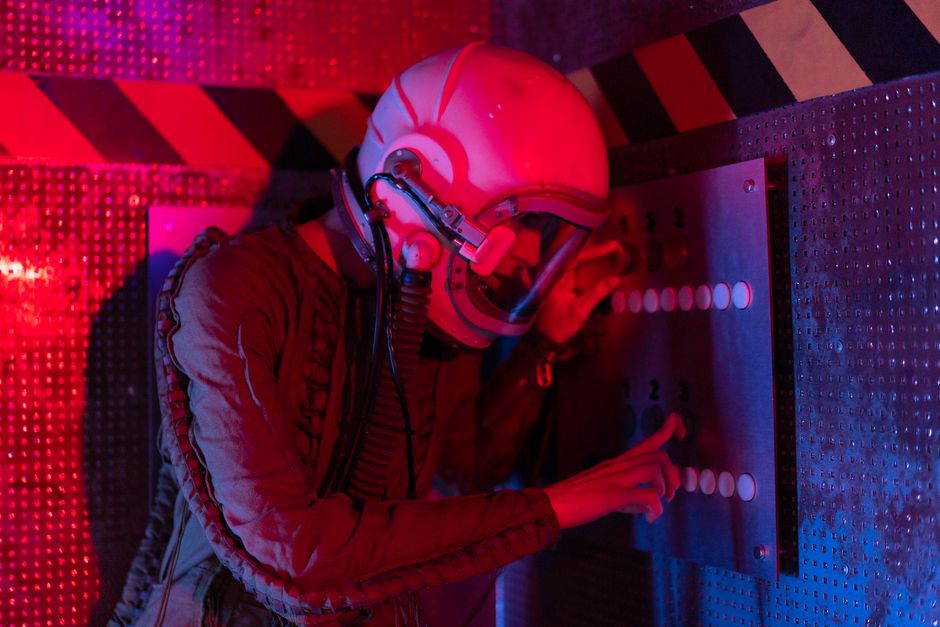
The project itself was a gamble. Scott was the fifth director approached. Four others had passed, dismissing the script as schlock. One particular scene drew the most ridicule: a creature bursting from a man’s chest during dinner. They called it ridiculous. Scott saw its potential for primal horror and took the job, driven by a competitive fire ignited in that dark moment after Star Wars.
The Script That Almost Wasn't: From Star Beast to Alien
Dan O’Bannon’s original draft bore the title Star Beast, a pulpy name that betrayed its B-movie roots. The core structure, a crew awakened from hypersleep to investigate a distress signal, remained intact, but the script evolved through numerous revisions. O’Bannon and Ronald Shusett refined the horror, tightening the screws on a story that would become legend.
Fox executive Alan Ladd Jr. deserves significant credit for the film’s existence. In the wake of Star Wars, every studio wanted to replicate that success. Ladd resisted the urge to clone Lucas’s formula. He recognised that a darker, more adult science fiction film could carve its own path. His greenlight was an act of faith in a genre that had not yet proven its range.
Casting brought its own surprises. Warren Beatty, then attached to a different project, recommended a young actress named Sigourney Weaver for the role of Ripley. It was an unconventional choice. The part had been written without specifying gender, and Weaver brought a fierce intelligence that transformed Ripley from a standard survivor into cinema’s most enduring final girl. Her presence grounded the film in a reality no amount of set design could manufacture.
Deconstructing the Atmosphere: Why the Silence Scares Us More Than the Monster
Alien’s greatest weapon is restraint. Modern horror often mistakes volume for tension, pelting audiences with stingers and shrieking strings. Jerry Goldsmith’s score takes the opposite approach. It is a work of unsettling beauty, built on atonal whispers and mournful woodwinds. The main theme, a lonely melody drifting through empty space, suggests not adventure but isolation. Goldsmith understood that silence, punctuated by discordant notes, creates a deeper unease than any orchestral blast.
Derek Vanlint’s cinematography amplifies this dread. The Nostromo is shot with an almost documentary realism, handheld cameras tracking through corridors thick with smoke and shadow. Light sources are practical: flickering computer screens, emergency beacons, the cold glow of hypersleep chambers. Faces emerge from darkness, half-lit and vulnerable. The claustrophobic framing traps the audience alongside the crew. There is no escape, no wide shot to release the pressure. Every frame reminds you that this ship is a coffin drifting between stars.
The "Jaws in space" strategy, a phrase Scott himself used, proved devastatingly effective. The Xenomorph is barely glimpsed for most of the runtime. Its presence is suggested through motion trackers, dripping saliva, and the terrible knowledge that it is somewhere in the vents. This restraint builds a reservoir of dread that modern CGI-heavy films rarely achieve. When the creature finally reveals itself in full, the payoff is earned through patience. Audiences in 2026, accustomed to instant gratification, still find themselves holding their breath during those long, quiet passages.
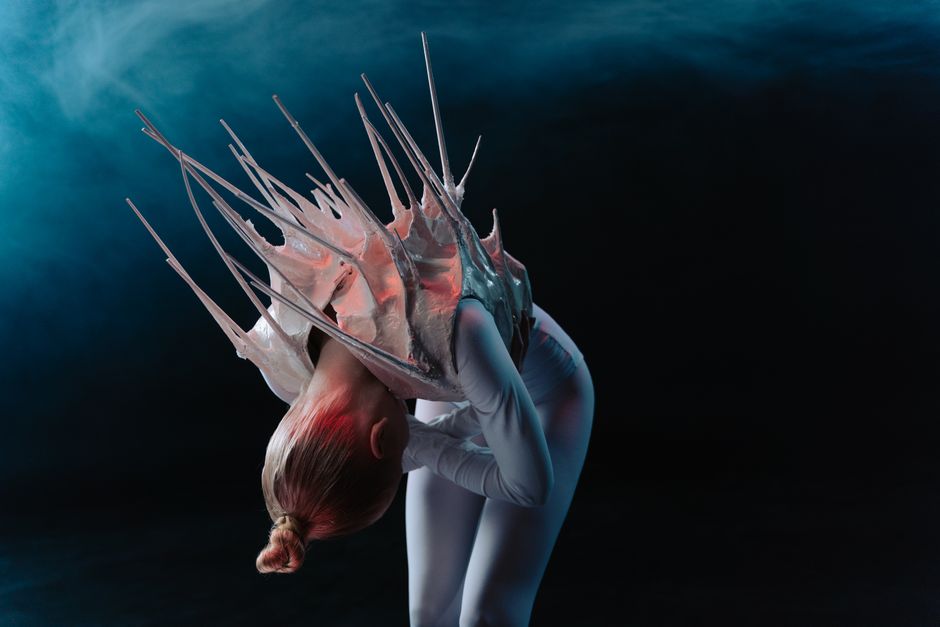
The pacing is deliberate, almost cruel. The first act unfolds with documentary slowness: the crew waking, bickering, eating, complaining about bonuses. This mundane reality makes the horror, when it arrives, feel like a violation of the natural order. Scott weaponises boredom, lulling viewers into a false sense of security before pulling the rug away. The result is a film that feels less like entertainment and more like an experience, a slow descent into a nightmare from which there is no waking.
The Chestburster Scene: A Masterclass in Practical Effects and Audience Manipulation
The chestburster scene remains one of the most shocking moments in cinema history, and its power owes much to what the cast did not know. Scott deliberately withheld details from the actors, wanting genuine reactions. When John Hurt’s Kane convulsed at the dinner table and a creature exploded from his torso, the horror on the faces of Veronica Cartwright and the rest of the crew was real. Cartwright’s scream, cut short by a spray of stage blood, was not acting. It was pure, unfiltered terror.
The practical effects, executed with a mechanical puppet and concealed tubes pumping fake viscera, hold up remarkably well in 2026. There is a weight and wetness to the scene that digital effects struggle to replicate. The creature, small and vulnerable, skitters away into the shadows, leaving chaos in its wake. The scene establishes the film’s core ethos: no one is safe. The rules of conventional storytelling, where the likeable crew member survives, are torn apart along with Kane’s ribcage.
Character Study: The Crew of the Nostromo as Blue-Collar Victims
The original script, by Scott’s own admission, contained "virtually no characterisation." The actors built their roles from fragments, imbuing the crew with a lived-in authenticity that elevates the horror. These are not astronauts or soldiers. They are mechanics, engineers, and navigators, working a job they tolerate for the pay. This blue-collar realism makes their fates resonate on a human level.
Sigourney Weaver’s Ripley undergoes the most significant transformation. She begins as a by-the-book warrant officer, rigidly adhering to quarantine protocols even when it means condemning a crewmate to potential death. Her logic is cold, but it is correct. As the film progresses, she sheds her corporate conditioning and taps into a primal survival instinct. By the final reel, stripped to her underwear and facing the Xenomorph alone, she has become something rare: a hero defined not by strength or bravado, but by sheer, desperate will.
Ian Holm’s Ash represents the film’s most chilling critique. Revealed as an android planted by the corporation to retrieve the alien organism at any cost, Ash embodies institutional betrayal. His calm, dispassionate voice as he explains the creature’s perfection, moments before attempting to murder Ripley with a rolled-up magazine, is more terrifying than any monster. The Company, as the crew calls it, views human life as expendable. Ash is its perfect servant.
The rest of the crew fills out a tragic ensemble. Dallas, the captain, is competent but out of his depth, his death in the ventilation shafts a masterclass in mounting panic. Kane’s curiosity dooms him first, a cautionary tale about poking the unknown. Lambert’s paralytic fear, culminating in her off-screen death, reminds us that not everyone rises to the occasion. Parker and Brett, the engineers, bicker about shares and bonuses until the creature picks them off one by one. Their deaths are not heroic sacrifices. They are workplace accidents in a universe that does not care. This lack of traditional heroism makes the horror feel honest. There is no cavalry, no grand speech, no redemption. Only survival, and even that is not guaranteed.
The Legacy of the Xenomorph: H.R. Giger’s Nightmare Made Flesh
Giger’s Xenomorph is a design that transcends its origins. It is simultaneously organic and mechanical, a fusion of flesh and chrome that defies easy categorisation. Its elongated, phallic head and skeletal frame carry undeniable sexual undertones, a deliberate choice that taps into deep psychological fears. The creature’s life cycle, from egg to facehugger to chestburster to adult, is a grotesque parody of reproduction and violation. It does not simply kill. It invades, implants, and transforms.
This biomechanical philosophy extends to every element of the alien world. The derelict ship, with its vaginal doorways and ribbed corridors, feels less like a spacecraft and more like a body. The space jockey, a fossilised giant fused to its chair, suggests an ancient tragedy that the film never explains. This restraint, the refusal to demystify the creature, is why the Xenomorph endures. We know it is the "perfect organism," as Ash describes it: a creature whose structural perfection is matched only by its hostility. We do not need to know more.
The influence on subsequent creature features is immeasurable. Every film that pits a small group against a relentless predator, from Predator to The Descent, owes a debt to Alien. Giger’s aesthetic seeped into video games, graphic novels, and fine art. The Xenomorph became a cultural icon, its silhouette instantly recognisable. Forty-seven years later, no design has surpassed it for sheer, primal impact.
Critical Reassessment: From Mixed Reviews to Unanimous Acclaim
Alien did not receive a hero’s welcome upon release. Many critics in 1979 found it excessively gruesome, a well-crafted but ultimately hollow exercise in shock. Some dismissed it as a B-movie with an A-movie budget. Audiences, however, understood what they were witnessing. The film grossed an estimated £7.8 million in the UK during its initial run, a figure that reflected strong word of mouth despite the critical divide.
Time has been kind, or rather, time has revealed what was always there. The Academy awarded Alien the Oscar for Best Visual Effects, acknowledging the craft behind the horror. It won three Saturn Awards, including Best Science Fiction Film and Best Direction, and took home the Hugo Award for Best Dramatic Presentation. These accolades hinted at the reassessment to come.
Today, the film holds an 8.4 out of 10 rating on IMDb, drawn from over a million user votes. It appears consistently on lists of the greatest films ever made, regardless of genre. The reasons for this longevity are clear. The practical effects, built with physical materials and photographed in camera, age gracefully in a way early CGI does not. The themes, corporate greed, bodily autonomy, the terror of the unknown, remain urgently relevant. Audiences in 2026 return to Alien not out of nostalgia, but because it still works. It still frightens. It still matters.
The "What If?" Factor: The Directors Who Said No
The history of cinema is littered with near-misses, and Alien’s production history contains one of the most fascinating. Four directors rejected the script before Ridley Scott accepted. They read the same pages that would become legend and saw only absurdity. The chestburster scene, now studied in film schools, struck them as ridiculous. Their names have faded from this story, but their absence shaped it. Had any of them said yes, Alien might have become a forgotten curiosity rather than a benchmark.
Scott’s competitive drive, born from that dark night after watching Star Wars, proved essential. He did not want to make a fun space adventure. He wanted to make something that would crawl under the audience’s skin and stay there. The irony is rich: a film born from rejection and despair became the standard against which all atmospheric horror is measured. The directors who walked away made the right decision for the wrong reasons. Their failure of imagination cleared the path for a masterpiece.
Where to Find the Perfect Alien Tribute
If this deep dive has you craving a piece of the Nostromo, there are ways to carry that legacy into your daily life. The iconic tagline, "In space no one can hear you scream," remains one of cinema’s greatest marketing hooks, and it looks just as striking on a T-shirt today as it did on a poster in 1979. At McLarenTeeHub, the collection of Alien merchandise spans retro designs, Giger-inspired artwork, and apparel that celebrates the film’s enduring shadow over science fiction and horror. Whether you prefer the stark industrial logo of the Nostromo or the biomechanical menace of the Xenomorph itself, there is something for every fan who understands that true terror lives in the dark spaces between the stars. Visit www.mclarenteehub.com to browse the full range of Alien gifts and T-shirts, and wear your appreciation for the greatest atmospheric sci-fi horror ever made.
Conclusion: The Unmatched Mastery of Ridley Scott’s Alien
Alien endures because it understands a fundamental truth: the most potent horror is not what you see, but what you fear is lurking in the dark. Ridley Scott built a film on patience, texture, and the unbearable tension of silence. He gave audiences a dirty spaceship, a crew of ordinary people, and a creature that defied comprehension. The result was not just a great monster movie. It was a redefinition of what science fiction horror could achieve.
Modern directors continue to chase its shadow. Denis Villeneuve’s Arrival and Blade Runner 2049 echo Alien’s commitment to atmosphere over exposition. Alex Garland’s Annihilation shares its fascination with the unknowable. The film’s DNA runs through decades of cinema, but the original remains untouched. In 2026, forty-seven years after its release, Ridley Scott’s Alien stands as a masterclass in tension. It reminds us that true horror does not shout. It waits, patient and perfect, in the silence of space.