
How Film-Themed Hoodies Are Designed for Fans
TL;DR:
- Film-themed hoodies combine cinematic storytelling with sophisticated graphic art and garment construction. Effective designs prioritize visual storytelling, subtle references, and mood over simple logos to engage fans deeply. Proper print techniques, prototype testing, and thoughtful placement are key to creating apparel that resonates and sells well.
Film-themed hoodies are apparel pieces that blend cinematic storytelling with technical clothing design to produce garments deeply connected to a film’s universe. Understanding how film-themed hoodies are designed means grasping two equally important disciplines: graphic art and garment construction. The best movie hoodies go far beyond slapping a logo on fleece. They use print zones, high-resolution artwork at 300 DPI, and carefully chosen production methods to create wearable pieces that resonate with fashion-savvy fans and cinephiles alike. Mclarenteehub has built its pop culture catalog on exactly this principle.
How are film-themed hoodies designed from a technical standpoint?
The technical foundation of film-themed hoodie design starts with print zones. Standard hoodie print areas include the left chest at 3.5–4 inches wide, the full front above the kangaroo pocket, and the full back up to 12×16 inches. Each zone carries different visual weight and communicates differently to the viewer.
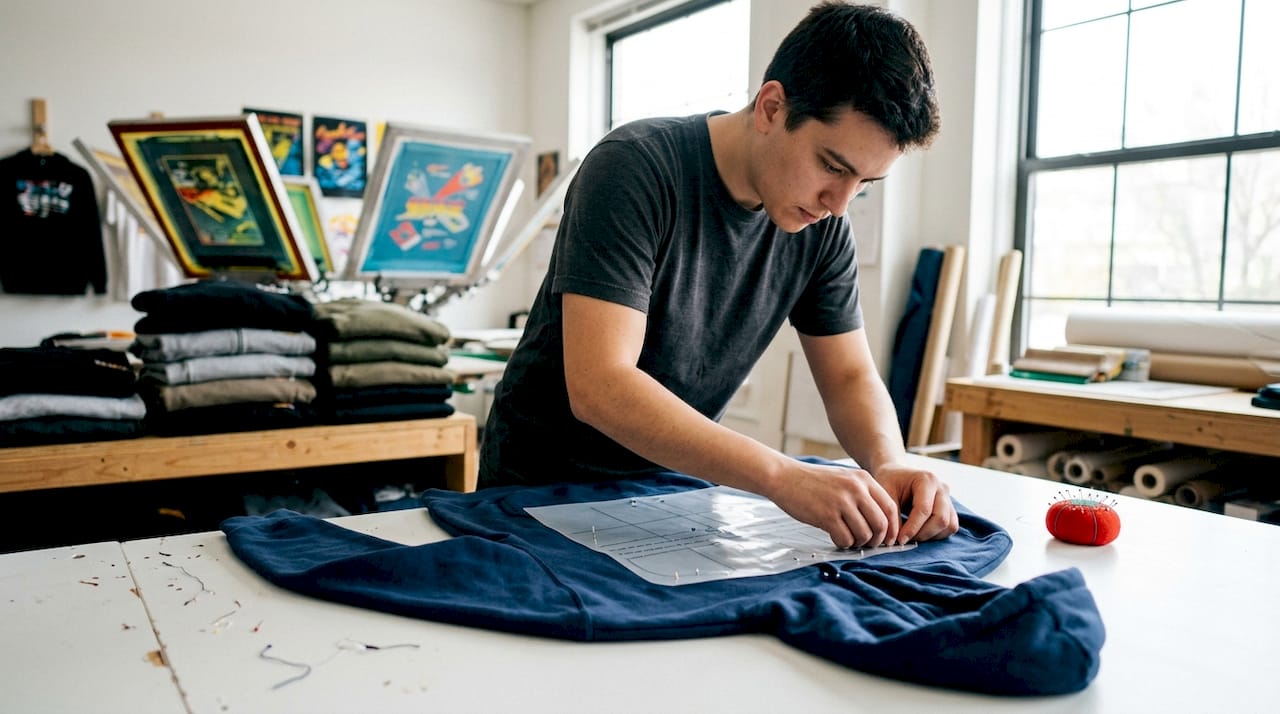
The kangaroo pocket is the single biggest constraint on pullover hoodie design. Printing over pocket seams almost always fails because the fabric shifts and the graphic distorts. Designers must either place artwork entirely above the pocket or build the composition around it intentionally.
The hood seam creates a second challenge at the back. Back graphics must account for the hood seam, which limits how high a design can extend. Sleeves and the hood itself offer smaller but useful branding opportunities for supplemental detail.
Choosing the right print method matters as much as the artwork itself. Each technique suits a different scenario:
- Screen printing: Best for bold, solid colors in high-volume runs. Delivers sharp edges and long-lasting ink.
- Embroidery: Ideal for logos and small chest graphics. Conveys a premium, tactile quality that printing cannot replicate.
- DTF (Direct to Film) and DTG (Direct to Garment): Best for full-color, photo-realistic artwork in low-volume or one-off runs. Handles gradients and fine detail well.
Fabric weight also shapes the outcome. Heavyweight fleece holds embroidery better and feels more substantial, which raises perceived quality. Lighter fleece prints more cleanly with DTG but may feel less premium in hand.
Pro Tip: Always supply artwork at 300 DPI and request a physical wash-test sample before approving a full production run. Ink that looks perfect on screen can crack or fade after three washes if the underbase is wrong.
On dark-colored fleece, screen printing requires a white underbase layer beneath every color. This underbase layer adds to the ink count and raises production cost. Plan for it early in the budget, not as an afterthought.
How do designers bring cinematic storytelling into film hoodie art?
Technical execution gets a hoodie made. Storytelling gets it worn. The most successful film-themed apparel does not simply display a movie title. Fans prefer merch that expands the film’s universe, inviting them to inhabit the cinematic world through subtle references, mood, and symbolic imagery.
“Successful designs invite fans to inhabit the cinematic world with subtle references, moods, and quotes rather than just publicizing film titles. The best movie merch feels like a piece of the world itself, not an advertisement for it.” — Vogue, “How to Get Movie Merch Right in 2026”
This philosophy reshapes how designers approach the artwork brief. Instead of asking “What does this film look like?” the better question is “What does this film feel like?” A horror film hoodie built around the color palette of a specific scene, or a sci-fi design using a character’s symbolic insignia, communicates far more than a poster reproduction ever could.
The cultural dimension runs deep. Movie-themed apparel now embodies identity and self-expression, blurring the line between merchandise and cosplay. Fans wear these pieces as part of everyday fashion, not just at conventions or screenings. That shift demands designs with genuine aesthetic depth.
Designers draw on several storytelling tools when building film-inspired hoodie art:
- Mood and atmosphere: Color grading, texture overlays, and tonal choices that mirror the film’s visual language.
- Character symbolism: Iconic objects, silhouettes, or motifs tied to a specific character arc rather than a generic cast shot.
- Quotes and typography: Dialogue lines that carry emotional weight for fans, set in type that matches the film’s era or aesthetic.
- Subtle easter eggs: Hidden references that reward attentive fans and spark conversation, building community around the garment.
Understanding expressive fashion psychology helps explain why these choices matter. Clothing communicates identity before a word is spoken. A film hoodie that captures a character’s emotional arc tells the world something specific about the person wearing it.
What is the creative workflow for a film-themed hoodie?
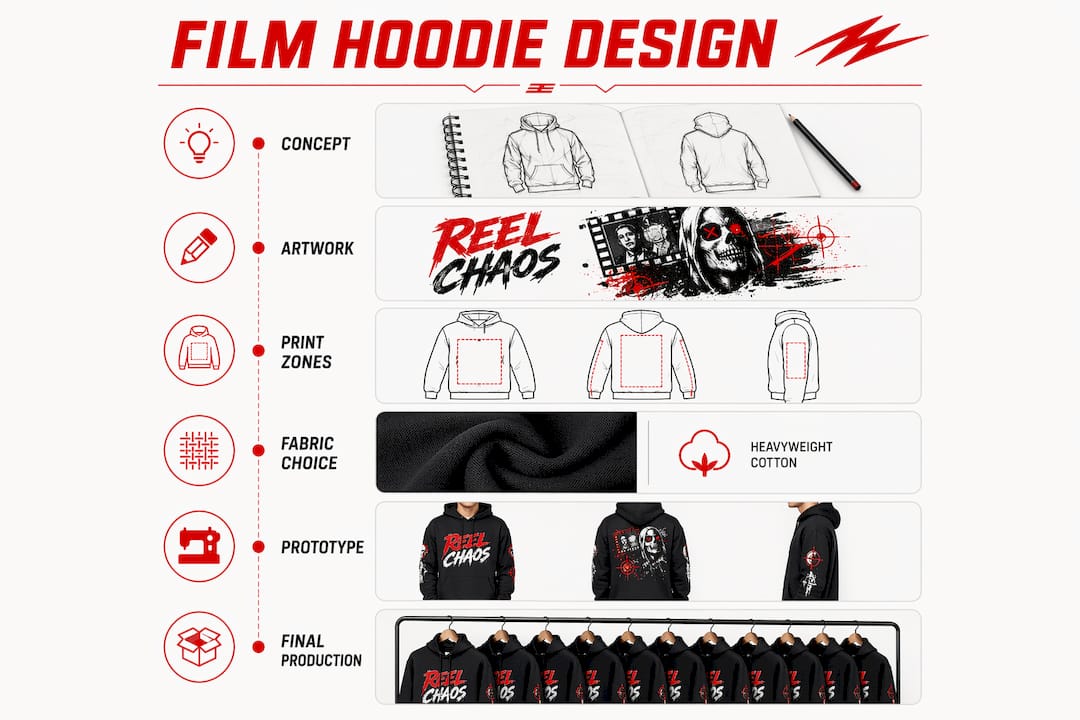
The film hoodie design process follows a clear sequence, even when individual steps vary by studio or designer. The workflow moves from cinematic immersion through prototype testing before a final product reaches production.
- Immerse in the source material. Watch the film multiple times with a designer’s eye. Note color palettes, recurring visual motifs, costume details, and the emotional tone of key scenes.
- Build a mood board. Collect reference images, color swatches, typography samples, and texture inspirations. A strong mood board aligns the whole team before a single line is drawn.
- Sketch initial concepts. Rough sketches explore composition, placement, and scale. This stage is fast and low-commitment. The goal is volume of ideas, not polish.
- Refine digitally. Move the strongest sketch into design software. Adjust proportions, test color combinations, and review how the graphic sits within the hoodie’s print zones.
- Select fabric and fit. Choose the garment blank based on the target wearer. Consider fleece weight, fit silhouette, and color options. A graphic designed for a midweight pullover may not translate to a zip-up without adjustment.
- Order a prototype sample. Print or embroider a single sample on the chosen blank. Evaluate color accuracy, placement, and how the graphic interacts with seams and pockets.
- Test for durability. Wash the sample multiple times and inspect for cracking, fading, or pilling. A design that fails at this stage needs a different print method or ink formulation.
- Finalize and produce. Approve the sample and move to full production. Document every specification so repeat runs stay consistent.
Each iteration at the prototype stage saves significant cost in production. Skipping it is the most common mistake in custom film hoodie design.
How do design choices affect commercial appeal and fan experience?
Design execution directly determines whether a film hoodie sells or sits in inventory. Back graphics consistently outsell timid chest logos in fan apparel. A bold full-back design commands attention and reads as a statement piece rather than a branded item.
Placement on the hood and sleeves adds depth without crowding the main graphic. Small graphics on the hood and sleeves justify premium pricing and give fans multiple visual touchpoints. A sleeve print of a film’s release year or a hood lining detail rewards close inspection and signals quality.
Print method selection also shapes how fans perceive value. 53% of buyers prefer premium decoration methods like embroidery for fan apparel. Embroidery on heavyweight fleece reads as craftsmanship. It holds its structure wash after wash, which matters to fans who wear these pieces regularly.
Key design decisions that affect commercial performance:
- Color contrast: High contrast between graphic and garment color maximizes visibility and photograph well on social media.
- White underbase planning: Dark fleece requires a white underbase for screen printing. Budgeting for it upfront prevents cost surprises and quality compromises.
- Scale and proportion: Oversized graphics on the back feel current and fashion-forward. Undersized graphics read as afterthoughts.
- Print method matching: DTF suits complex, photographic film stills. Screen printing suits bold, graphic-style artwork. Matching method to artwork type prevents quality failures.
Pro Tip: Before finalizing a design, photograph a printed sample against a plain background and view it at thumbnail size. If the graphic reads clearly at small scale, it will perform well on product pages and social media.
For fans who want to see how movie franchise hoodie styles translate these principles into finished products, the difference between a thoughtful design and a generic one becomes immediately obvious.
Key Takeaways
Film-themed hoodies succeed when technical print decisions and cinematic storytelling work together from the first sketch to the final wash test.
| Point | Details |
|---|---|
| Print zones define the design | Left chest, full front, and full back each carry different visual weight and require specific artwork sizing. |
| Storytelling beats logos | Designs that expand a film’s universe through mood, symbolism, and quotes outperform simple title graphics. |
| Prototype testing is non-negotiable | Wash-test samples before full production to catch ink failures and placement errors early. |
| Back graphics drive sales | Bold full-back designs outsell chest logos in fan apparel and position hoodies as statement pieces. |
| Print method must match artwork | Screen printing suits bold graphics; DTF handles photographic detail; embroidery signals premium quality. |
What I’ve learned from watching film merch get it right and wrong
The gap between a film hoodie that fans actually wear and one that ends up in a discount bin almost always comes down to one decision made early: did the designer treat this as merchandise or as storytelling?
I’ve seen technically flawless hoodies fail commercially because the artwork was a poster crop with a logo slapped underneath. The print was perfect. The fleece was excellent. But the design said nothing. It gave fans no reason to choose it over anything else.
The pieces that sell consistently are the ones where you can feel the designer actually watched the film. A color palette pulled from a specific scene. A quote that only fans of the third act would recognize. A silhouette that suggests a character without showing their face. These choices require no additional production cost. They require only genuine engagement with the source material.
Fan culture in 2026 is sophisticated. Fans who wear classic film-inspired clothing are not looking for a walking advertisement. They are looking for a piece that communicates something true about their relationship with a film. The technical craft matters enormously. But it serves the story, not the other way around.
The future of film-themed apparel belongs to designers who understand both disciplines equally. Get the print right. Then make sure the print is worth getting right.
— Nicholas
Film-inspired hoodies worth wearing, from Mclarenteehub
Mclarenteehub designs film-inspired apparel with the same principles covered here: intentional graphic placement, production methods matched to artwork complexity, and designs that go deeper than a title and a logo.
The store carries film-inspired apparel built for fans who care about both fashion and cinema. From horror to sci-fi to cult classics, each piece is designed to be worn, not just collected. If you want apparel that treats film culture with the respect it deserves, Mclarenteehub is the place to start.
FAQ
What is a movie hoodie?
A movie hoodie is a garment designed around the visual language, characters, or themes of a specific film. The best examples expand the film’s universe through mood, symbolism, and typography rather than simply displaying a title or logo.
What print method works best for film-themed hoodies?
Screen printing suits bold, graphic-style artwork in high-volume runs, while DTF and DTG handle photographic or full-color designs in smaller quantities. Embroidery works best for logos and chest graphics where a premium, tactile finish is the goal.
Why does artwork resolution matter for film hoodies?
Artwork must be supplied at 300 DPI to print cleanly at full size. Lower resolution files produce blurry or pixelated results that undermine the quality of even the best garment and print method.
How does the kangaroo pocket affect hoodie design?
The kangaroo pocket restricts front graphic placement because printing over pocket seams causes distortion. Designers place artwork above the pocket or build compositions that intentionally work around the seam.
What makes a film-themed hoodie sell well?
Bold back graphics, high color contrast, and designs rooted in cinematic storytelling consistently outperform generic logo placements. Fans respond to pieces that reflect genuine engagement with the film’s aesthetic and emotional world.
Recommended
- Movie Franchise Hoodie Styles Fans Will Love – McLaren Tee Hub
- Classic Horror Film Sweatshirts: The High-Performance Gear Every Fan N – McLaren Tee Hub
- Minimalist Film Shirts: The Sleekest Way to Rep Your Favorite Movies i – McLaren Tee Hub
- The Ultimate Movie T-Shirt Guide: Building a High-Performance Fan Ward – McLaren Tee Hub