

Buy Microwave Safe Mugs Without Guesswork, Seller Tested Safety Checks
Yes, most modern microwave safe mugs made from glazed ceramic, stoneware, or manufacturer-labeled heat-resistant glass are safe for daily reheating. The rule that matters most: check the base for a microwave-safe label before you buy, favor mugs with vented lids for reheating soups or coffee, and never microwave a mug when it’s empty. Skip anything with metallic trim or an unlabeled glaze.
TL;DR:
- Most microwave-safe mugs are made from glazed ceramic, stoneware, or heat-resistant borosilicate glass, and they often have clear labeling indicating safety.
- Thicker, well-fired dense ceramics and properly glazed stoneware resist thermal stress better and last longer through repeated microwave cycles.
- Always check for a microwave-safe label or test for safety by verifying the mark on the base or performing the water test; do not microwave empty mugs.
- Metallic trims, untested vintage ceramics, and unlabeled plastics pose risks of sparking, chemical leaching, or cracking when heated in a microwave.
- Proper long-term use involves avoiding heating empty mugs, not exposing them to sudden temperature changes, and following care instructions to maintain integrity.
Table of Contents
- Which Materials And Mug Types Are Microwave Safe?
- How Do You Check If A Mug Is Microwave Safe?
- Which Mugs And Features Are Not Microwave Safe?
- How Do You Use And Care For A Microwave Safe Mug Long Term?
- What Should You Look For When Buying A Microwave-Safe Mug?
- What Do Customers And Reviewers Actually Notice About These Mugs?
- What Actually Matters When You’re Buying A Microwave-Safe Mug?
- Why McLaren Tee Hub’s Glossy Mugs Are Built For Everyday Microwave Use
- Where To Find More On Microwave Mug Safety
- Sources
Which Materials And Mug Types Are Microwave Safe?
Glazed ceramic and stoneware make up the bulk of microwave safe mugs on the market, and for good reason. The glaze seals the clay body, so it doesn’t absorb water or heat unevenly the way raw, unglazed pottery does. That sealed surface is also what keeps a mug from developing hidden cracks that trap moisture and eventually cause it to fail under heat.
Not every ceramic performs the same way, though. Denser porcelains, sometimes made with feldspar, tend to outperform lower-density earthenware because thicker isn’t always better when it comes to thermal resistance — a denser, well-fired body resists thermal stress better while staying lighter than a thick, porous mug. That’s why a well-made stoneware mug can go through hundreds of microwave cycles without so much as a hairline crack, while a cheap earthenware mug might craze after a few months.
Borosilicate glass is the other reliable option, and it’s become common in specialty coffee shops and home offices alike. It’s engineered to resist thermal shock better than standard glass, which is why double-walled glass mugs have gotten so popular for lattes and pour-over coffee. Even so, some heat-resistant glass mugs that carry an explicit microwave-safe label still warn against heating them empty or exposing them to sudden temperature swings. The label tells you the material can handle the heat; it doesn’t mean the mug is bulletproof.
Plastic is the trickiest category. Only plastics explicitly rated “microwave safe” by the manufacturer should go anywhere near your microwave, and even those have limits on how long and how hot. A cheap, unlabeled plastic tumbler can warp, leach chemicals, or melt at the rim long before your coffee even gets hot.
A few practical patterns show up across all three materials:
- Thicker walls insulate better but heat more slowly and unevenly.
- Handles molded from the same material as the body tend to run cooler than glued-on or metal handles.
- Wider mugs with more surface area heat liquid faster than tall, narrow ones.
- Double-walled glass and vacuum-insulated ceramic keep the exterior touchable even when the contents are near boiling.
How Do You Check If A Mug Is Microwave Safe?
Start with the packaging or the product page. Reputable mug makers state clearly whether an item is microwave safe, dishwasher safe, or both, right in the specs. If you bought the mug online, that same information should be sitting on the product listing.
No labeling in sight? Work through this sequence before you use it:
- Flip the mug over and check the base for a microwave symbol, usually a small square with wavy lines, or text that says “microwave safe” or “food safe glaze.”
- Look for a “lead free” claim if the mug has any hand-painted or vintage-style finish. Older glazes sometimes used lead compounds that leach when heated.
- If there’s genuinely no marking anywhere, run the water test: fill the mug with water and microwave it briefly, then carefully touch the mug and the water separately.
- If the water is hot but the mug stays cool or just warm, it’s behaving the way a microwave safe ceramic cup should. If the mug itself is hotter than the water, the material is absorbing microwave energy it shouldn’t; you should not use it again.
Never run this test on an empty mug. Microwaves heat by exciting water molecules, and with nothing to absorb that energy, it can concentrate in the mug’s material or in trace metals within a decorative glaze, sometimes badly enough to crack the piece or scorch a decal.
Pro Tip: Keep a small dot of nail polish or a permanent marker mark on the base of any mug you’ve tested and confirmed safe. It saves you from re-testing the same mug six months later when you’ve forgotten which ones passed.
When should you skip testing entirely and just assume “not safe”? Any mug with a metallic rim or hand-applied gold leaf, any vintage piece with an unknown glaze history, or any thrift-store find with visible crazing (fine cracks in the glaze) belongs in the “display-only” category, not your microwave.
Which Mugs And Features Are Not Microwave Safe?
Some mugs fail for reasons that have nothing to do with the clay or glass itself. Here’s what actually causes the damage:
- Metallic accents. Gold rims, silver bands, and copper-flecked glazes create tiny electric fields inside a microwave that generate sparks. Whirlpool’s guidance on sparking and arcing notes that even small metal flecks in a decal can trigger it, damaging the oven’s interior and scorching the decoration in the process.
- Vintage and lead-glazed ceramics. Older glazing techniques, especially on hand-painted or imported vintage pieces, sometimes used lead-based pigments. Heat accelerates leaching, so a decorative antique mug that looks perfectly intact can still pose a real risk if you drink from it after microwaving.
- Unlabeled plastics. Without a manufacturer rating, you have no way to know the plastic’s melting point or whether it releases chemicals into hot liquid. Common culprits for microwave failures include cheap novelty tumblers and party-favor cups that were never designed for heat exposure at all.
- Decorative decals that aren’t rated for heat, even on an otherwise safe ceramic body. A mug can be stoneware through and through and still have a printed design that wasn’t fired at a high enough temperature to bond permanently, which means repeated microwave cycles can cause it to fade, bubble, or flake.
The arcing risk deserves a second look, because it surprises a lot of people. It’s not the whole trim that sparks. It’s the electric field building up around any sharp metallic edge, which is why even a thin decorative line can cause the same flash you’d see from a stray fork.
How Do You Use And Care For A Microwave Safe Mug Long Term?
A mug that’s rated microwave safe can still fail if you treat it carelessly. Most of the damage people blame on “bad quality” actually traces back to how the mug was used, not how it was made.
- Never microwave a mug without liquid in it. Follow the manufacturer’s stated time and temperature guidance rather than guessing based on your microwave’s wattage.
- If your mug came with a lid, check whether it’s vented. Meal mugs designed for reheating rely on that venting to release steam and prevent pressure from building up under a sealed lid, so skipping the vent step defeats the entire design.
- Avoid sudden temperature swings. Manufacturers consistently warn against pouring cold liquid into a mug straight out of the microwave, because that kind of thermal shock is exactly what cracks glass and stresses ceramic glazes, particularly on single-walled glass.
- Before each use, glance at the mug for hairline cracks or crazing in the glaze. Both weaken the material’s ability to handle heat evenly, and both tend to get worse, not better, over time.
Dishwasher care matters here too. Even mugs rated dishwasher safe hold up longer on a top rack, away from direct heating elements, and hand washing extends the life of any painted or decal design. For coffee and tea stains, a baking soda paste or diluted white vinegar soak works better than abrasive scrubbing, which can wear down glaze faster than the stains themselves would.
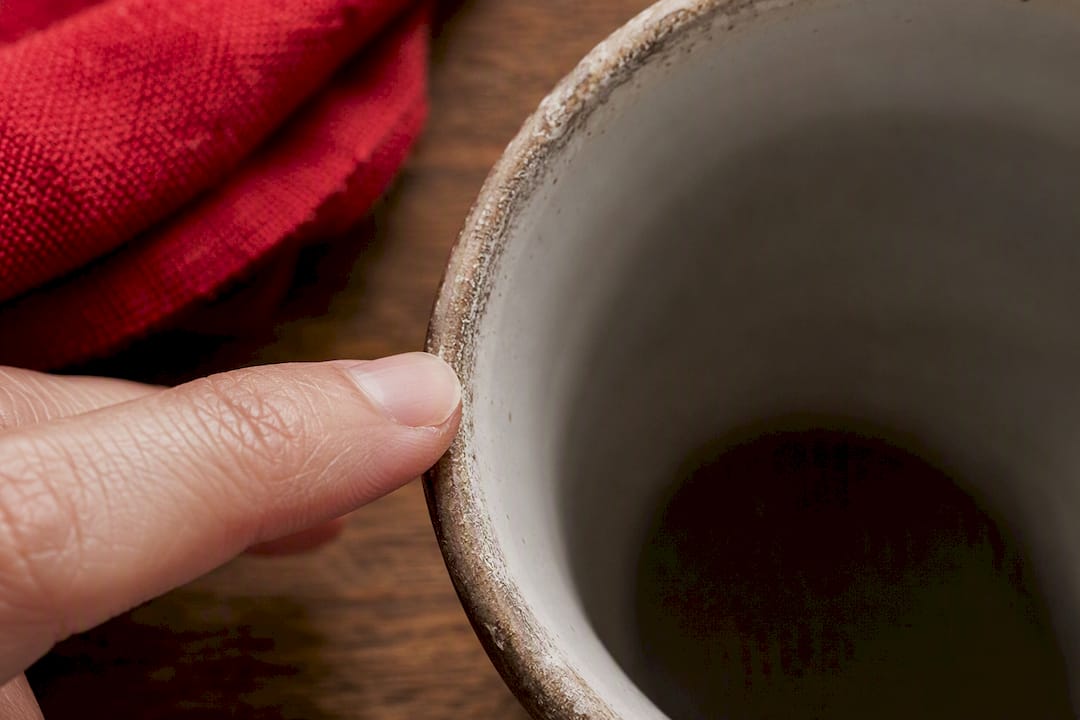
Pro Tip: If a mug starts feeling gritty or dull along the rim after months of use, that’s early glaze wear, not just staining. Once the glaze itself is compromised, the mug’s microwave-safe rating no longer applies the way it did new.
What Should You Look For When Buying A Microwave-Safe Mug?
Shopping for a mug online means you can’t pick it up and check the base yourself, so the listing has to do that work for you. A handful of details separate a trustworthy product page from a guess.
Look for explicit safety labeling first. The listing should state “microwave safe” outright, not just show a lifestyle photo of someone drinking coffee. If the mug has a decorative glaze, a lead-free statement adds real reassurance, especially for anything marketed as hand-painted or artisan-style.
Weigh insulation against fragility. Double-walled glass and thick stoneware keep drinks hot longer and stay cooler to the touch, but they’re also heavier and, in glass’s case, more prone to chipping if dropped. A thinner porcelain mug heats and cools faster, which some people actually prefer for casual coffee breaks where they’re not trying to stretch out the warmth.
Check capacity and handle design together. A medium-sized mug covers most coffee and tea drinking, while anything over 16 ounces edges into “reheat a small meal” territory, which is where a vented lid starts to matter. A handle that’s molded into the body rather than glued on tends to hold up better over years of daily washing and reheating, and it usually runs cooler when the mug comes out of the microwave.
Prioritize sellers who publish care instructions, not just a product photo. Retailers who commit to specifics, like the temperature range a material tolerates or a “do not heat empty” warning, are generally the ones who’ve actually tested the product rather than just relabeling a generic supplier item. Trustworthy glass mug listings tend to spell out exactly this kind of detail, and it’s a reasonable filter for judging any mug you’re about to buy sight unseen.
Confirm what happens if something goes wrong. A return policy and any warranty language tell you whether a seller stands behind their claims. If a listing doesn’t mention returns at all, that’s worth a second look before you check out.
Here’s how those criteria map onto everyday shopping decisions:
| What to check | Why it matters | Red flag |
|---|---|---|
| Microwave-safe label on base or listing | Confirms the manufacturer tested the material for heat | No mention anywhere on the packaging or page |
| Lid venting details | Prevents pressure buildup during reheating | Sealed lid with no venting instructions |
| Material and thickness | Determines heat retention and handle temperature | Vague “ceramic” with no glaze or density info |
| Care instructions listed | Signals the seller actually tested the product | Photo-only listing with no specs |
| Return policy or warranty | Protects you if the mug underperforms | No returns policy stated |
McLaren Tee Hub builds its mug pages around exactly this checklist. Each listing states the glaze type, notes whether the lid (where included) is vented, and lays out wash and reheat guidance so you’re not left guessing after the mug arrives. That level of detail matters more than it might seem, because a mug you can’t verify is a mug you’ll eventually stop trusting in the microwave altogether. If you’re also shopping for something that needs to survive years of daily dishwasher cycles, durable everyday mug options walk through what different price points actually get you in terms of build quality.
What Do Customers And Reviewers Actually Notice About These Mugs?
Print durability comes up constantly in mug feedback, and it’s usually the first thing to fail, not the ceramic body. A design that’s printed rather than properly glazed and fired will fade or peel after repeated microwave and dishwasher cycles, even when the mug itself is structurally sound.
Before McLaren Tee Hub lists a mug, the product team checks the manufacturer’s stated glaze type, confirms whether lids (where included) are BPA-free and vented, and verifies that care instructions match what’s printed on the packaging insert. Common customer questions center on whether a design will survive the dishwasher and whether the handle stays cool during reheating, both of which get addressed directly on the product page rather than left for the buyer to discover the hard way.
What Actually Matters When You’re Buying A Microwave-Safe Mug?
Most advice on this topic overcomplicates a simple decision. You don’t need to memorize glaze chemistry or the melting point of every plastic resin on the market. You need two things: a clear label and a habit of not microwaving anything empty.
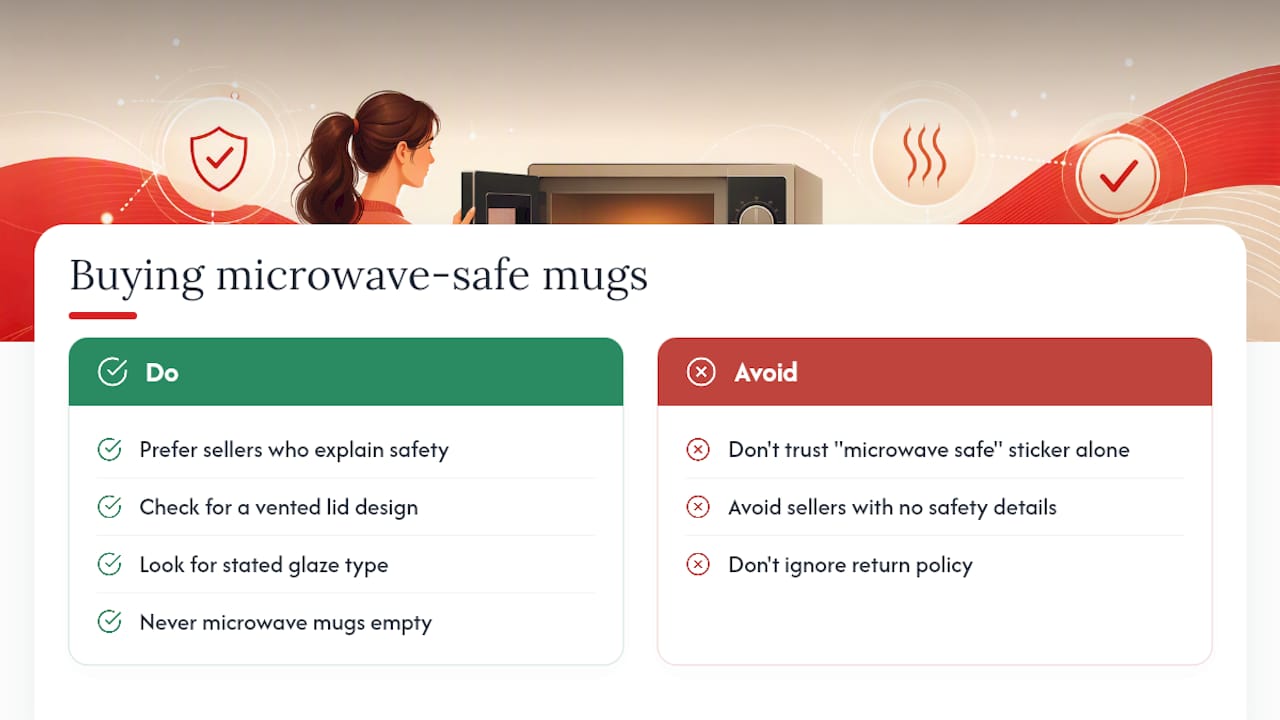
Where conventional shopping advice falls short is treating every safety claim as equally trustworthy. A sticker that says “microwave safe” on a $3 mug from an unfamiliar seller carries less weight than a listing that actually states the glaze composition, the lid’s venting design, and a care routine. That’s the real signal, not the label alone.
If you take one thing from this guide, prioritize sellers who explain why a mug is safe, not just that it is. A vented lid, a stated glaze type, and a return policy tell you more about how a mug will hold up in month eight of daily use than any single badge on the box. The rest, capacity, handle shape, color, comes down to what you actually want to drink out of every morning.
— Nicholas
Why McLaren Tee Hub’s Glossy Mugs Are Built For Everyday Microwave Use
McLaren Tee Hub’s mugs are made for people who want a mug that survives real mornings, not just a display piece for a shelf. Every glossy mug in the collection uses a glazed ceramic body rated microwave safe, with care details listed directly on the product page so you know exactly what you’re buying before it ships.

Take the Facehugger glossy coffee mug as a representative example: the glaze is fired for microwave and dishwasher use, the print is baked into the finish rather than stuck on top, and the listing spells out the care steps so there’s no guesswork about how hot is too hot. If you’re shopping for a gift rather than a mug for yourself, the funny coworker mug guide covers picks that hold up to daily office reheating without sacrificing the design people actually want to display at their desk. Pick a design you love, check the care tag on the page, and add it to your cart. That’s the whole process.
Where To Find More On Microwave Mug Safety
A few pages go deeper on the technical side of what makes a mug behave safely under heat, if you want to check the details yourself before buying:
- ArtyCera’s guide to checking microwave safety walks through the water test and common label markings in more detail.
- Glasafe’s explainer on borosilicate glass covers thermal shock and why denser materials perform better under repeated heating.
- Whirlpool’s sparking and arcing safety guide explains exactly how metallic trim damages microwave ovens.
- Corelle’s vented meal mug specs show what a properly designed venting system looks like in practice.
These sources cover the mechanics behind the rules in this guide, from why empty mugs crack to why gold rims spark, in case you want the deeper technical explanation behind any specific claim.
Sources
- How to tell if a mug is microwave safe — ArtyCera
- Can borosilicate glass be used in the microwave? — Glasafe blog
- Microwave sparking and arcing safety guide — Whirlpool
- CorningWare French White 20-ounce Meal Mug with Vented Lid — Corelle