

How Cinema Culture Shapes Fashion: A Bold Style Guide
Cinema shapes fashion more directly than any runway. From the moment Katharine Hepburn walked onto a 1930s film set in trousers, the screen became the most powerful style authority in the world. Films don’t just reflect what people wear. They decide it.
Here’s what that influence actually looks like in practice:
- Iconic costumes become wardrobe staples copied by millions
- Films challenge gender norms and rewrite dress codes
- Emotional narratives attach cultural meaning to specific garments
- Costume designers translate cinematic storytelling into wearable identity
- Celebrity style on screen drives mainstream trends within days
- Cinematic eras trigger cyclical fashion revivals
- Pop culture brands like Mclarenteehub channel that same energy into bold, film-inspired apparel
Table of Contents
- How cinema culture shapes fashion through history
- Why films build brand identity better than ads
- How Mclarenteehub brings cinematic style to pop culture fans
- Why film-inspired fashion connects so deeply
- How film genres shape distinct fashion aesthetics
- Mclarenteehub turns your favorite films into something you can wear
- Key Takeaways
How cinema culture shapes fashion through history
The clearest proof of cinema’s grip on style is in the timeline. Every decade has a film moment that cracked fashion wide open.
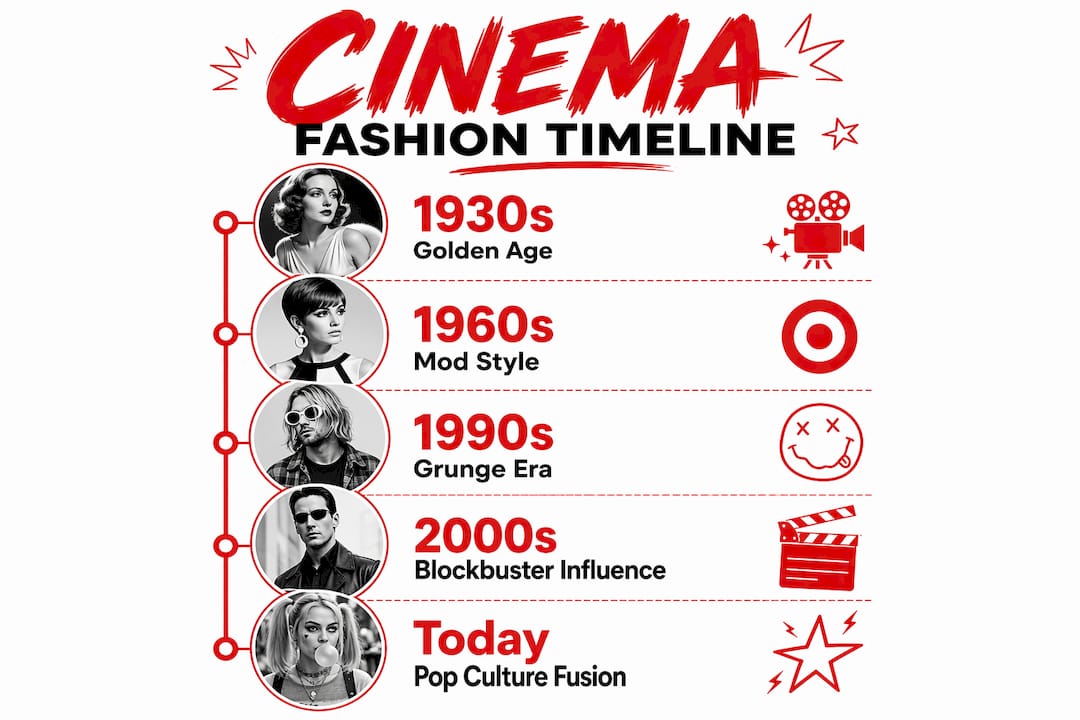
| Era | Film / Icon | Fashion Impact |
|---|---|---|
| 1930s | Katharine Hepburn, Greta Garbo, Marlene Dietrich | Pioneered trousers for women at a time when dresses were the social expectation |
| 1930s | Joan Crawford in Letty Lynton | Adrian’s ruffled gown inspired Macy’s to sell many copies |
| — | Audrey Hepburn in Breakfast at Tiffany’s | Givenchy’s little black dress is iconic in fashion history |
| 1970s | Diane Keaton in Annie Hall | Menswear layering redefined gendered fashion codes |
| — | Top Gun | Bomber jackets and aviator sunglasses surged; aviator shade sales reportedly jumped 40% |
| — | Clueless | Plaid skirts and preppy minimalism, a direct reaction against grunge |
The 1930s were the pivot point. Hollywood’s “Big 5” studios, including MGM, Paramount, and Warner Bros., recognized that costume designers were more powerful than Paris couturiers for American women. Gilbert Adrian dressed Garbo and Crawford, then launched his own fashion house. Hubert de Givenchy dressed Hepburn across six films, turning a working relationship into one of fashion history’s most influential partnerships.
Clueless costume designer Mona May put it plainly: when she scouted high schools before filming, she found “Kurt Cobain, Nirvana, girls looking like boys, baggy shirts, baggy pants.” The plaid and preppy looks she created were a deliberate counter-statement. That contrast is exactly why they landed.
Why films build brand identity better than ads
Fashion and film operate in a feedback loop. Studios need designers for distinctive costumes. Designers need the screen to reach audiences at emotional scale. The exchange keeps accelerating.
Costume designer Heidi Bivens, who worked on projects from Spring Breakers to Euphoria, describes the current moment with unusual clarity:
The reason film outperforms a social media ad is simple: a film stays with you. As creative consultant Sasha Mills has noted, a well-timed Instagram Reel generates engagement, but film offers context a square on a screen never can. Audiences remember what characters wore because they remember why those characters mattered.
The practical results back this up. After Challengers, Loewe sold the “I Told Ya” tee worn by Zendaya and Josh O’Connor on-screen for $330. It sold out fast. The halo effect of cinema only works, though, when the original content feels authentic. Forced product placement breaks the spell immediately.
Key reasons film beats traditional advertising for fashion brands:
- Narrative context makes clothing feel aspirational rather than commercial
- Audiences form emotional bonds with characters, then extend that bond to what they wear
- Cinematic campaigns generate press tour buzz that multiplies across social platforms
- Authentic brand integration creates organic cultural conversation, not paid reach
How Mclarenteehub brings cinematic style to pop culture fans
Mclarenteehub was built on exactly this principle: that the most powerful fashion statements come from films people genuinely love. The brand specializes in bold, pop culture-themed apparel that pulls directly from cinematic heritage, turning iconic moments into wearable pieces for young adults who want their clothes to say something.
The design approach at Mclarenteehub treats film quotes on clothing as cultural shorthand, not decoration. A line from Pulp Fiction on a t-shirt isn’t just a graphic. It’s an instant signal to everyone who recognizes it. That recognition is the whole point.
- T-shirts and hoodies reference specific films, characters, and moments with graphic precision
- Film-themed hoodies are designed with fan engagement in mind, not generic pop culture aesthetics
- Mugs, accessories, and gifts extend cinematic identity beyond clothing
- The visual identity, bold reds and purples against dark backgrounds, mirrors the high-contrast energy of great cinema
Pro Tip: When shopping for film-inspired pieces, look for designs that reference a specific scene or line rather than just a character’s face. Specificity is what separates a genuine fan piece from a generic licensed product.
Costume theory backs this up. Successful film-inspired fashion depends on the narrative purpose of the original costume, crafted to convey character emotion and story. Mclarenteehub applies that same logic: every piece connects to a real cinematic moment, not just a brand.
Why film-inspired fashion connects so deeply
The emotional pull of cinema-inspired style isn’t accidental. It’s structural.
- Mise-en-scène transfers to mood. Cinema’s use of color, lighting, and space shapes how audiences feel. Designers use those same tools in collections, and fashion collections built on cinematic techniques carry that emotional charge into the real world.
- Costumes encode memory. Film costumes are deliberate narrative tools where every accessory advances character and story. When you wear something that echoes that, you carry the story with you.
- Belonging through shared reference. Wearing a piece tied to a beloved film signals membership in a community. That’s why fan apparel has outlasted every trend cycle.
- Fashion theorists frame films as microcosms. Scholars argue that cinematic imagery transfers meaning to garments in a way similar to the Kuleshov Effect: context changes everything. A leather jacket means rebellion because of Marlon Brando and James Dean, not because of the jacket itself.
- Digital platforms compress the cycle. Trend cycles now move in days, not seasons. A costume seen on a press tour can inspire retail collections before the film even opens.
How film genres shape distinct fashion aesthetics
Genre is one of the most underrated drivers of style movements. Different genres produce entirely different visual languages, and those languages bleed into mainstream fashion in distinct ways.
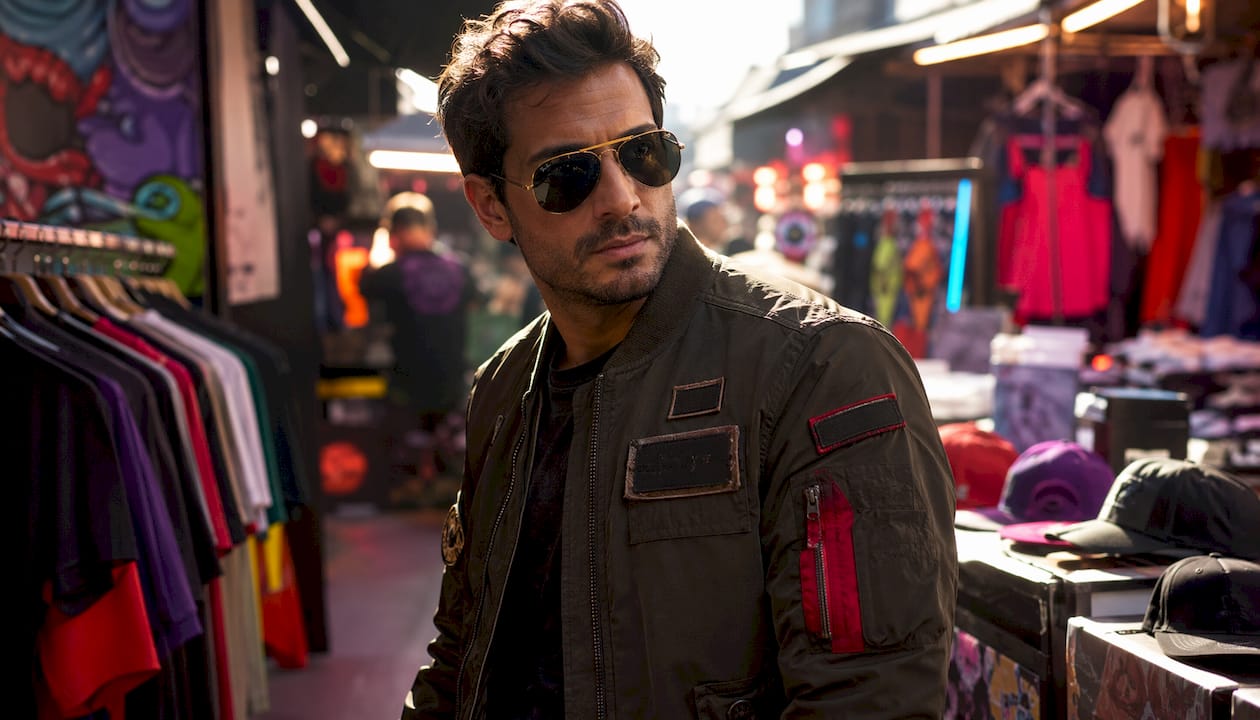
Action and thriller films deliver utilitarian cool: bomber jackets, tactical gear, aviator sunglasses. Top Gun and The Matrix both created lasting aesthetic templates that still show up on runways decades later. The Matrix’s black leather and trench coats predicted the sleek monochrome tailoring that Balenciaga has returned to repeatedly.
Romantic dramas and period films revive historical silhouettes with contemporary relevance. Productions set in the 1920s or 1970s consistently trigger high-street revivals of wide-leg trousers, bold prints, and art deco details. The Great Gatsby (1974) brought floaty feminine silhouettes back into vogue almost immediately after release.
Teen comedies hit hardest with youth culture. Clueless and Rebel Without a Cause didn’t just reflect what teenagers wore. They defined it. James Dean’s blue jeans, white t-shirt, and blouson jacket became the unofficial uniform for young people across the United States.
Gothic and horror fuel maximalist self-expression. Robert Eggers’s Nosferatu pushed somber palettes and Victorian silhouettes directly onto Fall/Winter 2024–25 runways, with designers like Rick Owens pushing gothic aesthetics further than the film itself.
Sci-fi gives designers permission to go further than any other genre. The visual freedom of science fiction, from Alien to Dune, produces costume work that fashion houses treat as concept blueprints rather than period references.
Mclarenteehub turns your favorite films into something you can wear
If you’ve spent any time thinking about how cinema shapes what you wear, Mclarenteehub is the logical next step. The store carries classic film-inspired clothing built for people who want their wardrobe to reflect the films they actually care about, not just a generic pop culture aesthetic.
The range covers everything from a Pulp Fiction-style tee to film-themed mugs and accessories that make real gifts for real fans. Every piece is designed with the specificity that separates genuine cinematic homage from mass-market licensing. Browse the full collection at mclarenteehub.com and find the piece that matches your film.
Key Takeaways
Cinema shapes fashion by embedding iconic styles into cultural memory, making film-inspired clothing one of the most emotionally resonant categories in casual wear.
| Point | Details |
|---|---|
| Historical milestones drive trends | Films from the 1930s produced fashion shifts copied by millions, from trousers for women to preppy plaid. |
| Authenticity determines impact | The halo effect of cinema-inspired fashion only works when the original content feels genuine to audiences. |
| Genre shapes aesthetic | Action, gothic, sci-fi, and teen comedy each produce distinct visual languages that translate directly into mainstream style. |
| Digital acceleration | Trend cycles now compress to days, meaning a film costume can inspire retail collections before a movie even opens. |
| Mclarenteehub | Carries bold, film-specific apparel and accessories designed for fans who want cinematic authenticity in what they wear. |
Recommended
- Find Classic Film Inspired Clothing That Turns Heads – McLaren Tee Hub
- How Film Quotes Appear on Clothing: The 2026 Guide – McLaren Tee Hub
- Why Comfort Wear Suits Movie Nights: Your Style Guide – McLaren Tee Hub
- The Ultimate Movie T-Shirt Guide: Building a High-Performance Fan Ward – McLaren Tee Hub