

Graphic Tees: Cotton vs Polyester Shirts That Last 40–50 Washes
Cotton wins for everyday printed tees and sensitive skin, polyester wins for high-sweat athletic wear and shape retention, and a cotton-poly blend wins when you want one shirt that handles both. Knit type, fabric weight, and finishing treatments can shift these outcomes, so the “right” fabric still depends on how you plan to wear and wash the shirt. The breakdown below covers the fiber science, the trade-offs, and the care habits that decide how long any of these shirts actually last.
TL;DR:
- Pure cotton shirts are preferable for detailed prints and soft feel, but they tend to shrink more and wrinkle easily without pre-shrinking treatment.
- Polyester shirts excel at shape retention, resist wrinkles, and are ideal for high-sweat activities, though they can feel slick and retain odors more stubbornly.
- Blended fabrics like 50/50 or 65/35 cotton-polyester reduce shrinkage and increase durability, making them better for frequent washing and long-term wear.
- Quality and construction significantly influence fabric performance, with lighter weaves offering more breathability and weight affecting warmth and drape.
- Proper care, such as washing in cold and air drying, extends the life of both cotton and polyester shirts and preserves print quality.
Table of Contents
- Cotton vs Polyester Shirts: How the Fibers Actually Behave
- The Real Pros and Cons of Cotton Shirts
- The Real Pros and Cons of Polyester Shirts
- Cotton-Poly Blends: Why They Exist and Which Ratio to Buy
- How to Wash and Care for Cotton and Polyester Shirts
- Printing, Odor, and Sustainability: The Trade-Offs Nobody Mentions
- What McLaren Tee Hub Looks for in a Shirt Fabric
- A Shopper’s Checklist for Choosing the Right Shirt
- Find Your Fabric Match at McLaren Tee Hub
- Sources
- FAQ
Cotton vs Polyester Shirts: How the Fibers Actually Behave
The difference between these two fabrics starts at the molecular level, and it explains almost everything else in this article. Cotton is hydrophilic. Its fiber structure pulls in moisture and holds it, which is why a cotton shirt feels heavier and cooler once you start sweating. Under standard lab conditions, cotton has an equilibrium moisture regain of roughly 7 to 8.5%, meaning the fiber itself absorbs sweat rather than just moving it around.
Polyester works the opposite way. As a synthetic polymer, it’s naturally hydrophobic, with a moisture regain of only about 0.4%. It doesn’t absorb sweat into the fiber at all. Instead, manufacturers engineer the yarn’s cross-section and add surface finishes so moisture travels along the fabric surface and evaporates fast. That’s the entire premise behind “wicking” activewear: the fiber isn’t drying you off, it’s refusing to hold water in the first place.
Construction changes how much of this you actually feel:
- A loose jersey knit breathes more than a tight, dense knit, regardless of fiber.
- Mesh panels in athletic shirts boost airflow on top of whatever wicking the polyester provides.
- Heavier fabric, measured in grams per square meter, traps more warmth and drapes differently than a lightweight tee, and checking the GSM listed on a garment tells you more about comfort than the fiber name alone.
- Percale-style cotton weaves feel crisper and cooler than a heavy cotton fleece.
A lightweight cotton jersey and a heavy cotton fleece behave almost like different materials, even though the tag says the same thing.
The Real Pros and Cons of Cotton Shirts
Cotton’s biggest selling point isn’t really breathability, it’s how it feels against skin. That soft hand comes from the natural fiber’s structure, which is also why cotton tends to cause fewer irritation issues for people with sensitive skin compared to synthetic alternatives. If you’ve ever wondered why a $30 graphic tee feels noticeably softer than a $10 one, the answer is usually cotton quality, specifically whether it’s ring-spun or combed.
Cotton is also the gold standard for printing. Direct-to-garment printing and water-based inks bond directly into the cotton fiber, producing sharper detail and a softer print hand than most synthetic alternatives allow.
The trade-offs are real, though:
- First-wash shrinkage on untreated cotton typically falls in the 3% to 8% range, which can turn a perfect fit into a snug one overnight.
- Cotton wrinkles more readily than synthetic fabric and needs ironing or steaming to look sharp.
- Durability varies a lot by construction. A cheap, thin cotton tee wears out faster than a heavier ring-spun cotton shirt.
Pro Tip: Check the tag for “pre-shrunk” or “sanforized” before buying. That single word tells you whether the shirt has already been through the shrinkage process, or whether you should size up to compensate.
Cotton makes the most sense for graphic tees, everyday casual wear, and anyone prioritizing softness and print quality over athletic performance.
The Real Pros and Cons of Polyester Shirts
Polyester’s strongest argument is consistency. It holds its shape wash after wash, resists wrinkles without ironing, and shows near-zero shrinkage in normal home laundering. For anyone tired of shirts that fit differently every time they come out of the dryer, that stability is the whole appeal.
Engineered polyester also outperforms cotton for anything involving heavy sweat. The wicking finishes built into performance fabric move moisture to the surface, where it evaporates fast instead of soaking into the shirt. That’s why running shirts, gym gear, and staff uniforms lean almost universally on polyester or poly-heavy blends.
The downsides show up in how it feels and how it ages:
- Polyester can feel slick or clingy against skin, especially in cheaper, thinner constructions.
- It tends to hold onto odor more stubbornly than cotton, even after washing.
- Printing polyester well usually requires sublimation dye or specialized inks with pretreatment, which limits design options compared to cotton’s easier DTG process.
Polyester earns its keep in activewear, uniforms, and any shirt where you want minimal maintenance and maximum shape retention over frequent washing. It’s a weaker choice when comfort against bare skin or vivid custom printing matters more than durability.
Cotton-Poly Blends: Why They Exist and Which Ratio to Buy
Blends exist because pure fibers force a trade-off nobody wants to make. Cotton feels great but shrinks and wrinkles. Polyester holds its shape but can feel synthetic and print poorly. Mixing the two fibers in a single yarn splits the difference, and the ratio you choose determines exactly how far it leans in either direction.
- 50/50 cotton-poly. The most common blend for staff shirts and multipacks. It cuts shrinkage dramatically compared to pure cotton, holds up to more wash cycles, and still takes DTG printing reasonably well. Lab comparisons cited by fabric guides even show some 50/50 jersey knits beating 100% cotton on air permeability, since the blend often uses a lighter, more porous construction.
- 65/35 poly-cotton. Leans harder toward durability and wrinkle resistance, which is why it shows up often in workwear and school uniforms where the shirt gets washed constantly.
- 80/20 cotton-poly. Keeps most of cotton’s soft hand while adding just enough polyester to reduce shrinkage, a good pick for premium graphic tees that still need to hold detail in the print.
- Tri-blends (cotton, polyester, rayon). These deliver the softest hand and a vintage, draped fit that fans of retro-style tees tend to love, though the rayon content can trade away some long-term durability compared to a straightforward cotton-poly blend.
Buy a blend when you want one shirt to survive frequent washing and still print well. Choose a pure fiber only when you have a specific priority, like maximum wicking or maximum print vibrancy, that a blend would compromise.
How to Wash and Care for Cotton and Polyester Shirts
Most of the damage shirts take happens in the laundry, not on your back. Pure cotton without pre-shrinking can lose several percent of its size in the very first hot wash and dry cycle, which is why sanforized or “pre-shrunk” cotton exists. Wash cotton in cold or warm water, skip the high-heat tumble dry setting, and air-dry when you can to protect both size and print quality.
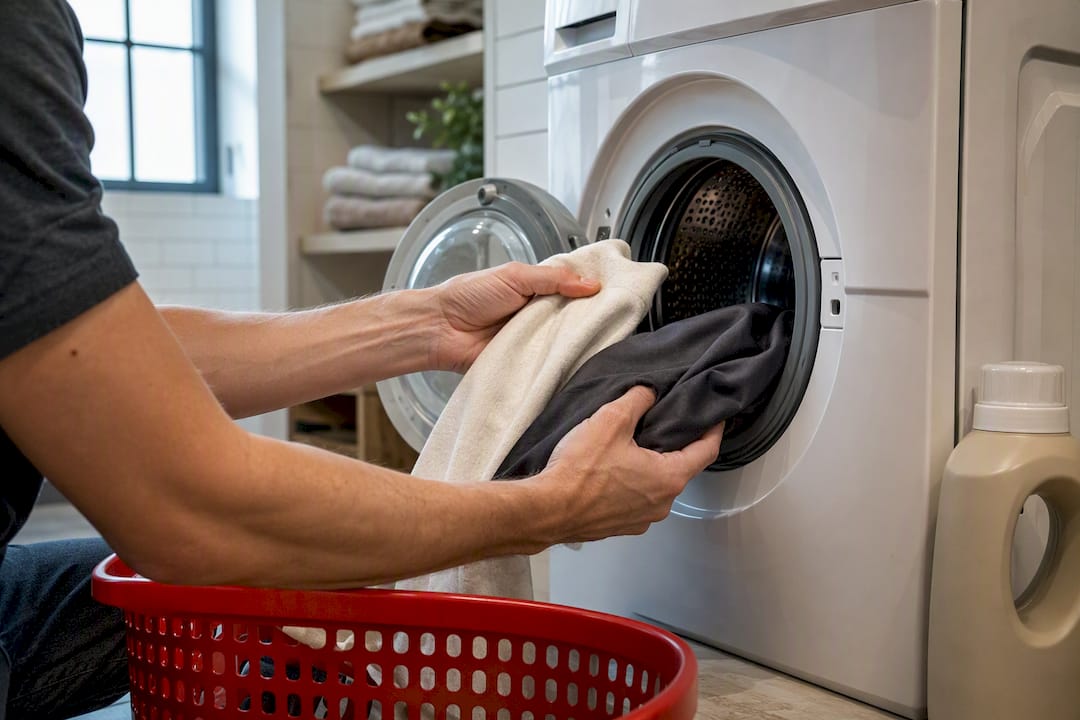
Polyester and polyester-heavy blends need a gentler approach for a different reason: heat can damage synthetic fibers and set in odor rather than release it. Cold water washes and low-heat or air drying keep the wicking finish intact longer.
Durability numbers back up why blends often win on cost-per-wear. Lab-reported averages put pure cotton tees at roughly 15 to 25 wash cycles before showing real wear, while 50/50 and 65/35 blends often last 40 to 50 cycles. That’s more than double the usable life for a shirt that usually costs only a little more upfront.
Watch for these signs a shirt has reached the end of its life:
- Visible pilling across high-friction areas like the underarms or sides
- Print cracking, fading, or peeling at the edges
- Fabric that’s gone thin enough to see through at the shoulders
- Collar or hem seams pulling loose after repeated stretching
Rotating shirts instead of wearing the same one every few days, and always washing inside-out, adds real months to a printed tee’s life regardless of fiber.
Printing, Odor, and Sustainability: The Trade-Offs Nobody Mentions
Fabric choice affects more than how a shirt feels. It determines what kind of print you can even put on it. Direct-to-garment and water-based screen printing bond into cotton fibers directly, producing detailed, soft-hand graphics. Polyester usually needs sublimation printing or specialized inks with pretreatment to get comparable results, which is part of why most graphic tee brands default to cotton or cotton-blends for detailed artwork.
Odor is another polyester weak point. Its fiber surface allows microbes to cling more persistently than they do to cotton, which is why a synthetic gym shirt can smell stronger after one wear than a cotton shirt would. Anti-microbial finishes and more frequent washing help, but they don’t fully close the gap.
On sustainability, both fibers carry real trade-offs:
- Cotton is a natural, biodegradable fiber, but conventional growing methods use significant water and pesticides.
- Polyester doesn’t biodegrade and sheds microfibers in every wash cycle, an ongoing concern for waterways.
- Recycled polyester (rPET) cuts down on virgin petroleum use without changing the shedding issue.
Buyers who care about this should check labels for organic cotton or recycled polyester content, and wash synthetic blends in a mesh filter bag when possible.
What McLaren Tee Hub Looks for in a Shirt Fabric
Selling pop-culture graphic tees for years offers insight into which fabric claims actually hold up in someone’s closet. Some fabric guides build around one question: will this shirt still look and feel good after twenty washes, not just on day one?
That’s why the print surface, hand-feel, and wash durability all get weighed together rather than picked in isolation. A shirt with a stunning print that shrinks two sizes in the wash isn’t a win, and neither is a bulletproof synthetic tee that feels like a windbreaker against skin.
For readers who want the deeper mechanics, the tri-blend versus cotton breakdown and the eco-friendly graphic tee checklist go further into fiber sourcing and long-term wear than this guide has room for.
— Nicholas
A Shopper’s Checklist for Choosing the Right Shirt
Before I buy or recommend any shirt, I run through the same short list. First, nail down the primary use: is this shirt for a bold graphic print, everyday wear, or the gym? That single answer eliminates half the options immediately. Next, check the fabric tag and the GSM if it’s listed. Then confirm print compatibility and whether the cotton is pre-shrunk, since that determines the size you should actually buy.
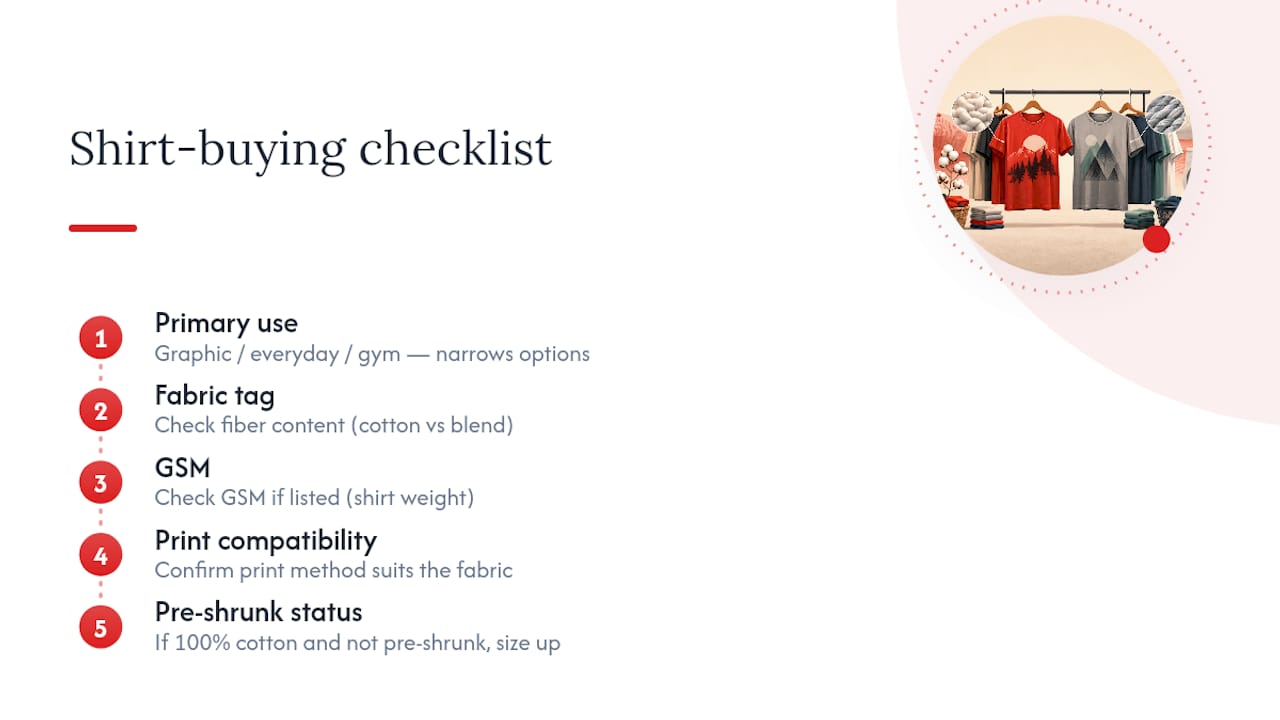
Pro Tip: Size up on 100% cotton shirts if they’re not marked pre-shrunk. You’re trading a slightly looser first wear for a correct fit after the shrinkage happens, and it’s cheaper than replacing a shirt that no longer fits.
Weigh cost-per-wear, not sticker price. A blend that costs a little more but lasts twice as long almost always wins.
Find Your Fabric Match at McLaren Tee Hub
Mclarenteehub builds its pop culture t-shirt collection around exactly the trade-offs covered in this guide: ring-spun cotton for shirts where print detail and softness matter most, and tri-blend options for anyone who wants a lighter, more draped fit with a bit more wash resilience. If your priority is showing off a sharp fan-art design, cotton and cotton-heavy blends are going to carry that print better than a synthetic alternative ever will.
If you’re picking a shirt for everyday wear or as a gift, start with the ring-spun cotton graphic tees for maximum print vibrancy and softness, or step up to a tri-blend if you want a bit more shrink resistance without losing the vintage drape. For colder layering, the hoodie and sweatshirt collection applies the same fabric logic in heavier weights. Whichever route fits your closet, the Pop Culture T-shirts collection is the place to start browsing designs and fabric options side by side.
Sources
The fiber and laundering figures in this guide come from a small set of sources worth checking directly: Wikipedia’s yarn conditioning entry for moisture regain data, Into The AM’s fabric guide for blend and wash-durability comparisons, NatuClothes’ fiber comparison for shrinkage and wicking behavior, and Wearlie’s printing guide for print-method compatibility. Readers sourcing print-on-demand shirts may also find this print-on-demand supplier guide useful for understanding fabric constraints from the production side.
- Yarn conditioning — Wikipedia
- Fabric Guide: Cotton vs Polyester vs Blends — Into The AM
- Is Polyester Better Than Cotton? A Data-Driven Comparison — NatuClothes
- Cotton vs Polyester vs Blends: Best T-Shirt Fabric — Wearlie
FAQ
Is cotton or polyester better for a graphic tee?
Cotton is generally the better choice for graphic tees because water-based and DTG printing bond directly into the fiber, producing sharper, softer-feeling prints than most polyester options.
Does polyester shrink less than cotton?
Yes. Polyester typically shows near-zero shrinkage in standard washing, while untreated cotton can shrink 3% to 8% on its first wash unless it’s labeled pre-shrunk or sanforized.
What’s the best fabric for summer shirts?
Lightweight cotton in a breathable jersey or percale weave usually performs best for summer casual wear, since cotton’s high moisture regain pulls sweat away from skin at low activity levels.
Are cotton-poly blends worth buying over pure cotton?
Often, yes. Blends like 50/50 or 65/35 reduce shrinkage, extend wash-cycle durability to roughly 40 to 50 cycles compared to 15 to 25 for pure cotton, and still print reasonably well.
Does Mclarenteehub sell cotton or polyester shirts?
Mclarenteehub’s t-shirt collection offers ring-spun cotton for print-focused graphic tees and tri-blend options for shoppers who want a softer, more draped fit with added durability.