

Hoodie Size Guide: Measure, Compare, and Choose Right
Measure pit-to-pit and body length on a hoodie you already own, then match those two numbers to a unisex size chart. The pit-to-pit measurement (armpit seam to armpit seam) doubles to approximate your body chest circumference, and once you have that figure, picking between a clean fit and an oversized one is just a matter of preference.
Here’s the fast version:
- Grab a reference garment. Any hoodie that fits the way you want this one to fit works as your baseline.
- Measure three things. Pit-to-pit, body length (top of shoulder to hem), and sleeve length.
- Match and decide. Compare those numbers to the chart below, then size up or down based on whether you want a clean fit, a relaxed drape, or a fully oversized silhouette.
If you’ve got a hoodie you love, measure it right now. Chest, length, sleeve. Then jump to the chart below and find its twin.
McLaren Tee Hub builds its garment specs around this same laid-flat method, because it’s the one measurement approach that works no matter which brand’s label is sewn into the collar.
Key Takeaways
Picking the right hoodie size comes down to measuring pit-to-pit and body length on a reference garment, then matching those numbers to a chart that states its measurement method clearly.
| Point | Details |
|---|---|
| Measure laid flat | Pit-to-pit, body length, and sleeve length give the three numbers that actually predict fit. |
| Double pit-to-pit for circumference | A 22" pit-to-pit roughly equals a 44" chest circumference, fitting a 38 to 41 inch actual chest. |
| Shoulder width matters most | It’s harder to fix after purchase than a loose body or long sleeve, so size up when in doubt. |
| Account for shrinkage | Budget a half inch to a full inch of body length loss with heat drying, and wash cold to avoid it. |
| Check listing-specific specs | McLaren Tee Hub posts laid-flat measurements on every product page so you can compare before buying. |
Table of Contents
- Hoodie Size Guide Chart: XS Through 3XL in Inches and Centimeters
- How Do You Measure a Hoodie or Your Body for Sizing?
- Which Hoodie Fit Should You Choose Between Sizes?
- Does Fabric Weight Affect Which Size You Should Buy?
- How Fit Choices Change the Look of a Graphic Hoodie
- How Do You Convert Inches to Centimeters for Hoodie Sizing?
- Why Does Shoulder Width Matter as Much as Chest Size?
- How Do Body Shape Differences Change Your Size Pick?
- An Editor’s Take on the Sizing Mistakes That Cause Returns
- How McLaren Tee Hub Sizes Its Hoodies
- Frequently Asked Questions
- Sources
Hoodie Size Guide Chart: XS Through 3XL in Inches and Centimeters
A garment chart only works if you know what’s actually being measured. Pit-to-pit is a flat width, not a full circumference. Double it, and you get the number that corresponds to your body chest measurement. Most standard-fit hoodies carry slight tolerances in measurements, since fabric and cut can vary slightly even within one production run.
A few notes on reading this correctly:
- Add roughly a half inch of tolerance to any figure above. A 22" chest width could reasonably run 21.5" to 22.5" off the same size label.
- A 22" pit-to-pit (44" circumference) typically fits someone with a 38 to 41 inch actual chest, since hoodies build in 4 to 6 inches of ease over your real measurement. That’s noticeably more room than a t-shirt gives you.
- These numbers reflect a regular fit. Slim cuts run tighter through the body; oversized styles run wider and longer across every size, which the chart section below explains in more detail.
Regular-fit charts like this one commonly land near 20" for a small, 22" for a medium, and 24" for a large, which is a useful sanity check if a brand’s own numbers seem off from what you’re used to.
How Do You Measure a Hoodie or Your Body for Sizing?
Lay the hoodie flat on a bed or table, front side up, with no wrinkles pulling the fabric off-grain. Measure straight across from one armpit seam to the other. That’s your pit-to-pit number, and it’s the single most reliable figure on the entire garment.
For body length, run the tape from the highest point of the shoulder, right where it meets the hood seam, straight down to the bottom hem. Sleeve length gets measured two ways depending on the cut: shoulder seam to cuff for a standard set-in sleeve, or center-back neck to cuff for drop-shoulder styles, since the shoulder seam on those sits somewhere down the arm rather than at the joint.
No reference hoodie on hand? Wrap a soft tape around the fullest part of your chest, keeping it level and snug but not tight. For torso length, measure from your high shoulder point down to wherever you want the hem to land.
- Lay the garment flat. Never measure while wearing it, since stretch and body curves distort every number.
- Measure the hem and ribbing relaxed, not stretched, or you’ll undersize yourself.
- A soft tape measure works best. String plus a ruler is a fine backup if that’s all you’ve got.
- Stick to inches if you’re comparing against a U.S. size chart, since most American brands list measurements that way.
Pro Tip: Measuring a favorite hoodie you already love wearing usually gives you a more reliable match than trusting a brand’s size label alone, since silhouette choices like drop-shoulder cuts and rib height vary so much across brands.
Which Hoodie Fit Should You Choose Between Sizes?
Three fit goals drive almost every sizing decision: clean and everyday, relaxed streetwear, or full oversized for layering. Each one weighs the same four measurements differently.
- Clean fit: prioritize chest ease and sleeve length landing right at the wrist bone.
- Relaxed fit: allow extra chest room and slightly longer sleeves that bunch a bit at the cuff.
- Layering fit: size up specifically for shoulder width and body length, since you need room for a shirt or jacket underneath.
Most charts add roughly 1 to 2 inches of pit-to-pit width per size jump, so going up one size from your measured fit rarely throws off the whole silhouette. As a rough secondary check, someone around 5’6" and 140 pounds typically lands in a medium, while someone closer to 6’0" and 190 pounds usually sits in a large to extra large. Treat that as a backup, not a substitute for your own numbers.
Pro Tip: Drop-shoulder and boxy cuts change the math entirely. A drop shoulder shifts the seam down the arm, which shortens your effective sleeve length even if the total sleeve measurement stayed the same, so oversized styles often need a size up just to keep sleeves at a normal length.
Does Fabric Weight Affect Which Size You Should Buy?
Fabric weight, measured in GSM (grams per square meter), changes how a hoodie drapes at any given size. Anything under 300 GSM tends to collapse and lose shape in an oversized cut, while a structured streetwear hoodie usually lands between 350 and 420 GSM for the boxy silhouette that holds its form.
- Cotton fleece commonly shrinks a bit with washing and drying, so budget an extra half inch to a full inch in body length if you plan to machine dry on high heat.
- Wash cold and tumble on low, or hang dry, to keep your measurements close to what you bought.
- Heavyweight fleece in a slim cut can still feel snug through the shoulders even at your usual size, so consider sizing up there specifically.
Pro Tip: If a hoodie runs heavyweight and slim at the same time, treat it as its own category rather than assuming your normal size carries over.
How Fit Choices Change the Look of a Graphic Hoodie
Fit changes how a chest print reads just as much as it changes comfort. A tighter body with a shorter hem puts a graphic front and center; go oversized and that same print sits lower and wider, which works well for movie franchise designs built around bold, oversized artwork.
Length and shoulder line do the heavy lifting when balancing an outfit. A longer body pairs naturally with slim jeans or leggings, while a cropped or true-to-size length works better layered under a jacket, a trick covered in more detail in this guide to hoodie styles across seasons.
- Photo-ready fit: shorter sleeves, tighter body, hood sitting flat.
- Lounge fit: roomier body, longer sleeves, deeper hood for actual warmth.
Pro Tip: If you’re buying a hoodie mainly to photograph well for a costume or fandom look, size down slightly from your usual pick so the graphic doesn’t stretch or distort.
How Do You Convert Inches to Centimeters for Hoodie Sizing?
Most U.S. hoodie pages list pit-to-pit and body length in inches, so a quick conversion helps when comparing against international brands. One inch equals 2.54 centimeters, so a 22" chest width works out to about 56 centimeters, matching the medium row in the chart above.
- Unisex vs. women’s cuts: women’s hoodies typically run narrower in the chest and shorter in body length than a unisex hoodie at the same labeled size, with a more tapered waist. Sizing up one size is common if you want that looser unisex drape.
- Circumference vs. garment width: if a listing says “chest circumference” rather than “chest width,” don’t double it. That number already represents the full measurement, not the flat pit-to-pit figure.
- One-size or “giant” hoodies: these intentionally measure close to a 3XL or 4XL and are designed to be worn oversized on purpose, not to replace your regular size.
Why Does Shoulder Width Matter as Much as Chest Size?
Shoulder width gets overlooked constantly, and it’s often the real reason a “correct size” hoodie still feels off. Measure it across the back, from the outer edge of one shoulder seam to the other, with the garment laid flat and the sleeves smoothed out to their natural angle.
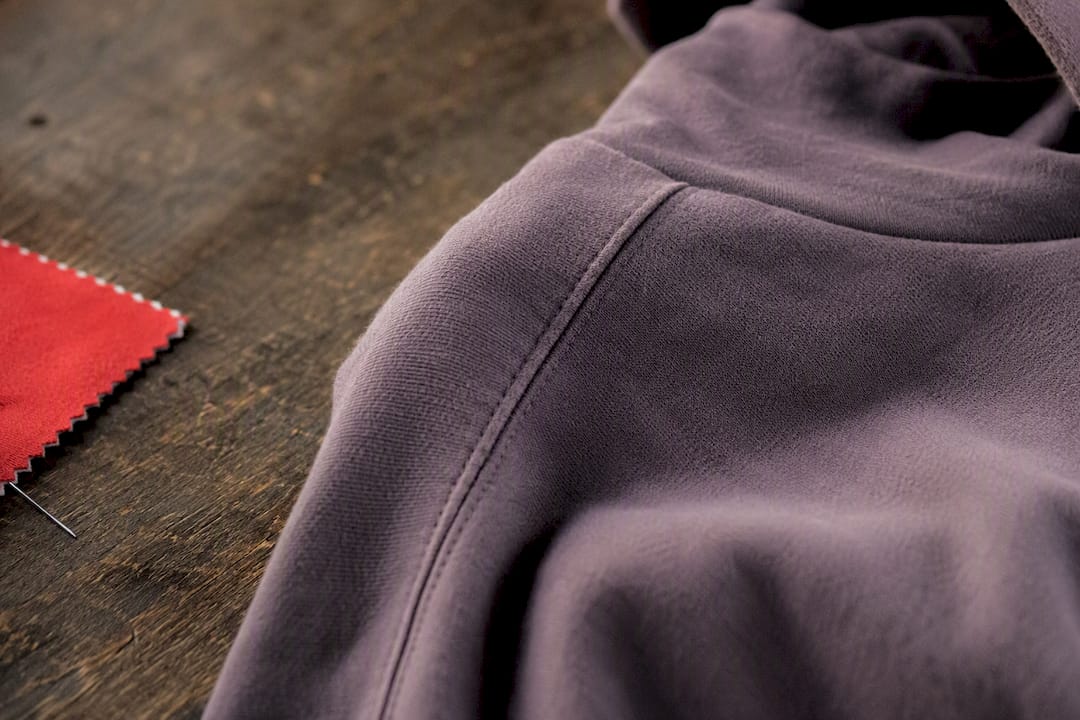
A hoodie can match your chest measurement perfectly and still pull at the shoulders or hang loosely off them if the shoulder width is wrong for your frame. This matters more with hoodies than with t-shirts because the added fabric weight of fleece exaggerates any seam that sits in the wrong place. A shoulder seam that drops too far down the arm on someone with narrower shoulders creates bunching at the sleeve head. A seam that sits too high on someone with broader shoulders restricts arm movement and makes the whole garment feel tight even if the chest has plenty of ease.
Regular-fit hoodies keep the shoulder seam close to the natural shoulder point, which is why they’re the easiest starting point for most body types. Drop-shoulder and oversized styles intentionally move that seam down the arm as a design choice, not a sizing mistake, which is part of why oversized hoodies need their own proportion logic rather than simply scaling up a regular-fit pattern.
If you’re between sizes and your shoulders run wide for your chest measurement, lean toward the larger size. Shoulder width is far harder to fix after the fact than a slightly loose body or long sleeve.
How Do Body Shape Differences Change Your Size Pick?
Two people with identical chest measurements can need completely different hoodie sizes once shoulder width, torso length, and arm length enter the picture. A standard chart assumes proportional averages, and plenty of real bodies don’t fit that mold.
Broad shoulders relative to chest size usually call for sizing up specifically to protect shoulder comfort, then accepting a bit of extra room through the body as a tradeoff. Going up a size for shoulders adds roughly 1 to 2 inches of chest ease too, which is rarely a problem since hoodies already run loose by design.
A longer torso needs a size chosen primarily off body length rather than chest width. If your torso runs long, measure a hoodie that already hits the hem length you want and match that instead of defaulting to your usual chest-based size, even if the chest ends up slightly roomier than expected.
Shorter arms relative to overall height often mean a standard sleeve length runs long regardless of size. In that case, a drop-shoulder or cuffed style is more forgiving than a set-in sleeve, since the ribbed cuff can be pushed up without looking sloppy.
- Broad shoulders: size up, prioritize shoulder width over chest snugness.
- Long torso: choose by body length first, chest width second.
- Shorter arms: favor cuffed or drop-shoulder styles that tolerate extra sleeve length gracefully.
None of these adjustments require guessing. They just mean measuring the specific dimension that’s actually driving your fit problem, instead of assuming one chest number tells the whole story.
An Editor’s Take on the Sizing Mistakes That Cause Returns
The mistake I see most often is conflating garment width with body circumference, then acting surprised when a hoodie fits twice as loose as expected. The second most common one: measuring a stretched-out hem or ribbing and treating that number as accurate. Both errors are easy to make and easy to avoid once you know they exist.
Ignoring sleeve length and shoulder width until after checkout causes almost every remaining return. Measure a hoodie you already trust, check the specific garment spec on the listing rather than a generic size label, follow the wash instructions, and jot down your numbers somewhere you’ll actually find them again next time.
How McLaren Tee Hub Sizes Its Hoodies
McLaren Tee Hub builds every hoodie around unisex garment measurements, with laid-flat pit-to-pit, body length, and sleeve specs listed directly on each product page rather than a single vague size label. That means you’re comparing real numbers, not guessing based on a size chart that might not match the actual cut.

Different product lines lean toward different fits. Clean-cut styles suit an everyday look with a snug shoulder line, relaxed fits give you streetwear room without going full oversized, and boxier oversized pieces are built for layering over a tee or under a jacket, the kind of styling breakdown covered in this guide to film-themed hoodie design. Before checkout, pull up the garment spec on the specific listing you’re eyeing and measure a hoodie you already own for comparison. It takes two minutes and it’s the difference between a hoodie that fits the way you pictured it and one headed for a return box. Head to the McLaren Tee Hub shop to browse current fits and check each listing’s size chart before you buy.
Frequently Asked Questions
What is the standard method for a hoodie size guide measurement? Lay the hoodie flat and measure pit-to-pit for chest width, shoulder to hem for body length, and either shoulder seam to cuff or center-back neck to cuff for sleeve length, depending on the cut.
How do I know if I should size up for an oversized hoodie fit? If you want extra room for layering or a boxier drape, size up one to two sizes from your true-to-size measurement, and expect the shoulder seam to sit lower on your arm.
Should I use my body chest measurement or the garment’s pit-to-pit number? Use both together. Measure your actual chest, then compare it against double the garment’s pit-to-pit figure to see how much ease that hoodie will actually give you.
Do women need a different hoodie size guide than men? Women’s hoodies typically run narrower in the chest and shorter in length at the same labeled size, so sizing up one size is common when a looser, more unisex drape is the goal.
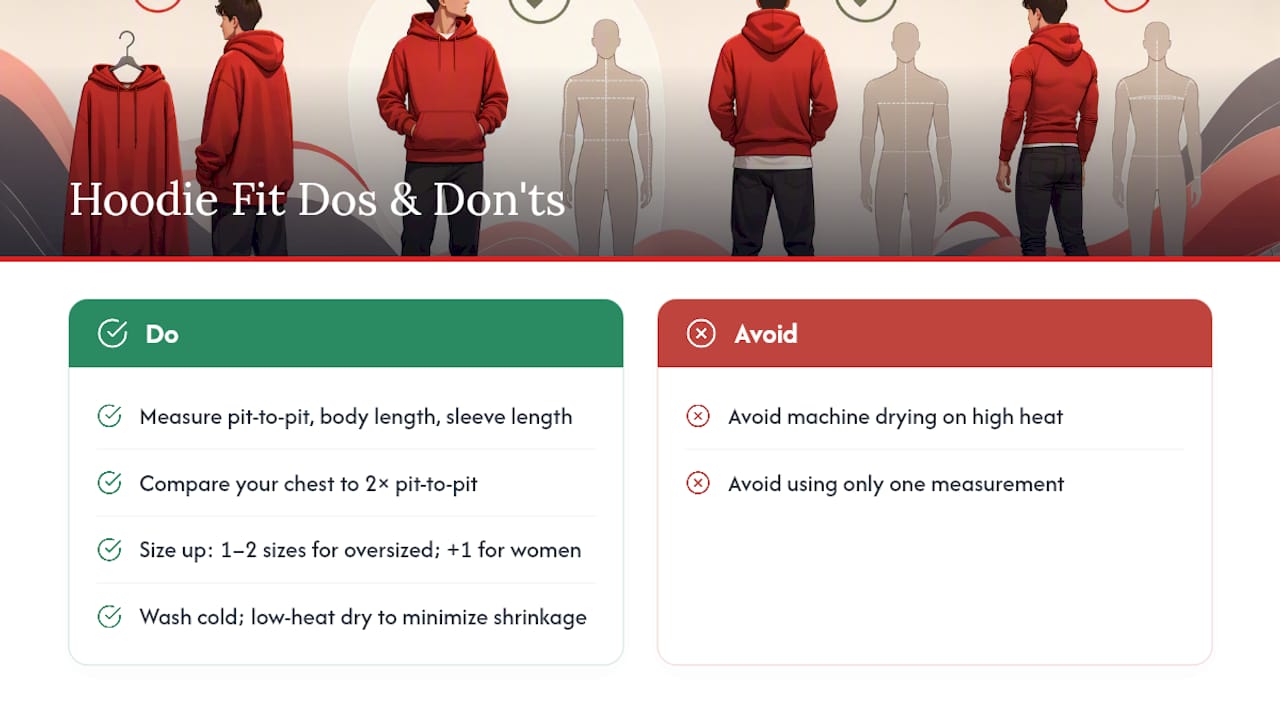
How much shrinkage should I expect from a cotton fleece hoodie? Plan for roughly a half inch to a full inch of shrinkage in body length if you machine dry on high heat, and wash cold with a low-heat dry cycle to minimize it.
Sources
- Hoodie Size Chart - MFG Merch
- The Ultimate Hoodie Size Chart Guide : Slim, Regular, & Oversized Fits – Topology Apparel
- How to Develop an Oversized Hoodie Fit - StitchQuote
Recommended
- The Right Hoodie Style for Every Season – McLaren Tee Hub
- How to Style Your Halloween Hoodie Like a Pro: The Ultimate 2026 Guide – McLaren Tee Hub
- Horror Hoodie Guide 2026: Killer Looks for the Ultimate Pop-Culture Fa – McLaren Tee Hub
- How Hoodies Became Mainstream Fashion: A Cultural History – McLaren Tee Hub