

How Hoodies Became Mainstream Fashion: A Cultural History
TL;DR:
- The hoodie originated in the 1930s as a functional garment for cold warehouse workers. It became a cultural icon through subcultures in the 1970s and 1980s before achieving mainstream and luxury status in later decades. Its enduring popularity stems from its comfort, versatility, and deep-rooted cultural significance.
The hoodie is defined as the single garment that completed the journey from cold-weather workwear to a global fashion staple worth billions. Understanding how hoodies became mainstream fashion means tracing a path through labor history, hip-hop culture, skate parks, and luxury runways. The global hoodie and sweatshirt market is valued at $224.77 billion in 2026. That number tells you this is not a trend. It is a permanent shift in how the world dresses.
What is the origin of the hoodie and its early practical uses?
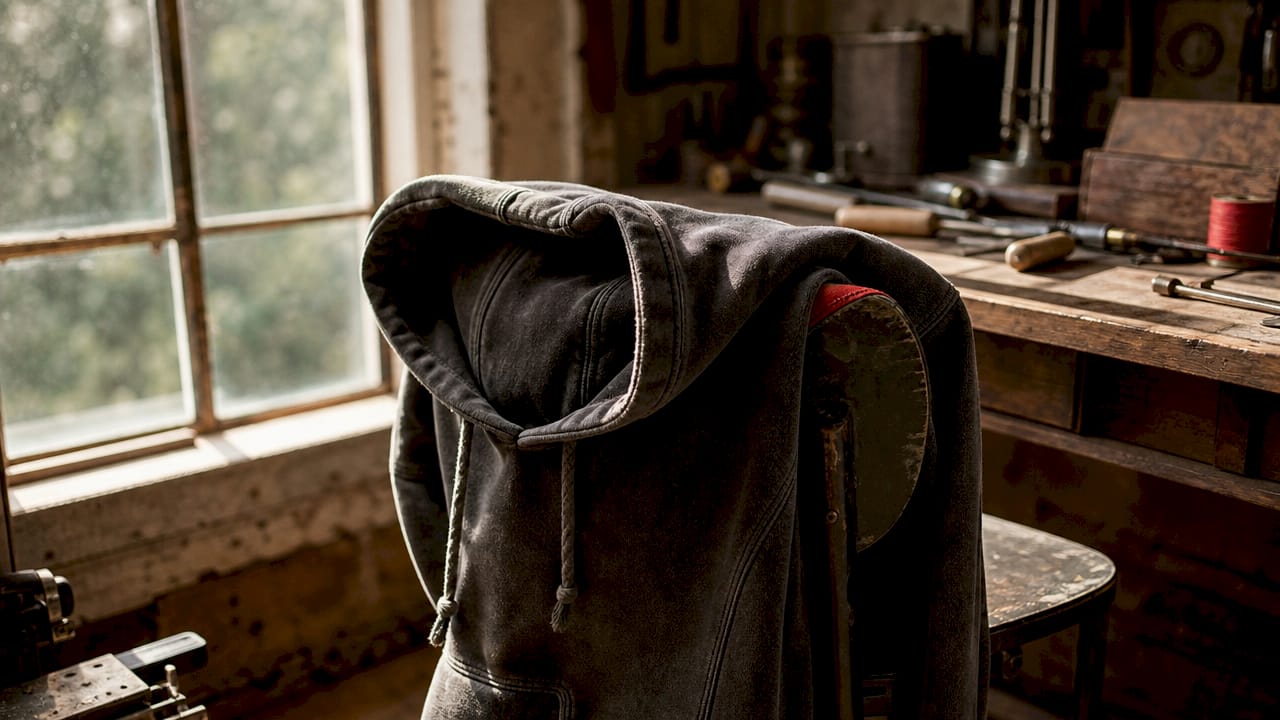
The hoodie originated in the 1930s as a purely functional garment made for cold New York warehouse workers. Champion manufactured the first hooded sweatshirt to solve a simple problem: workers needed warmth without the bulk of a coat. That practical origin is the foundation of everything the hoodie became.
The early hoodie had no cultural ambition. It was workwear, plain and simple. Athletes adopted it next, using it for outdoor training in cold weather. The hood kept the head warm without requiring a separate hat, and the kangaroo pocket gave workers and athletes a place to store their hands.
The garment’s design actually traces back much further than the 1930s. Medieval monks wore hooded tunics called cowls, and outdoor laborers in northern Europe wore hooded cloaks for centuries. Champion’s version industrialized that ancient logic and made it affordable at scale.
Key facts about the hoodie’s early life:
- Champion created the first modern hooded sweatshirt in upstate New York
- The original customer was the American blue-collar worker, not the fashion consumer
- Athletes, particularly football players and boxers, adopted it for training
- The garment’s core design, a hood attached to a sweatshirt body, has not changed in 90 years
That design stability is remarkable. Very few garments survive nine decades without a major structural overhaul. The hoodie did, because the original design was already close to perfect for its purpose.
How did 1970s and 1980s subcultures popularize the hoodie?
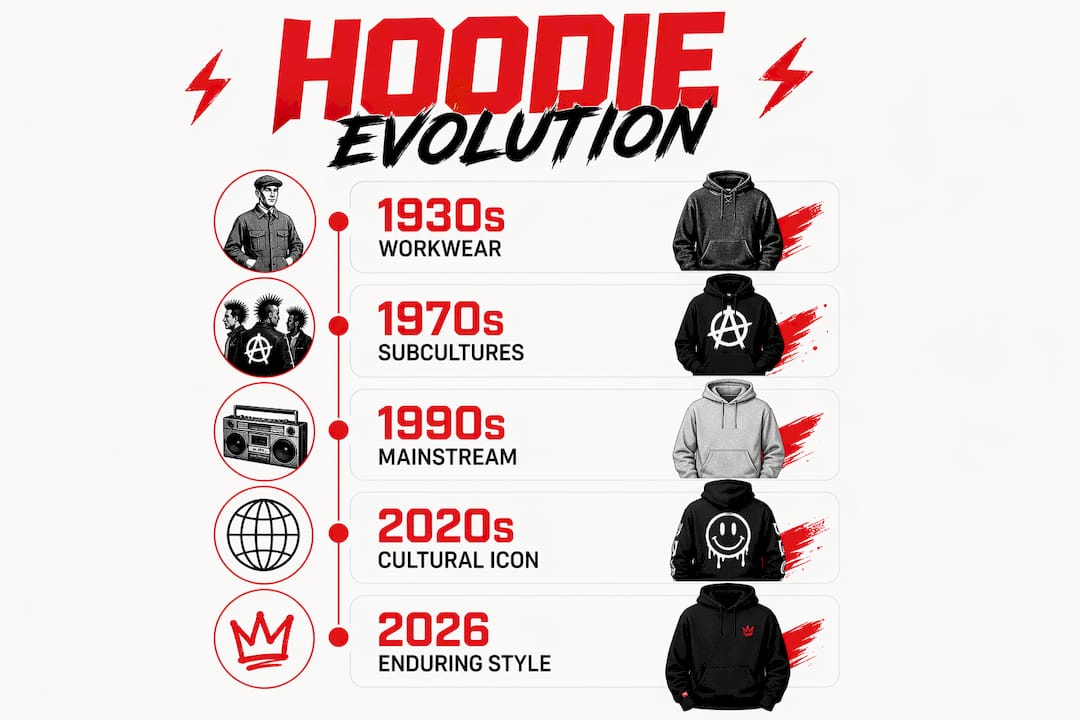
The hoodie’s transformation from workwear to cultural symbol happened in the 1970s and 1980s, driven by three distinct subcultures: hip-hop, punk, and skate. Each group adopted the hoodie for a different reason, but all three valued the same quality: the hood offered a degree of anonymity that felt like power.
Hip-hop artists and skateboarders in the 1970s and 1980s turned the hoodie into a symbol of cool defiance. New York’s South Bronx was the birthplace of hip-hop culture, and the hoodie fit the aesthetic perfectly. It was affordable, it was tough, and pulling the hood up communicated something that no tailored jacket could.
“The hoodie became the uniform of anyone who existed outside the mainstream. It said: I define my own style, on my own terms. That message traveled from the South Bronx to every city in America within a decade.”
West Coast skate culture added another layer. Skaters needed durable, flexible clothing that could handle falls and long hours outdoors. The hoodie delivered on both counts. Skate brands began printing graphics on hoodies in the early 1980s, turning a blank canvas into a statement piece.
Film played a critical role too. Rocky, released in 1976, showed Sylvester Stallone training in a gray hoodie through the streets of Philadelphia. That image burned itself into American pop culture. The hoodie became associated with grit, determination, and the underdog spirit.
- Hip-hop culture: The hoodie signaled street credibility and authenticity in New York’s emerging rap scene
- Skate culture: West Coast skaters used hoodies as a practical and visual identity marker
- Punk and alternative scenes: The hoodie’s plain, anti-fashion aesthetic appealed to those rejecting mainstream dress codes
- Film and media: Movies like Rocky gave the hoodie aspirational, working-class heroism
By the late 1980s, the hoodie carried a dual identity. It was simultaneously the garment of the outsider and the garment of the athlete. That tension made it fascinating to the mainstream, which was watching from a distance.
Why did the hoodie become mainstream fashion in the 1990s and beyond?
The 1990s were the mainstream tipping point for hoodie fashion. The decade saw hoodies move from niche subcultures to mall shelves across America. College licensing programs put university logos on hoodies and sold them to millions of students. Mass retailers stocked them in every color. The hoodie stopped being a symbol of the margins and became the uniform of everyday American life.
Music videos accelerated this shift dramatically. Hip-hop artists appearing on MTV wore hoodies as a core part of their visual identity. Brands recognized the marketing power of that visibility and began producing hoodies with bold graphics and logos. The garment became a canvas for self-expression at a price point almost anyone could afford.
Black-owned streetwear brands played a defining role in scaling urban style into a retail category. These brands understood the cultural language of the hoodie and translated it into products that resonated far beyond their original communities. Their influence shaped what mass retailers stocked throughout the 1990s and into the 2000s.
The 2000s brought the hoodie into tech culture. Silicon Valley’s preference for casual dress made the plain zip-up hoodie a symbol of a different kind of power: the power of the builder who does not need to dress up to prove their worth. That association added yet another layer of meaning to a garment already carrying decades of cultural weight.
The luxury fashion pivot came in the 2010s, when high-fashion houses began integrating hoodies into their collections. This was not a casual decision. It was a recognition that the hoodie had won the culture war. Menswear experts describe the hoodie as the “antithesis of tailoring,” representing a cultural shift where comfort became integral to style rather than opposed to it.
Key eras in the hoodie’s mainstream rise:
- 1930s: Champion creates the first hooded sweatshirt for warehouse workers
- 1970s–1980s: Hip-hop, skate, and film culture adopt the hoodie as a symbol of identity
- 1990s: Mall retail and college licensing bring the hoodie to mass audiences
- 2000s: Tech culture and music videos cement the hoodie as everyday American wear
- 2010s–2020s: Luxury fashion houses integrate hoodies, completing the garment’s status elevation
| Era | Primary Driver | Cultural Meaning |
|---|---|---|
| 1930s | Workwear manufacturing | Utility and warmth |
| 1970s–1980s | Hip-hop and skate subcultures | Rebellion and identity |
| 1990s | Mall retail and college licensing | Mainstream accessibility |
| 2000s | Tech culture and music media | Casual authority |
| 2010s–2020s | Luxury fashion adoption | Status and versatility |
What factors explain the hoodie’s enduring popularity in 2026?
The hoodie’s staying power comes from a combination of comfort, cultural identity, and style flexibility that no other single garment matches. Menswear experts confirm the hoodie represents a shift toward comfort as a core style value, not a compromise. That shift is now permanent.
The pandemic accelerated what was already happening. Remote work normalized wearing comfortable clothing all day, and the hoodie was the obvious beneficiary. But the oversized hoodie as a celebrity staple predates the pandemic by decades. Celebrities used the oversized silhouette to project an intentionally effortless look long before lockdowns made comfort mandatory.
The hoodie’s role as a cultural unifier is its most underrated quality. It bridges streetwear and luxury, youth culture and middle age, athletic wear and office casual. No other garment sits comfortably in all of those spaces simultaneously. That versatility is why fashion enthusiasts and casual wearers alike keep reaching for it.
The market data confirms the trajectory. The hoodie fashion market stands at $8.43 billion in 2026 and is projected to reach $17.07 billion by 2033. That near-doubling in seven years reflects genuine consumer demand, not marketing hype.
Pro Tip: When styling an oversized hoodie for a polished look, pair it with tailored trousers and clean sneakers. The contrast between the relaxed top and structured bottom is exactly the tension that makes the combination work. Check out movie franchise hoodie styles for inspiration on graphic hoodies that carry cultural weight.
Popular hoodie styles in 2026 reflect the garment’s range. Oversized fits dominate streetwear. Cropped hoodies lead in women’s fashion. Zip-up hoodies remain the default for athletic and casual wear. Graphic hoodies, particularly those tied to pop culture, film franchises, and music, drive the most engagement on social media. The growth of streetwear culture has made the graphic hoodie one of the most recognizable forms of personal expression in fashion today.
Key Takeaways
The hoodie became mainstream fashion by moving from 1930s workwear through subculture adoption in the 1970s and 1980s, reaching mass retail in the 1990s, and achieving luxury status in the 2010s and beyond.
| Point | Details |
|---|---|
| Workwear origins | Champion created the first hooded sweatshirt in the 1930s for cold New York warehouse workers. |
| Subculture adoption | Hip-hop and skate culture in the 1970s and 1980s transformed the hoodie into a symbol of identity and rebellion. |
| 1990s mainstream shift | Mall retail, college licensing, and music videos brought the hoodie to mass American audiences. |
| Luxury validation | High-fashion houses integrated hoodies in the 2010s, confirming the garment’s permanent cultural status. |
| Market growth | The hoodie fashion market is $8.43 billion in 2026 and projected to reach $17.07 billion by 2033. |
Why the hoodie’s story is the most honest fashion history we have
The hoodie did not become a fashion icon because a designer decided it should. It earned that status from the ground up, through decades of adoption by people who needed it for real reasons: warmth, identity, rebellion, comfort, and self-expression. That bottom-up story is rare in fashion, where trends usually flow from the top down.
What strikes me most about the hoodie’s cultural journey is how it absorbed meaning from every group that adopted it without losing its original character. It is still, at its core, a hooded sweatshirt. The design has not changed. What changed is what we project onto it. That is a sign of a genuinely powerful garment, one that carries meaning without demanding it.
The hoodie also tells an uncomfortable truth about fashion’s relationship with subculture. Hip-hop and skate communities wore the hoodie for years before the mainstream noticed. When the mainstream did notice, it commodified those aesthetics at scale. The communities that created the cultural meaning rarely received proportional credit or economic benefit. Recognizing that history is part of understanding why the hoodie matters.
For fashion enthusiasts watching trends in 2026, the hoodie is the clearest example of how streetwear and luxury are no longer separate categories. They are the same conversation, just at different price points. The garment that started in a cold New York warehouse now appears on Paris runways. That arc is the most honest fashion history we have.
— Nicholas
Hoodies, pop culture, and what to wear next
The hoodie’s story is inseparable from pop culture, and that connection is exactly what makes wearing one feel like more than just getting dressed. At Mclarenteehub, the catalog reflects that same energy: graphic tees, hoodies, and accessories built around the films, music, and cultural moments that shaped the way we dress.

Whether you are drawn to bold streetwear graphics or understated casual pieces, Mclarenteehub carries options that speak to the same spirit the hoodie has always represented. Browse the full collection at Mclarenteehub and find pieces that carry real cultural weight, not just a logo.
FAQ
What year did hoodies first become popular in mainstream fashion?
The 1990s mark the mainstream tipping point, when hoodies moved from niche subcultures to mass retail through college licensing programs and mall chains. Hip-hop music videos and affordable pricing made them a wardrobe staple for millions of Americans during that decade.
Who invented the hoodie?
Champion manufactured the first modern hooded sweatshirt in the 1930s for cold New York warehouse workers. The design was purely functional, built to provide warmth without the bulk of a coat.
Why are hoodies still trendy in 2026?
The hoodie remains trendy because it bridges comfort, cultural identity, and style versatility in a way no other garment does. The hoodie fashion market is valued at $8.43 billion in 2026, reflecting sustained consumer demand across streetwear, athletic, and luxury categories.
How did hip-hop culture influence hoodie fashion?
Hip-hop artists in New York’s South Bronx adopted the hoodie in the 1970s and 1980s as a symbol of street credibility and anonymity. That association gave the hoodie cultural weight that eventually pulled it into mainstream retail and, later, luxury fashion.
What are the most popular hoodie styles right now?
Oversized fits dominate streetwear, cropped silhouettes lead in women’s fashion, and graphic hoodies tied to pop culture and film franchises drive the most social media engagement. Zip-up hoodies remain the standard for athletic and everyday casual wear.
Recommended
- Why Streetwear Culture Is Growing So Fast – McLaren Tee Hub
- Benefits of Pop Culture Apparel: Fan Fashion Guide – McLaren Tee Hub
- Horror Hoodie Guide 2026: Killer Looks for the Ultimate Pop-Culture Fa – McLaren Tee Hub
- How to Style Your Halloween Hoodie Like a Pro: The Ultimate 2026 Guide – McLaren Tee Hub