

Fans: 5 Checks to Verify Ethical Fan Merchandise
Yes, you can buy fan gear made with fair labor and a lighter environmental footprint, and it doesn’t require a research project. Look for a recognized standard like GOTS on the product page, plus a plain explanation of where and how the item was made. Publishers that disclose production details make that first check fast.
TL;DR:
- Most ethical fan merchandise options pair certifications like GOTS, Fair Trade, and Fair Wear, covering both material safety and fair labor practices.
- Certified organic cotton and recycled polyester offer environmental benefits, but each has its trade-offs, such as water use and microplastic shedding.
- Print-on-demand and domestic small-batch production significantly reduce environmental impact and overproduction compared to mass overseas manufacturing.
- Always verify certification numbers and factory disclosures before trusting sustainability claims, as vague marketing language is common.
- Genuine ethical products tend to cost more due to higher material, labor, and certification costs but offer transparency and lower environmental footprints.
Table of Contents
- What Does “Ethical Fan Merchandise” Actually Mean?
- Which Materials and Certifications Actually Mean Something?
- How Much Does Production Method Change the Impact?
- How Do You Verify a Brand’s Claims Before Buying?
- A Quick Checklist for Any Product Page
- Why Trust This Guide? Publisher and Author Background
- How Does Ethical Merchandise Change the Relationship Between Fans and Artists?
- Where Can You Actually Find Ethical Fan Merchandise Today?
- Why Is Ethical Fan Merchandise Still Hard to Source?
- Is Ethical Fan Merchandise Worth the Extra Cost?
- A Fan’s Take on Buying With Intention
- Shop Fan Gear Built Around Transparency, Not Guesswork
- Sources
- FAQ
What Does “Ethical Fan Merchandise” Actually Mean?
Ethical fan merchandise means apparel, mugs, and accessories built around two commitments: the people making them earned fair wages under safe conditions, and the materials and process didn’t trash the planet to get there. Those are two separate problems, and a shirt can fail either one independently. A factory can pay workers well while still dyeing fabric with chemicals that poison a river. A shirt can be made from recycled polyester and still come from a supplier that runs sixteen-hour shifts.
The risk shows up at predictable points in the supply chain. Cotton farming and textile dyeing are the biggest environmental pressure points. Cut-and-sew factories and print shops are where labor conditions get tested. Packaging, often an afterthought, adds plastic waste that never touches the “sustainable” marketing on the front of the box.
None of this is theoretical for how brands behave. Musicians and merch companies are shifting toward ethical production because fans increasingly expect it, and fans have shown they’ll pay a premium for it. That demand curve is doing real work. When enough buyers ask “who made this and how,” suppliers that can’t answer start losing contracts, and the ones that document their process start winning them. Your individual purchase is small, but the aggregate buying pattern is what moves factories.
Which Materials and Certifications Actually Mean Something?
Not every green label on a hangtag carries weight, and the three most-cited certifications in fan merchandise cover different problems.
GOTS (Global Organic Textile Standard) governs the fiber content and processing chain: at least 70% organic fiber, restrictions on toxic dyes and bleaches, and wastewater treatment requirements at certified facilities. It says almost nothing about wages.
Fair Trade certification runs the opposite way. It centers on farmer and worker compensation, often through a price premium paid back to producing communities, and on baseline labor standards. It doesn’t guarantee organic materials.
Fair Wear (the Fair Wear Foundation) audits factory conditions directly: hours, safety, freedom of association, and grievance systems. It’s a labor-practice certification, not a materials one.
The practical takeaway: a shirt with only one of these badges has covered one problem, not both. The strongest options carry multiple certifications or, at minimum, pair a materials claim with a labor disclosure in plain language.
Material choice matters just as much as the badge:
- Organic cotton skips synthetic pesticides and fertilizers, but it still uses significant water during cultivation.
- Recycled polyester diverts plastic from landfills but sheds microplastics in the wash, same as virgin polyester.
- Hemp needs far less water and few pesticides, though it’s harder to source at scale and often costs more.
- TENCEL/Lyocell comes from wood pulp processed in a closed-loop system that reclaims most of its solvents.
Ink and packaging matter more than shoppers assume. Water-based inks replace the plastisol inks that require harsh solvents to cure, and print-to-order models built around them cut both toxic runoff and leftover inventory. Compostable or recyclable mailers close the loop that a lot of “eco” branding conveniently ignores.
How Much Does Production Method Change the Impact?
Print-on-demand, small-batch domestic runs, and mass overseas production land on wildly different points of the impact scale, and the differences aren’t subtle.
Print-on-demand only produces what’s actually sold, which eliminates the deadstock problem plaguing traditional apparel. Small-batch domestic manufacturing, where knitting, dyeing, sewing, and printing all happen in one country, cuts transport emissions and keeps labor oversight local and auditable. A USA-made organic cotton tee produced through that kind of consolidated domestic chain skips the multi-country shipping legs that add up fast on a carbon ledger. Mass overseas production hits the lowest per-unit cost, but oversight gets harder with every subcontracted layer between the brand and the factory floor.
The materials themselves carry real environmental weight, independent of who makes them. A single cotton T-shirt’s supply chain drives significant water use during cultivation, along with pesticide and fertilizer runoff, according to the World Wildlife Fund’s breakdown of conventional cotton farming. Polyester skips the water problem but runs on petroleum, tying its footprint to fossil fuel extraction and processing.
Lifecycle matters beyond the factory gate, too:
- A well-made cotton tee holds its shape and color through dozens of washes; a cheap poly-blend pills and fades within months.
- Natural fibers biodegrade at end of life; synthetic blends mostly don’t.
- Simpler seam construction is easier to repair, which matters if you actually plan to wear something for years rather than one convention season.
How Do You Verify a Brand’s Claims Before Buying?
Certification badges are only useful if they’re real, so run a quick check before trusting one.
- Look for a registration number. Legitimate GOTS and Fair Trade certifications come with a license or scope certificate number you can look up in the certifying body’s own database, not just a logo pasted on a page.
- Search for a factory disclosure. Brands with nothing to hide often name their manufacturing partners or at least the country and facility type.
- Check for an audit trail. Product pages that link certification numbers, factory locations, and audit reports offer real verification; vague sustainability paragraphs without any of that are marketing copy, not evidence.
- Compare stock claims against production claims. A seller advertising “made-to-order” but showing dozens of sizes in stock across every color is telling you something.
Watch for language doing more work than the facts behind it: “eco-friendly,” “conscious,” and “green” mean nothing without a standard attached. If a seller can’t name which certifying body backs their claim, treat the claim as unverified.
Pro Tip: Email the seller one specific question: “What certification number backs your organic cotton claim, and which registry can I check it against?” A brand with nothing to hide answers in a sentence. A brand that dodges the question just answered it differently.
A Quick Checklist for Any Product Page
Before you add anything to a cart, scan the listing for five things:
- A named certification (GOTS, Fair Trade, Fair Wear) with a checkable number, not just a badge icon.
- A clear material statement (organic cotton, recycled polyester percentage, hemp blend).
- A stated production method (print-on-demand, small-batch, or bulk overseas).
- Packaging and returns policy that matches the sustainability pitch.
- A durability claim you can actually test against wash count or fabric weight.
On pricing: a premium is justified when it’s paying for organic fiber, domestic labor, or lower-volume runs that avoid overproduction, all of which cost more per unit than mass overseas manufacturing. A premium is not justified when it’s paying for a logo with no certification behind it.
Two questions worth copying straight into an email to any seller: “Can you share your factory’s location and certification registry number?” and “What happens to unsold inventory, do you print to order or hold stock?”
Pro Tip: If a seller answers both questions specifically within a day, that responsiveness alone tells you more than most sustainability pages will.
Why Trust This Guide? Publisher and Author Background
Some online stores sell pop culture apparel, hoodies, mugs, hats, and gifts built around original fan art and parody tributes, sold direct-to-consumer and fulfilled through print-on-demand. That production model is directly relevant here: making a shirt only after it’s ordered is one of the concrete practices this guide recommends, not an abstract idea borrowed from a sustainability report.
Nicholas, who covers merchandise trends and buying guidance for the site, has written on the different categories of fan merchandise worth knowing, why fan apparel often beats cosplay for everyday fandom expression, and the legal ground rules around fan art and reselling it… .
How Does Ethical Merchandise Change the Relationship Between Fans and Artists?
Merchandise has always been part of how fans support the creators they follow, but the money trail underneath a purchase decides how much of that support actually lands where it’s meant to. When a shirt is made through a transparent, made-to-order process, the margin structure tends to be cleaner, since there’s no leftover inventory eating into what an artist or license holder ultimately sees.
For independent artists licensing their work into fan apparel, small-batch and print-on-demand production also lowers the barrier to entry. They don’t need to gamble on a bulk order they might not sell through, which means more artists can put original work into the world without carrying inventory risk themselves. That shift matters more than it sounds. It’s the difference between a creator being able to greenlight a design because it’s low-risk, versus shelving it because a 500-unit minimum order is too much exposure.
Fans benefit too, in a way that’s easy to underrate: buying something made responsibly turns a purchase into a small act of alignment with the community’s values, not just a transaction. A convention badge or a band tee stops being just merchandise and becomes a marker that says the people who made it, and the people who bought it, both cared about more than the price tag.
Where Can You Actually Find Ethical Fan Merchandise Today?
The market for worker-centered, lower-impact fan gear has grown past a handful of niche Etsy shops, though it’s still far from mainstream retail. Print-on-demand platforms integrated into pop culture storefronts, including sites like McLaren Tee Hub, let shoppers see production disclosures and material statements directly on the product page rather than digging through a separate sustainability report.
Smaller domestic apparel makers focused on organic cotton and consolidated, single-country manufacturing chains represent the other end of the spectrum, producing lower volumes at a higher price point in exchange for tighter labor oversight and shorter shipping distances. Specialty ethical apparel companies built around fair labor messaging, the kind that publish factory relationships and audited supplier lists as a core part of their brand story, sit somewhere in between: not print-on-demand scale, but not mass overseas production either.
The common thread across all of them isn’t a single business model. It’s disclosure. The brands worth trusting are the ones that show you the certification number, name the production method, and let you see the material breakdown before you check out, regardless of whether they’re a solo Etsy seller or a full storefront.
Why Is Ethical Fan Merchandise Still Hard to Source?
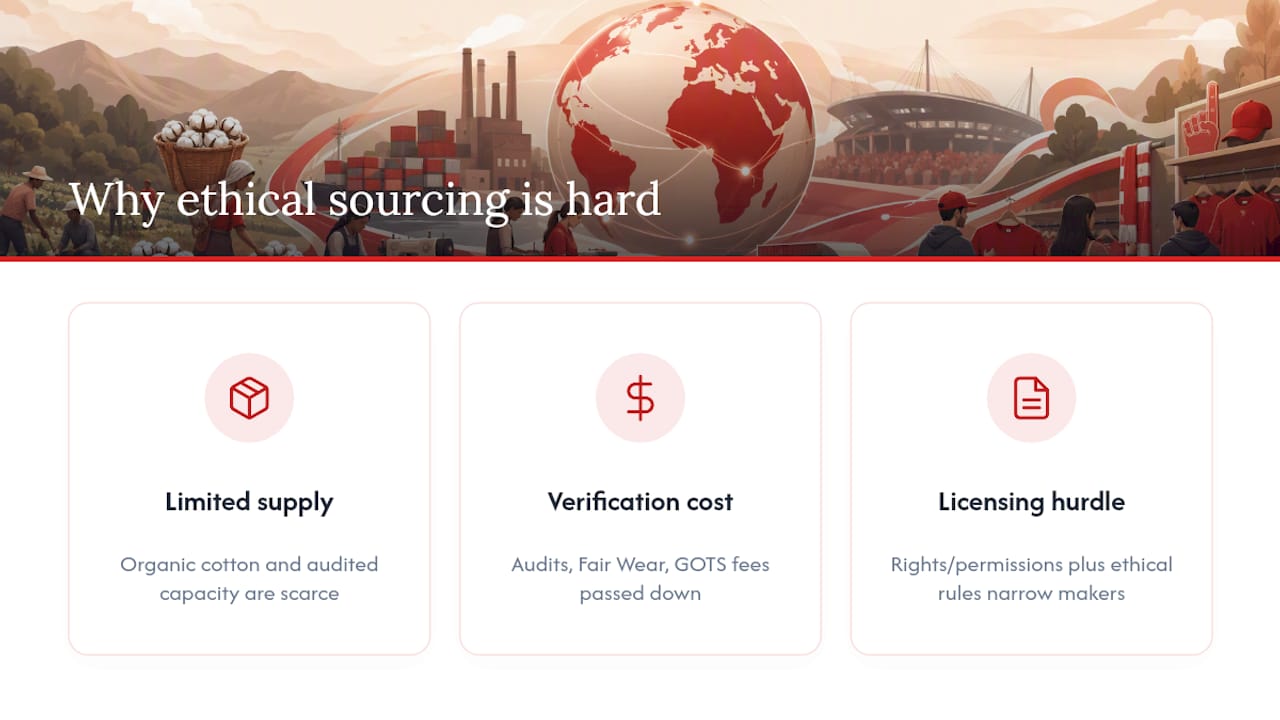
Sourcing genuinely ethical merchandise is harder than the marketing suggests, and the friction shows up at every stage of the supply chain. Certified organic cotton and audited factory capacity are both limited relative to conventional supply, which means brands trying to scale ethical production often hit availability bottlenecks that don’t exist with mass-market synthetic blends.
Verification itself is a cost center. Running a factory audit, maintaining a Fair Wear membership, or keeping GOTS certification current all require ongoing paperwork and fees that get passed down the chain. Smaller fan merchandise sellers, the ones running a single print-on-demand storefront, often can’t absorb that overhead the way a larger apparel company can, which is part of why full third-party certification is more common in general apparel than in niche fan gear.
Fan merchandise adds its own wrinkle on top of the usual apparel supply chain problems: licensing. A shirt built around original fan art or a parody tribute already navigates rights and permissions before production even starts, and stacking ethical sourcing requirements on top of that licensing complexity narrows the pool of manufacturers willing or able to take on the work. That’s a real constraint, not an excuse, and it’s part of why disclosure and transparency matter more than a perfect certification checklist. A brand that’s honest about what it can and can’t certify yet is more trustworthy than one making blanket claims it can’t back up.
Is Ethical Fan Merchandise Worth the Extra Cost?
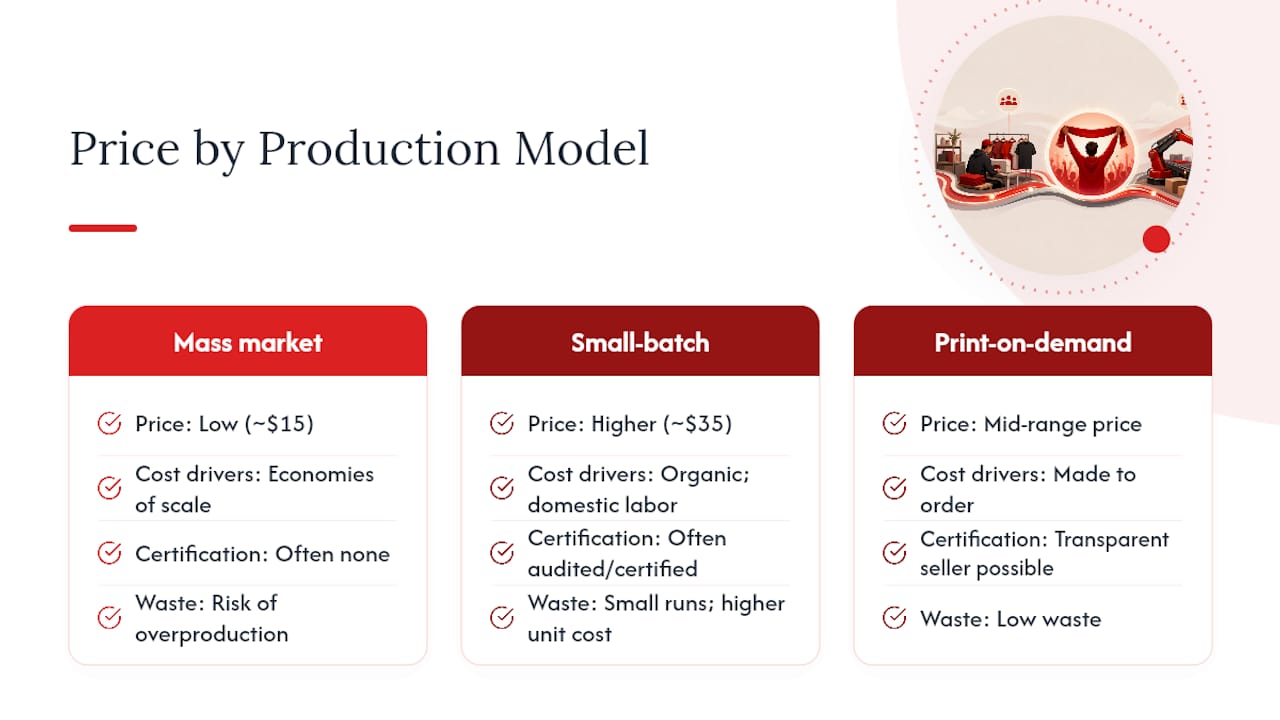
Expect to pay more, and expect that premium to track a specific set of real costs rather than a marketing markup. Organic cotton typically costs more to grow and process than conventional cotton. Domestic labor costs more than overseas labor. Small-batch production loses the economies of scale that let mass manufacturers hit rock-bottom per-unit prices. Add those up and a $35 ethically produced tee sitting next to a $15 mass-market one isn’t necessarily overpriced. It’s reflecting where the money actually went.
That said, price alone is a weak signal. A high price with no certification behind it is just a high price. The useful comparison is price relative to disclosed production method: a print-on-demand shirt from a transparent seller can sit in a reasonable mid-range price bracket precisely because it skips the overproduction waste that inflates costs elsewhere in the supply chain, even without hitting every certification box.
Budget-conscious fans don’t have to choose between “ethical” and “affordable” as a strict binary. Print-on-demand models, by making only what’s ordered, tend to land in a more accessible price range than fully audited, certified small-batch runs from boutique labels. Neither approach is wrong. They’re solving different parts of the problem, at different price points, and knowing which trade-off you’re making is more useful than chasing the cheapest option or the most certified one on principle alone.
A Fan’s Take on Buying With Intention
Fandom has always been about more than the object. It’s a way of saying who you are and what you care about, and the shirt or mug you buy is a small, visible piece of that statement. What’s changed is that fans now have enough information to ask whether the object itself matches the values behind it, instead of just trusting a logo.
I don’t think most fans need to become supply-chain experts to buy better. Checking one certification number and reading one production disclosure takes less time than deciding which design to buy in the first place. Start there, and the rest of the checklist gets easier.
— Nicholas
Shop Fan Gear Built Around Transparency, Not Guesswork
Some stores run their pop culture apparel, mugs, and gift lineups through a direct-to-consumer, print-on-demand model, which means items are produced after you order rather than pulled from a warehouse of overstock nobody asked for. That production choice lines up directly with the checklist in this guide: no leftover inventory sitting in a landfill, and product pages that state material and sizing details plainly instead of burying them in fine print.
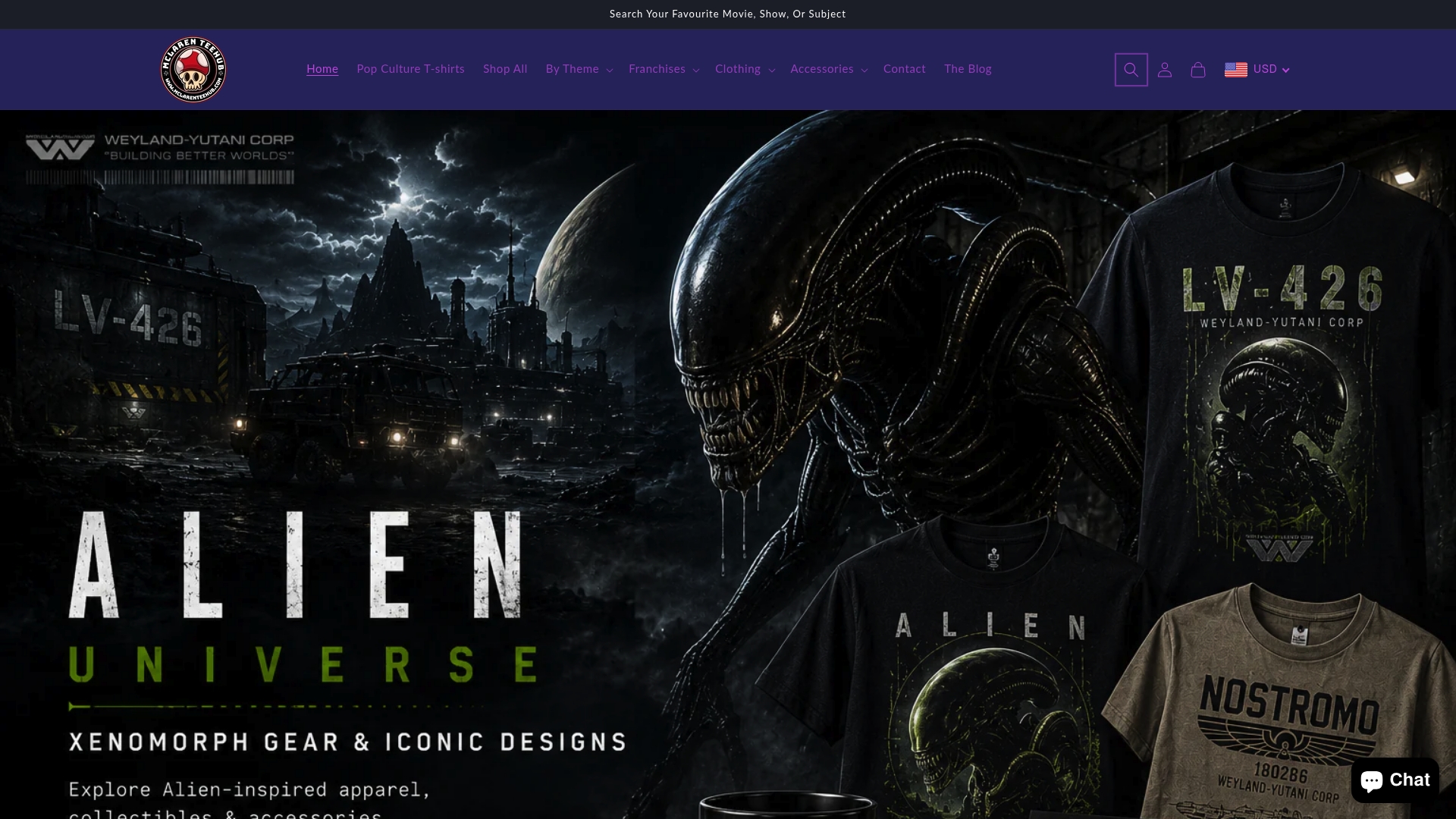
Browse a live example of that transparency on the Pulp Fiction style graphic tee product page, or check out the Facehugger coffee mug if apparel isn’t what you’re after today. Either page shows exactly what you’re getting before you check out, which is the entire point of the checklist above. Pick a design, read the product details for yourself, and see whether it holds up to the standard you just learned to apply.
Sources
- The impact of a cotton t‑shirt – World Wildlife Fund (WWF)
- Collaborate & Merchandise – THTC Clothing
FAQ
Is There an Ethical Alternative to Buying From Amazon for Fan Gear?
Yes. Print-on-demand storefronts and smaller apparel brands that disclose materials and production methods on the product page, rather than routing everything through a mass marketplace, give you a direct line to see how and where an item was made.
Is Fan-Made Merchandise Legal to Sell?
It depends on licensing status and how closely the design uses protected characters, logos, or trademarks; original fan art and parody tributes occupy different legal territory than direct reproductions. Read a full breakdown of fan art legality before assuming either extreme.
Which Clothing Brand Is Considered the Most Ethical?
There’s no single universally agreed “most ethical” brand, since ethics spans labor practices, materials, and transparency, and few companies score perfectly on all three. Look for the specific certifications covered above, GOTS, Fair Trade, and Fair Wear, rather than searching for one brand that claims to check every box.
Is Lululemon Considered an Ethical Brand?
Lululemon has published supplier and sustainability disclosures, but assessments of any large brand’s ethics should rest on checking its current certification registrations and factory audit reports directly rather than on general reputation.
How Do I Know if a Certification Badge on a Product Page Is Real?
Search the certifying body’s own public registry for the license or scope number listed on the product; a real certification will match a real, checkable entry, while a badge with no number attached is not verifiable.