

Pick by GSM: Midweight vs Heavyweight Hoodie for Pop Culture Shoppers
Pick midweight for daily wear. It runs within a moderate GSM range, drapes well, layers easily, and dries fast. Reach for heavyweight when you need real cold-weather outerwear or standalone insulation. Before buying, always check the product page for the exact GSM (or oz/yd²) and fabric construction, since those two numbers tell you more than the marketing copy ever will.
TL;DR:
- Midweight hoodies, typically around 250 to 350 GSM, are suitable for mild weather and layering, offering good drape and quick drying.
- Heavyweight hoodies, usually 350 GSM and above, provide insulation and are best for standalone cold-weather outerwear or outdoor use below 50°F.
- Fabric construction, such as brushed fleece versus French terry, significantly influences warmth and feel at the same GSM.
- Higher GSM generally means longer drying times and slightly lower durability if fabric quality is poor.
- For most wearers, choosing a midweight hoodie offers maximum versatility and comfort across varying conditions.
Table of Contents
- Midweight vs Heavyweight Hoodie: What GSM Actually Tells You
- How Warm Is Each Weight, Really?
- Fleece, French Terry, and Blends: Why Construction Beats the Number
- Fit, Drape, and Layering: What Weight Does to Your Silhouette
- Washing, Drying, and Long-Term Durability by Weight
- How to Choose Between Midweight and Heavyweight
- Why McLaren Tee Hub’s Take on Hoodie Weight Holds Up
- A Simple Rule for Building Your Hoodie Rotation
- Find Your Weight in the Hoodies Collection
- Sources
- FAQ
Midweight vs Heavyweight Hoodie: What GSM Actually Tells You
GSM stands for grams per square meter. It’s the industry’s standard way to measure fabric density, and it’s the single most useful number on a hoodie’s product page. Higher GSM almost always means a thicker, heavier fabric, which usually (though not always) translates into more warmth.
The ranges shift a little depending on the source, but the general bands hold up:
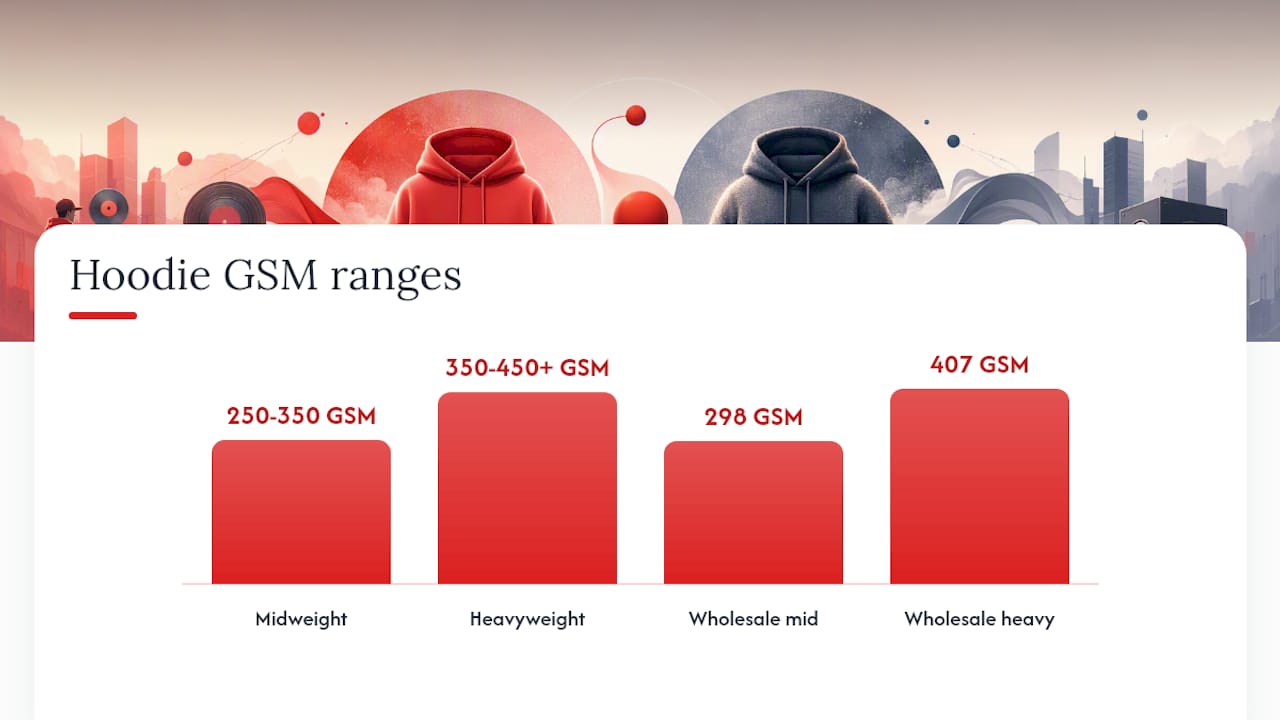
- Midweight: roughly 250 to 350 GSM (about 8.8 to 10 oz/yd²)
- Heavyweight: roughly 350 to 450+ GSM (12 oz/yd² and up)
Wholesale blank catalogs often peg core midweight hoodies at 8.8 oz, or about 298 GSM, while heavyweight streetwear blanks land closer to 12 oz, or roughly 407 GSM.
Statistic to remember: a hoodie’s GSM number is the fastest way to predict warmth and print behavior before you ever touch the fabric. But GSM alone doesn’t tell the whole story. Two hoodies at 320 GSM can feel completely different depending on whether they’re brushed fleece or French terry, which is why construction matters almost as much as the number itself.
How Warm Is Each Weight, Really?
GSM sets the baseline, but the temperature range you’ll actually be comfortable in depends on how you’re using the hoodie.
- Midweight (45°F to 65°F): solid on its own in mild weather, and easy to layer under a jacket once temperatures drop further.
- Heavyweight (below 50°F): built to work as standalone outerwear, especially in the 350+ GSM range where fabric density does the insulating job a jacket would normally handle.
- Lined or heavily brushed heavyweight: can push comfortable use even lower, since the interior pile traps more air against your skin.
Midweight is the better call if you split time between indoors and outdoors, since it won’t leave you sweating the second you walk into a heated store. Heavyweight earns its keep once you’re standing outside for a while, tailgating, walking a dog in January, or working a stall at an outdoor market.
Fleece, French Terry, and Blends: Why Construction Beats the Number
Two hoodies with an identical GSM rating can wear completely differently, and that’s down to how the fabric is built, not just how much it weighs.
- Brushed fleece: the inside gets mechanically brushed to raise a soft nap, which traps air and boosts insulation. This is the fabric behind most heavyweight hoodies.
- French terry: a looped, uncut knit that stays lighter and more breathable at a similar GSM, which is why it shows up in a lot of midweight designs.
- Loopback cotton: similar to French terry but often slightly denser, giving a bit more structure without heavy bulk.
- Cotton/polyester blends: the poly component speeds up drying and resists shrinkage, while cotton keeps the hand-feel soft.
Brushed fleece traps noticeably more heat than French terry even at the same fabric weight, which is why “midweight fleece” and “midweight French terry” can feel like two different seasons.
Pro Tip: If a product page lists GSM but not the weave, search the listing for “brushed” or “terry.” That single word predicts warmth better than the number alone.
Fit, Drape, and Layering: What Weight Does to Your Silhouette
Fabric weight changes more than temperature. It changes how the hoodie hangs on your body and how it plays with everything else in your closet.
- Midweight drapes closer to the body, moves with you, and slides under a denim or bomber jacket without adding bulk at the shoulders.
- Heavyweight builds a boxier, more structured silhouette, the look a lot of streetwear brands lean into on purpose.
- Layering gets harder as GSM climbs, since a heavyweight hoodie under a coat can feel restrictive across the arms and shoulders.
- Graphic prints read cleaner on midweight fabric because the surface sits flatter, which matters if you’re after crisp detail on a pop-culture design rather than a solid color block.
If your closet is built around jackets and vests you actually wear, midweight is going to fit into that rotation without a fight.
Washing, Drying, and Long-Term Durability by Weight
Heavier fabric holds more water, plain and simple. That means heavyweight hoodies take noticeably longer in the dryer, and running them on high heat repeatedly is one of the fastest ways to shrink a good garment.
- Wash heavyweight hoodies inside out on cold, and tumble dry on low or air dry when you can.
- Midweight hoodies dry faster and tolerate more frequent washing, since there’s simply less fabric mass holding moisture.
- Higher GSM often means better long-term durability, but only when the fiber quality backs it up. A cheap heavyweight blend can still pill and thin out faster than a well-made midweight one.
Pro Tip: Turn any printed hoodie inside out before washing. It protects the graphic and cuts down on fading regardless of fabric weight.
How to Choose Between Midweight and Heavyweight
- Check your climate first. If daytime temperatures mostly sit in the 45 to 65°F range, midweight covers you. Consistently below 50°F, especially outdoors, points to heavyweight.
- Think about how you’ll wear it. Standalone piece most days? Either weight works. Planning to layer it under a coat or jacket? Midweight wins.
- Decide on silhouette. Want something that moves with you and stays low profile? Go midweight. Want a boxier, structured streetwear look? Heavyweight delivers that on its own.
- Factor in care habits. If you wash hoodies often and want fast drying, midweight is the lower maintenance option.
- When still unsure, default to midweight. It’s the more versatile pick for most closets, and you can always add a heavyweight piece later for genuinely cold days.
- Size with the weight in mind. A heavyweight hoodie in your usual size can fit tighter across the shoulders than a midweight one, so check the sizing guide before ordering if you’re between sizes.
| Factor | Midweight | Heavyweight |
|---|---|---|
| Typical GSM range | moderate midweight range | heavier weight range for insulation |
| Warmth / temperature range | 45°F to 65°F | Below 50°F, standalone outerwear |
| Best use cases | Daily wear, indoor/outdoor transitions | Cold-weather outerwear, outdoor exposure |
| Layering ability | Strong, fits under jackets | Limited, adds bulk under coats |
| Drying time / care | Faster dry, tolerates frequent wash | Slower dry, needs lower heat |
| Durability / longevity | Good with quality fiber | Often higher, fiber-dependent |
Why McLaren Tee Hub’s Take on Hoodie Weight Holds Up
Nicholas has spent years watching how fans actually wear graphic hoodies day to day, not just how they look on a hanger. That hands-on view of fit, print behavior, and repeat washing shaped the GSM and care guidance above. For more on sizing specifics, the hoodie size guide and the printed hoodie buyer’s guide go deeper into decoration and construction choices.
A Simple Rule for Building Your Hoodie Rotation
If you own one hoodie, make it midweight. It’s the piece that works for the widest range of days and outfits. If you own two, add a heavyweight for the genuinely cold stretches. For fan and pop-culture designs specifically, midweight fabric tends to show off detailed prints more cleanly, so keep that in mind before your next purchase.
— Nicholas
Find Your Weight in the Hoodies Collection
Pop-culture hoodies are available across both weight categories, so you’re not stuck choosing between the design you want and the warmth you need. Original fan art and parody tributes pulled from movies, anime, and horror franchises show up in cuts ranging from lighter everyday layers to heavier standalone pieces.

Before adding one to your cart, check the specific GSM or oz/yd² listed on the product page against what you learned here, and cross-reference it with the hoodie size guide to see how that fabric weight affects fit. If you want a sense of how premium cotton hoodies are typically styled outside the fan-apparel space, Hugo Boss’s cotton hooded sweatshirt is a useful reference point for silhouette. When you’re ready, browse the Movie and Pop Culture Hoodies collection and pick the weight that actually matches how you’ll wear it.
FAQ
What Does “Midweight Hoodie” Mean?
A midweight hoodie generally falls in the 250 to 350 GSM range, offering a balance of warmth, breathability, and drape for daily wear and light layering.
How Heavy Is a Midweight Hoodie?
Most midweight hoodies weigh between roughly 8.8 and 10 oz/yd², which converts to around 298 to 340 GSM depending on the exact fabric blend.
What Is Considered Heavyweight for a Hoodie?
Heavyweight hoodies typically start around 350 GSM and run up to 450+ GSM, with many premium streetwear blanks landing near 12 oz, or about 407 GSM.
Are Heavyweight Hoodies Good?
Heavyweight hoodies are excellent for cold-weather outerwear and durability, though they take longer to dry and layer less easily than midweight options. Both hoodie weights are commonly available, so the better choice depends on your climate and how you plan to wear it.