

3 Oversized Hoodie Fits: A Shopper’s Size Guide
The most reliable way to handle oversized hoodie sizing is to skip the label and measure. If the hoodie is cut oversized, order your true size for the intended drape, size up one for extra baggy, or size down one for a cleaner silhouette. Grab a hoodie you already love, lay it flat, and match its chest and length numbers to the product’s size chart before you check out.
TL;DR:
- Measuring a hoodie you already own provides the most accurate way to select the right size, especially for oversized cuts with built-in ease.
- Garment charts typically include a tolerance of 1 to 2 centimeters, so size recommendations should be treated as guidelines rather than precise measurements.
- Fabric weight and construction details, like ribbing and hood structure, significantly influence how a hoodie fits and drapes over your body.
- For a standard oversized look, add 2 to 4 inches of ease to your half chest measurement, depending on how baggy you want the hoodie to feel.
- Always compare your measurements to the product’s garment chart before purchasing, and size your hoodie true to your usual size if it already has an oversized pattern.
Table of Contents
- How Do You Measure a Hoodie for the Right Size?
- Why Cut and Fabric Weight Change Your Size Choice
- What Size Should You Buy Based on Your Measurements?
- How Should an Oversized Hoodie Actually Fit You?
- What McLaren Tee Hub Recommends Before You Buy
- A Few Rules I Keep Coming Back To
- Shop Hoodies Sized the Smart Way
- Sources
- FAQ
How Do You Measure a Hoodie for the Right Size?
Skip guessing and grab a tape measure. The fastest way to size an oversized hoodie is to compare it against one you already own and love, since measuring a garment you own is the method most brand size guides recommend over trusting the size label alone.
Lay that favorite hoodie flat on a bed or table, then take these four measurements:
- Half chest: armpit to armpit, straight across the front.
- Body length: from the back collar seam (high point of shoulder) down to the hem.
- Sleeve length: from the shoulder seam to the end of the cuff.
- Shoulder width: seam to seam, across the top of the back.
Now compare those to your own body. Measure your actual chest circumference around the fullest part, then divide by two to get a comparable “half chest” figure. From there, decide how much ease you want. A classic oversized feel usually calls for 2 to 4 inches of extra room beyond your half chest measurement. Want something closer to a blanket you can wear outside, extra baggy territory, add significantly more room for that very loose fit.
One catch: garment charts aren’t laser precise. Manufacturers typically build in a tolerance of 1 to 2 centimeters, and that margin shifts slightly depending on fabric weight and finishing. Treat every chart as a strong guideline, not a guarantee down to the millimeter. If a hoodie’s chart already builds in generous ease at your normal size, you likely don’t need to size up at all. That’s the point people miss most often.
Why Cut and Fabric Weight Change Your Size Choice
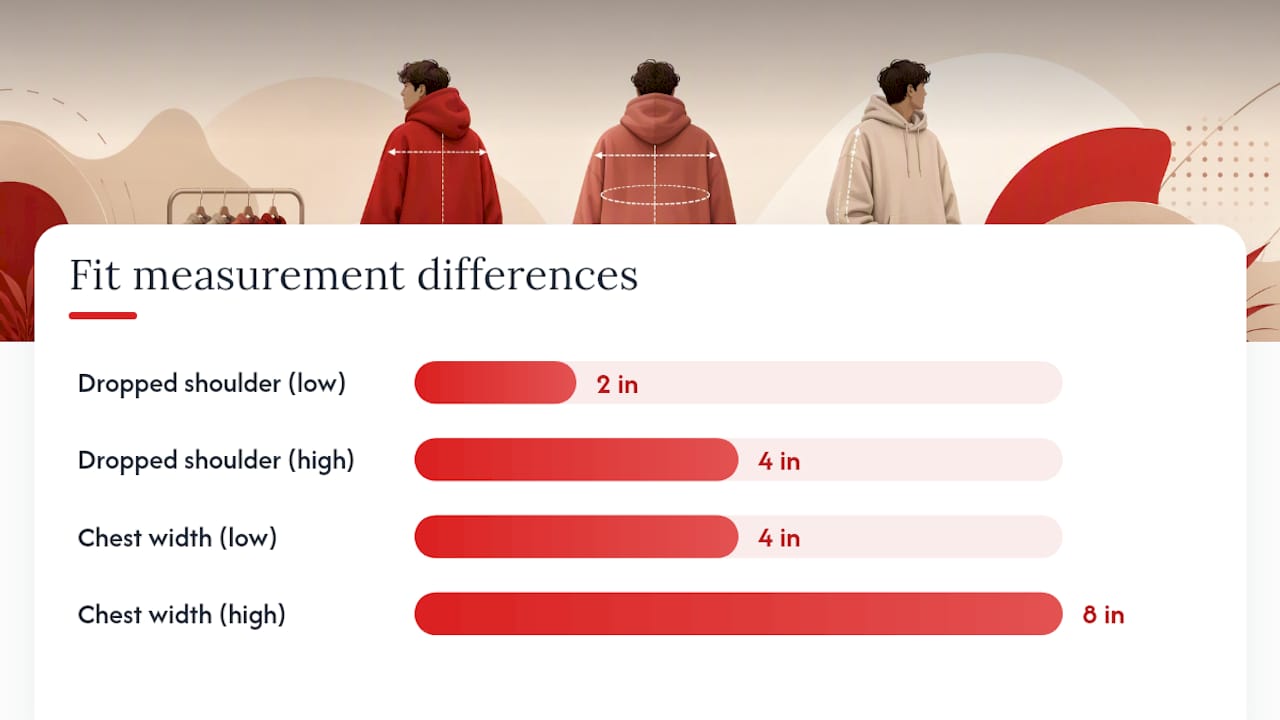
An oversized small isn’t a scaled-up regular small. It’s a different pattern altogether. Dropped shoulders typically sit 2 to 4 inches below your natural shoulder point, and the chest can run 4 to 8 inches wider than the same labeled size in a regular fit. That’s why an oversized medium from one brand can measure closer to a regular large from another.
Fabric weight matters just as much as the pattern. A lightweight hoodie can look sloppy in an oversized cut, it collapses and clings in weird spots. A fabric weight in the mid to heavy range tends to hold its shape better for a structured streetwear silhouette instead of sagging.
A few practical notes on construction:
- Heavier ribbing at the cuffs and hem holds a boxy shape longer through wear and washing.
- A tall, structured hood adds visual bulk up top, which can make the body look proportionally roomier even at the same chest measurement.
- Thinner fleece or single-layer cotton needs a slightly closer size if you want it to look intentional rather than shapeless.
If you’re torn between two sizes and unsure how the fabric will behave, our midweight versus heavyweight breakdown walks through how GSM changes drape.
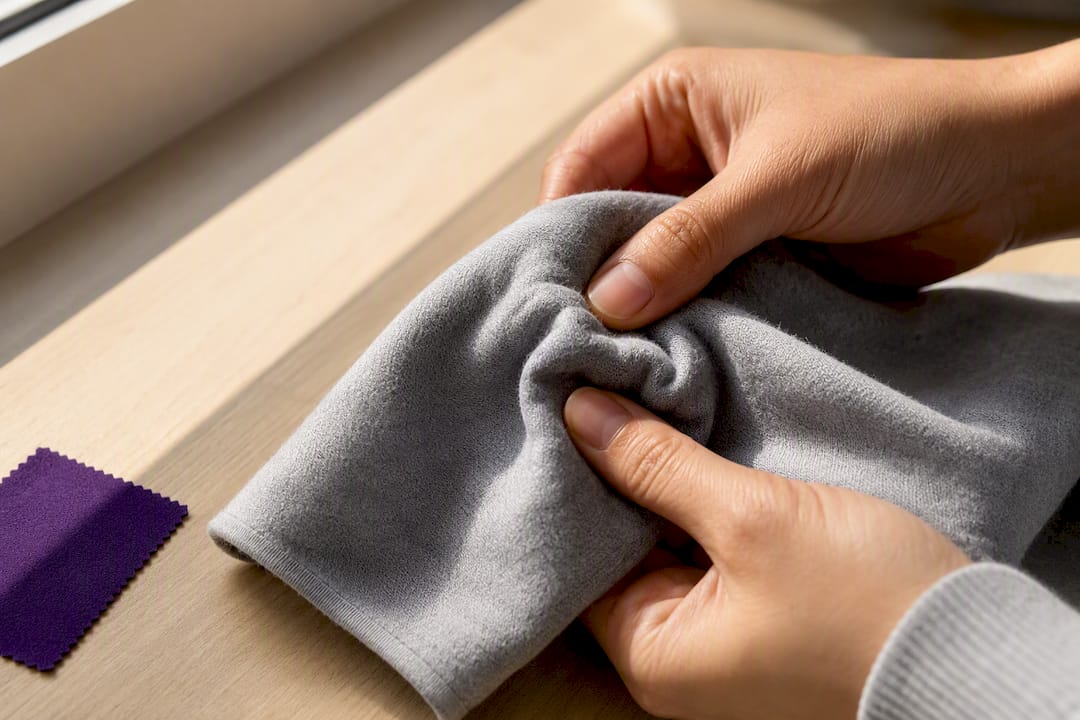
Pro Tip: Scrunch a corner of the fabric in your hand before buying. If it springs back into shape, it’ll hold an oversized silhouette. If it stays wrinkled, expect more slouch than structure.
What Size Should You Buy Based on Your Measurements?
Here’s how real body measurements typically translate into oversized hoodie sizing, assuming a standard drop-shoulder cut:
- 5’4", 130 lbs, usual size Small: aim for a garment half chest around 24 to 25 inches and length around 27 inches for a classic oversized look. Sizing up to Medium pushes it toward extra baggy.
- 5’8", 160 lbs, usual size Medium: target a half chest near 26 to 27 inches and length near 28 to 29 inches. True-to-size in an oversized cut usually nails the look without extra sizing.
- 5’11", 190 lbs, usual size Large: look for a half chest around 28 to 29 inches. If the brand’s oversized Large already runs generous, stick with it rather than jumping to XL.
- 6’2", 210 lbs, usual size XL: an XL commonly runs about 2 inches wider in the chest than a Large and 1 to 2 inches longer in body length, which matters if you’re layering a shirt underneath.
When you’re stuck between two sizes, the tiebreaker is simple: go up for more drape and slouch, go down for cleaner lines and less bunching at the sleeve. Shorter frames often look better in the smaller of the two options since excess length can swallow proportions, while taller frames can usually handle the bigger size without looking sloppy.
How Should an Oversized Hoodie Actually Fit You?
Oversized isn’t one look. It’s a spectrum, and knowing which end you’re aiming for changes your size pick.
- Subtle oversized: shoulder seams sit close to your natural shoulder, sleeves land at the wrist, hem hits around hip level. This is the easiest to wear daily and pairs well with fitted bottoms.
- Classic streetwear oversized: shoulder seams drop noticeably past your natural shoulder line, sleeves can be pushed up for a stacked look, and the hem sits a few inches below the hip. Dropped shoulder construction is designed to create this longer sleeve, push-up-friendly effect on purpose.
- Extra baggy: shoulders drop well past the arm, sleeves may need cuffing, and the hem can reach mid-thigh. This works best with joggers or wide-leg pants to balance the volume up top.
Petite shoppers generally get better proportions from the subtle or classic range rather than extra baggy, since too much length can overwhelm a smaller frame. Taller shoppers can lean into extra baggy without losing shape.
For outfit pairings by look, our guide to styling retro film hoodie fits breaks down bottoms and layering combinations for each oversized level.
What McLaren Tee Hub Recommends Before You Buy
The core rule holds no matter which hoodie you’re eyeing: measure a hoodie you already own, then compare those numbers to the product page chart before you commit to a size.
-
Check our hoodie size guide for a full breakdown of measuring technique and chart reading.
-
If you’re deciding between unisex and gendered sizing, our unisex versus men’s sizing guide covers when to size down a letter.
A Few Rules I Keep Coming Back To
Measure first, always. Buy true to size when the cut is already oversized. Size up only when you actually want that extra-baggy look, not by default. The biggest mistake shoppers make is trusting a label name over the fabric weight and ribbing details that actually decide how a hoodie hangs.
— Nicholas
Shop Hoodies Sized the Smart Way
Every hoodie product page uses garment measurements, not just S/M/L guesswork, so you’re matching real numbers instead of hoping a label fits your vision. That’s the advantage over shopping blind on sizing: our online shopping best-practice approach of publishing exact garment measurements means fewer surprises when your order shows up.
Grab a hoodie from your closet, measure the half chest and length, then browse our pop culture hoodies and sweatshirts collection with those numbers in hand. Every product page lists the flat measurements you need to pick between subtle, classic, or extra baggy with confidence. Pair your pick with a graphic tee from our t-shirt collection for layering, then check the size chart one more time before you check out.
Sources
For more on measurement tolerances, dropped-shoulder construction, and GSM ranges, see the guides linked throughout this article from Dope Beyond, Three Layer, and Topology Apparel.
- Hoodie Sizing Guide: How to Get the Perfect Fit | Dope Beyond
- Oversized vs Regular Fit Hoodies Guide | Three Layer
- The Ultimate Hoodie Size Chart Guide : Slim, Regular, & Oversized Fits – Topology Apparel
FAQ
Should I size up for oversized hoodies?
Only if you want an extra-baggy look beyond the standard oversized drape. If the hoodie is already cut oversized, ordering your usual size gives you the intended relaxed fit, and sizing up pushes it further into slouchy territory.
What size should I get if it’s oversized?
Buy your true size when the garment is already patterned as oversized, since the extra room is built into the cut. Measure a hoodie you own and compare it to the product’s garment chart to confirm before ordering.
How do I fit an oversized hoodie correctly?
Lay a favorite hoodie flat and measure the half chest, body length, and sleeve length, then match those numbers to the product page. Look for shoulder seams that drop 2 to 4 inches past your natural shoulder line for a classic oversized construction.
How much bigger is an XL hoodie than a Large?
An XL typically runs about 2 inches wider in the chest and 1 to 2 inches longer in body length than a Large in the same style. That difference matters most if you plan on layering a shirt or long sleeve underneath.