

Is Parody Merch Legal to Sell? What Designers Need to Know
Selling parody merch is legal in some cases and a lawsuit magnet in others, and the difference usually comes down to one question: does your design work as a joke, or does it work as a brand? For commercial sellers, here’s the reasoning that matters most:
- Copyright fair use is a defense you raise in court, not a right you get automatically.
- Trademark law cares about whether shoppers might confuse your product with the source, not whether the design is funny.
- Jack Daniel’s v. VIP Products (2023) narrowed parody protection specifically for merch that uses a joke as its own brand.
This is general information, not legal advice. Fair use gets decided case by case, and a court is the only place that determination is final.
Key Takeaways
Parody merch can be legal, but protection narrows sharply once a design functions as a brand rather than a joke, especially after the 2023 Jack Daniel’s ruling.
| Point | Details |
|---|---|
| Fair use is a defense | Copyright fair use gets argued in court case by case; it’s never a guaranteed shield before you sell. |
| Trademark cares about confusion | Even a funny parody can infringe if shoppers might think the brand made or approved it. |
| Jack Daniel’s v. VIP Products matters | Parody used as your own brand identifier now faces standard likelihood-of-confusion analysis, not automatic Rogers protection. |
| Platforms move faster than courts | Takedowns and account suspensions happen on contractual grounds, independent of whether a lawsuit would succeed. |
| Mclarenteehub favors originality | The brand builds its catalog around original fan art and clearly transformative tributes rather than close brand copies. |
Table of Contents
- Is Parody Merch Legal? Copyright vs. Trademark Basics
- Why Doesn’t Fair Use Guarantee Legal Protection?
- What Did Jack Daniel’s v. VIP Products Change in 2026?
- Takedowns and Account Risk on Marketplaces
- How Can Designers Reduce Legal Risk Before Listing?
- What Should You Do If You Get a Takedown Notice?
- When Should You Talk to a Lawyer About Parody Merch?
- A Seller’s Honest Take on Parody Risk
- A Safer Path for Sellers Who Want Original Designs
- Where to Read the Primary Sources
- Frequently Asked Questions
- Sources
Is Parody Merch Legal? Copyright vs. Trademark Basics
The short answer is that copyright and trademark law ask different questions, and parody merch has to survive both. That’s why a design can be a clever, obviously transformative joke and still get pulled from a marketplace.
Copyright’s fair use defense looks at whether your work is transformative, meaning it adds new meaning or commentary rather than just repackaging the original. Courts also weigh how much of the original you used and whether your product could hurt the market for the thing you’re parodying. A t-shirt design that riffs on a movie poster to make a joke about the movie itself has a stronger transformative argument than one that just swaps a logo’s colors and calls it a day.
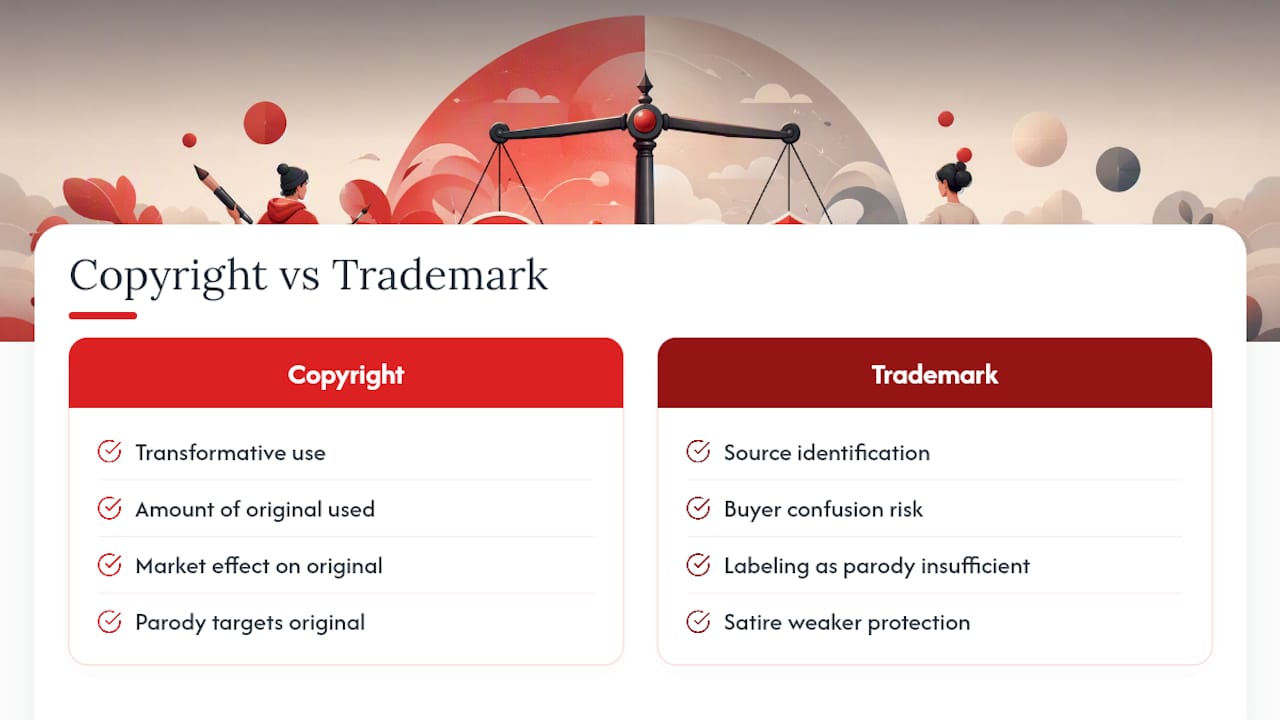
Trademark law works on a completely different logic. Its whole purpose is to help shoppers identify who actually made a product, so the legal question isn’t “is this funny?” It’s “would a reasonable buyer think this came from the brand, or think the brand approved it?” A research guide from Indiana University Libraries notes that courts weigh multiple factors here, and being labeled “parody” doesn’t automatically clear a commercial product.
There’s a useful distinction buried in the case law: parody targets the thing it’s mocking, while satire borrows a mark to comment on something unrelated.
A t-shirt that pokes fun at a specific brand’s marketing is parody. A t-shirt that uses that brand’s logo to make a joke about, say, politics or another company entirely is satire, and satire typically gets weaker legal protection because the connection to the original mark is incidental rather than the point.
That distinction, drawn from First Amendment scholarship on satire and parody, shows up constantly in court opinions and it’s worth understanding before you sketch a design.
Why Doesn’t Fair Use Guarantee Legal Protection?
Fair use isn’t a checklist you pass. It’s a balancing test, and courts apply it inconsistently depending on the facts in front of them. Here are the four copyright factors judges weigh:
- Purpose and character of the use. Is your design genuinely transformative, adding commentary or a new message, or is it a near-copy with a caption slapped on?
- Nature of the copyrighted work. Highly creative works (movie art, character designs) get stronger protection than purely factual content.
- Amount used. Using a small, necessary slice of the original for the joke to land is safer than reproducing the whole thing.
- Effect on the market. If your merch could realistically replace sales of official licensed goods, that cuts hard against fair use.
Trademark claims run on a parallel but separate set of factors: how strong and recognizable the original mark is, how similar your design looks to it, whether there’s evidence shoppers actually got confused, what your intent was, and where you’re selling. Selling on the same channels as the official brand, using nearly identical fonts or colors, and profiting directly from the confusion all raise your exposure.
Pro Tip: The moment your parody design starts functioning as your own brand, meaning shoppers see the logo and think it identifies your product’s source rather than just landing a joke, you’ve stepped out of parody’s strongest legal territory and into ordinary trademark exposure.
What Did Jack Daniel’s v. VIP Products Change in 2026?
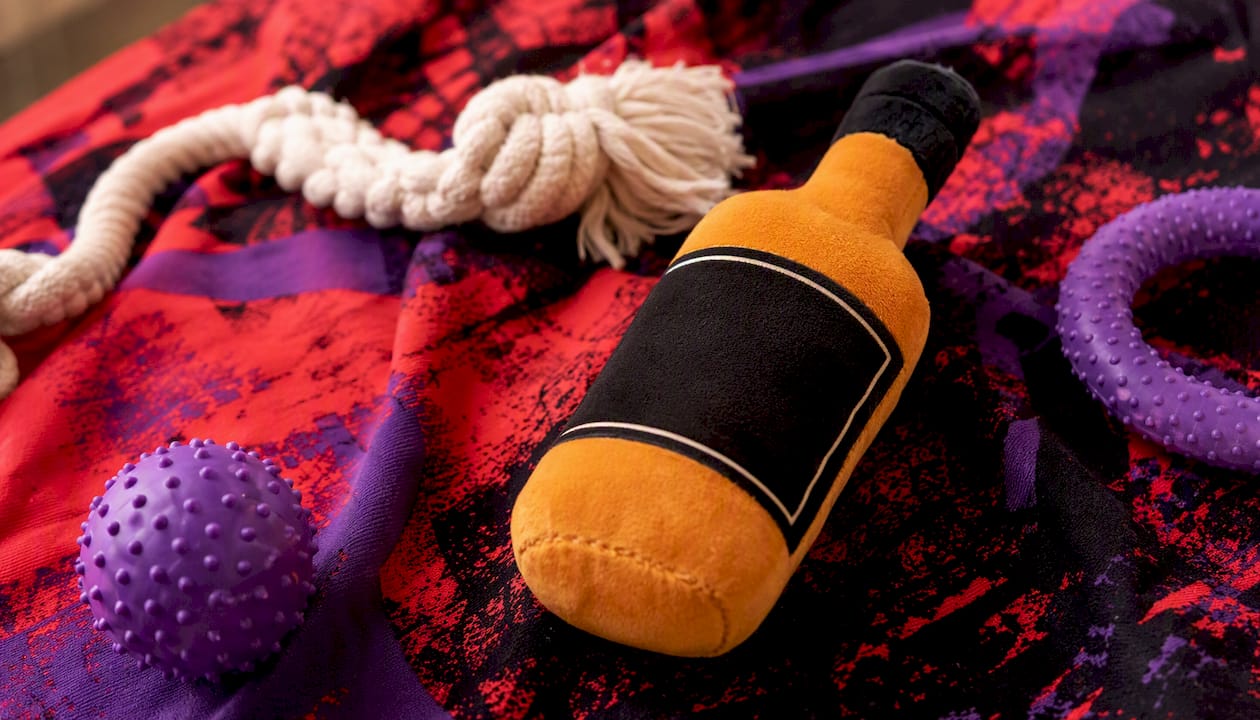
The Supreme Court’s 2023 decision in Jack Daniel’s v. VIP Products involved a dog toy called “Bad Spaniels” designed to mimic the whiskey bottle’s trade dress as a joke. The Court ruled that when a parody functions as a mark identifying the seller’s own goods, a lower court can’t shortcut the analysis using the Rogers test. It has to run the standard likelihood-of-confusion analysis instead.
Rogers v. Grimaldi still matters, but its shelter now applies mainly to expressive works, like movies, books, or songs that reference a brand, not products where the parody itself operates as the item’s own trademark. Faegre Drinker’s guidance on trademark parody points out that rights holders protect brand associations aggressively, so even a clever parody can draw enforcement.
A widely cited illustrative example is the long-running Mike-vs-Nike style trademark disputes (the Stanard litigation), where courts examined whether a parody mark could still confuse consumers about sponsorship or approval, not just similarity in appearance.
Post-decision analysis from legal commentators confirms the practical shift: parody used as a source identifier no longer gets an automatic procedural pass. It faces the same confusion analysis as any other commercial mark, according to Mondaq’s summary of the ruling.
- No blanket safe harbor exists anymore for source-identifying parody merch.
- The clarity of your joke still matters for the merits, even if it no longer skips the confusion test.
- A later 2026 Ninth Circuit opinion in the same case found the Bad Spaniels toy didn’t dilute the Jack Daniel’s brand on remand, showing courts still weigh parody as evidence, per Fox Rothschild’s commentary.
Takedowns and Account Risk on Marketplaces
Lawsuits are the worst-case scenario, but they’re rare compared to platform enforcement, which happens fast and doesn’t require a judge. Marketplaces and print-on-demand sites typically respond to intellectual property complaints with:
- Immediate listing removal, sometimes before you’re notified.
- Account suspension or permanent bans for repeat complaints.
- Payment holds while a dispute is reviewed.
- Search visibility penalties even if the listing stays up.
A DMCA takedown notice targets copyright specifically and gives you the option to file a counter-notice, but that counter-notice restores your listing only after a waiting period, and it can invite the rights holder to actually sue you instead of just complaining to the platform. A cease-and-desist letter is different: it comes directly from a brand or its lawyers, has no formal platform process attached, and usually means someone is seriously considering litigation.
Print-on-demand marketplaces enforce IP complaints on their own contractual terms, independent of whether a court would ultimately side with the brand. If a platform decides removing your listing is easier than adjudicating a legal question, it will.
How Can Designers Reduce Legal Risk Before Listing?
You can’t eliminate risk entirely, but you can stack the odds in your favor before you ever hit publish. Here’s a practical pre-launch checklist:
- Make the parody unmistakable. If a shopper has to squint to see the joke, a judge will too.
- Avoid exact reproductions of logos, fonts, or trade dress. Redraw, restyle, or reinterpret instead of tracing.
- Skip trade dress elements (bottle shapes, packaging colors, layout) that function as a brand’s visual signature.
- Add a disclaimer clarifying your product isn’t affiliated with or endorsed by the original brand.
- Build a distinct storefront identity so your parody line doesn’t read as an extension of the brand you’re riffing on.
- License the underlying work when a design leans more on direct reproduction than genuine commentary.
Pro Tip: Keep dated notes, sketches, and drafts showing how your design evolved. If you ever need to argue transformative purpose, documented creative process carries real weight, and it costs you nothing to save it now.
Sellers navigating platform choices should also look at how different types of fan merchandise carry different licensing exposure before committing to a design direction.
What Should You Do If You Get a Takedown Notice?
- Save everything, screenshots, the original notice, your sales history, and timestamps on your design files.
- Pause sales of the flagged item while you sort out next steps; continuing to sell after notice can look like willful infringement.
- Read the notice carefully to see whether it’s a DMCA complaint, a cease-and-desist, or an actual court filing.
- Talk to an attorney before filing a counter-notice or responding directly to the claimant.
- Weigh a quiet takedown or a negotiated license against a legal fight, especially for a single design in a large catalog.
Never ignore actual court papers. Failing to respond to a lawsuit can result in a default judgment against you, even if your underlying defense was solid. A DMCA counter-notice can also backfire: it restores your listing but effectively invites the claimant to sue rather than just complain to the platform.
When Should You Talk to a Lawyer About Parody Merch?
Get counsel involved once you receive an actual cease-and-desist from a brand’s legal team, a lawsuit, or a platform’s refusal to reinstate a listing after you’ve appealed. High sales volume on a design that skirts a well-known brand is also worth a proactive consult, before a complaint arrives.
Bring copies of the design and its drafts, sales and revenue records, dated correspondence, and the exact notice you received. Ask about likely defenses, realistic cost ranges, and whether settlement or a licensing deal makes more sense than fighting the claim outright. Reviewing common merchandise mistakes before that meeting can help you frame the right questions.
A Seller’s Honest Take on Parody Risk
Running a merch business means accepting that clever design and legal safety don’t always point the same direction. I lean conservative: obvious parody cues, original art over traced logos, and licensing when a design leans too close to direct reproduction rather than commentary.
At Mclarenteehub, that means favoring original fan art and clearly transformative tributes over anything that could pass as unauthorized official merchandise. None of this replaces a lawyer’s judgment on your specific design, and fair use gets decided in court, not by a confident gut feeling.
A Safer Path for Sellers Who Want Original Designs
If the legal analysis above has you second-guessing a design, Mclarenteehub takes a different approach entirely: original fan art and parody tributes built around clear creative distance from official merchandise, not close copies dressed up with a disclaimer. That means distinct branding, print-on-demand production practices built to avoid the trade-dress traps that trigger takedowns, and designs meant to read as tributes rather than substitutes for licensed goods.
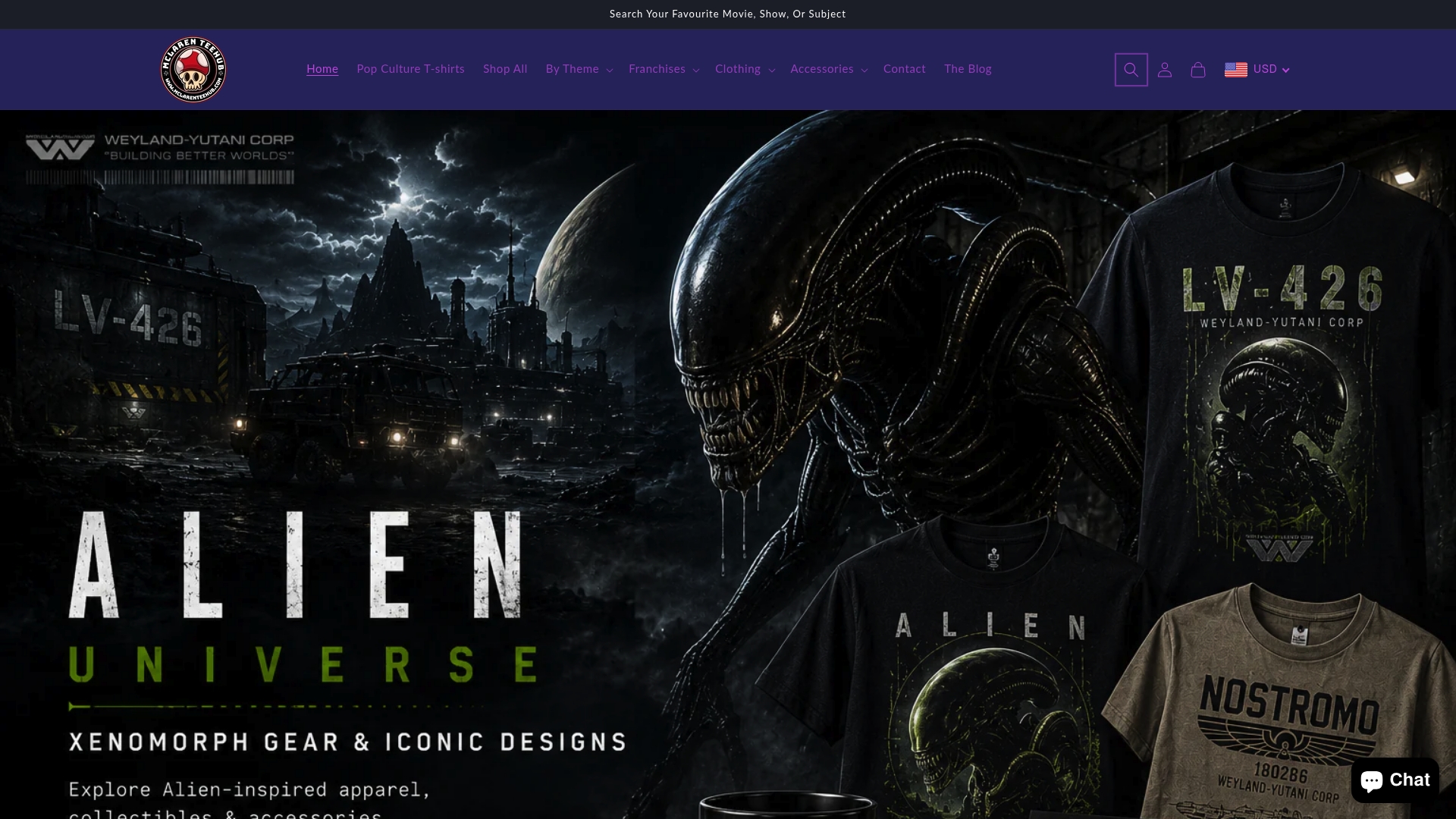
For designers who’d rather focus on creating than tracking case law, browsing how fandom trends shape merchandise choices is a good starting point before you shop Mclarenteehub’s current pop culture collection for inspiration on doing it the safer way.
Where to Read the Primary Sources
For readers who want to check the law directly rather than take a summary at face value:
- Faegre Drinker’s parody guidance, useful for practical enforcement patterns.
- Mondaq’s post-ruling analysis, a clear plain-language summary of what changed.
- Indiana University’s copyright parody research guide, a solid academic overview of fair-use factors.
- Print-on-demand suppliers’ own DMCA and IP policy resources, essential reading before choosing a fulfillment partner.
Frequently Asked Questions
Is parody merch legal to sell in the United States? It depends on the specific design. Parody merch can be legal if it’s clearly transformative and doesn’t function as a source identifier that confuses buyers, but there’s no blanket rule making all parody merch safe from claims.
What’s the difference between parody and satire in merchandise design? Parody comments on the actual brand or work it borrows from. Satire uses a recognizable mark to comment on something unrelated, and it generally gets weaker legal protection because the connection to the original is incidental.
Does Jack Daniel’s v. VIP Products mean parody merch is never protected? No. The ruling narrows the procedural shortcut available when a parody works as your own brand’s identifier, but courts still weigh parody as evidence on the merits, as the 2026 Ninth Circuit remand in the same case showed.
Can I get sued just for adding a parody disclaimer to my design? A disclaimer helps but doesn’t guarantee protection. Courts still look at overall design similarity, market effect, and consumer confusion regardless of a disclaimer’s wording.
What should I do first if a platform removes my parody t-shirt listing? Save the notice and your records, pause related sales, and figure out whether it’s a DMCA complaint or a cease-and-desist before deciding whether to appeal, redesign, or consult a lawyer.
This article is general information, not a substitute for advice from a qualified lawyer. Consult a qualified legal professional about your own circumstances before acting on anything here.
Sources
- Laugh it off? A guide to parody under U.S. trademark law (Faegre Drinker)
- Supreme Court ruling confirms limits on parody defenses to trademark claims (Mondaq)