

Collector Edition Merchandise Explained for Gamers
A collector’s edition is a retail release that bundles the standard game or product with extra physical and digital items not available in the regular version. According to Wiktionary’s definition, it contains additional features or items compared with the normal retail release. In gaming, that typically means a box packed with some combination of the following:
- Physical items: artbook, statue or figure, steelbook case, poster, soundtrack CD or vinyl, clothing, enamel pins, numbered certificate
- Digital extras: exclusive in-game skins, DLC packs, early access, in-game currency, wallpapers, theme music
- Packaging: oversized or premium box, foam inserts, branded outer sleeve
Who buys them? Mostly gamers who want the physical extras as display pieces, publishers who want higher margins, and collectors chasing scarcity. The Wikipedia entry on collector’s editions notes the label can mean anything from a numbered, signed run to simply a box with a few bonus items tossed in — which is exactly why knowing what you’re paying for matters.
Table of Contents
- What physical items does a collector’s edition usually include?
- How to decode edition labels: limited, deluxe, special, anniversary
- Are collector’s editions worth buying? A short checklist
- How to verify authenticity and preserve what you buy
- Publisher practices and how double-dipping works
- Where to check secondary-market prices in the U.S.
- Key Takeaways
- The part most buyers skip
- Collectible-style pop culture merch from Mclarenteehub
- Useful sources for further research
What physical items does a collector’s edition usually include?
Collector’s editions commonly include artbooks, figurines, steelbooks, soundtracks, and exclusive packaging designed to appeal to fans and collectors. Each item serves a specific purpose beyond the game itself.
| Item type | Why publishers include it | Long-term collectibility |
|---|---|---|
| Artbook | Showcases concept art; signals premium production | Moderate — condition-dependent |
| Statue / figure | Display centerpiece; strongest perceived value | High when numbered and sealed |
| Steelbook case | Premium game packaging; low cost to produce | Low to moderate; widely produced |
| Soundtrack (CD/vinyl) | Nostalgia and audio fandom appeal | Moderate; vinyl holds better than CD |
| Poster | Low-cost filler; easy to include | Low unless signed or numbered |
| Clothing (shirt, hat) | Wearable fandom signal | Low; fabric degrades |
| Enamel pins | Affordable collectible; high perceived value per dollar | Moderate if limited run |
| Numbered certificate | Signals authentic scarcity | High — core authenticity marker |
| Exclusive packaging | Shelf presence; brand differentiation | Low on its own |
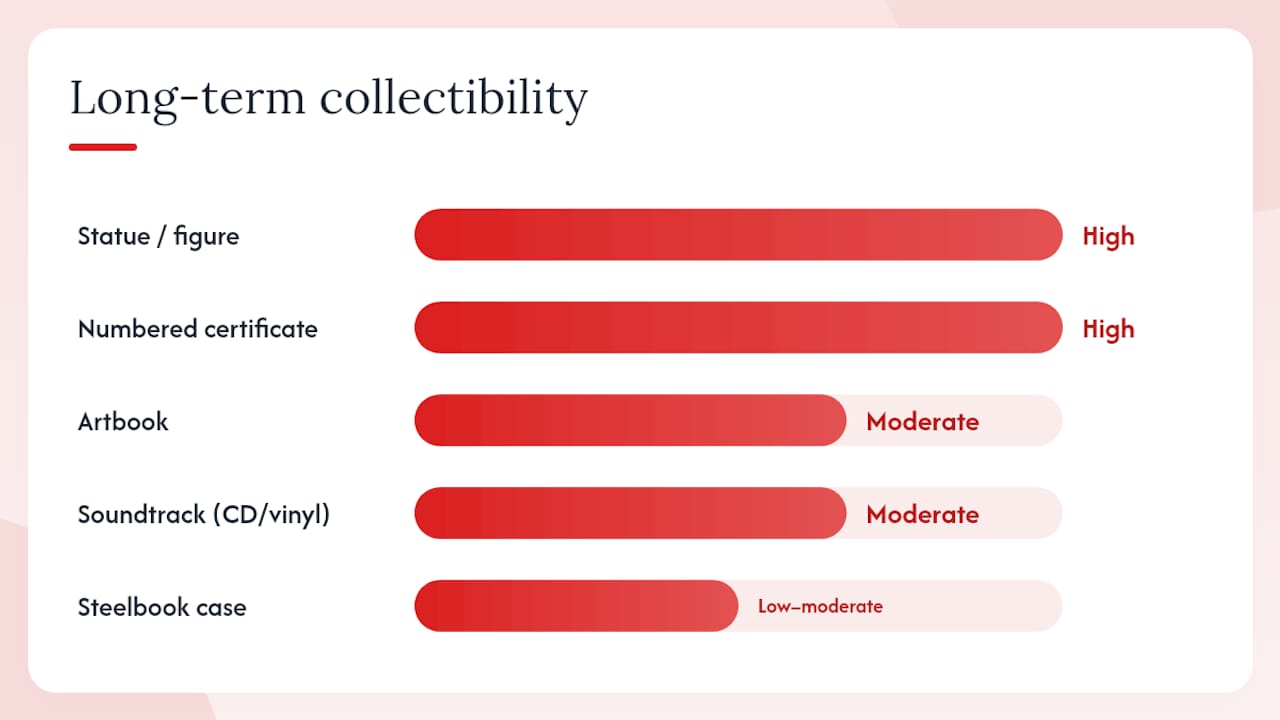
Statues and numbered certificates are the items that tend to hold value longest. A resin figure from a low-run edition retains demand because it cannot be reprinted. Clothing and posters, by contrast, degrade with handling and are often produced in larger quantities than the “limited” label implies.

Pro Tip: When evaluating physical items, prioritize hard materials (resin, metal) over paper or fabric. A numbered certificate paired with a low stated run size is the single strongest signal that a physical item will retain secondary-market value.
For a broader look at how limited edition film merch is evaluated and purchased, the buyer checklist principles apply across gaming and film categories alike.
How to decode edition labels: limited, deluxe, special, anniversary
Publishers use edition labels inconsistently, and that inconsistency is intentional. The Wikipedia article on special editions confirms that “special,” “limited,” and “collector’s” are used interchangeably across books, music, and games — often as marketing incentives rather than precise descriptions of scarcity.
Here’s what each label typically signals in practice:
Standard / Base Edition — the regular retail version with no extras.
Deluxe Edition — usually adds digital content (a season pass, bonus missions, cosmetic DLC). Rarely includes physical items. Often sold at $10–$20 above the base price.
Special Edition — a step up, sometimes with a steelbook or small physical item. The term is vague enough that publishers apply it to almost anything.
Limited Edition — implies restricted availability, but “limited” can mean a limited window of sale, a limited retail channel, or an actual limited print run. The fine print tells you which.
Collector’s Edition — the premium tier, typically with the largest physical bundle. Still not a guarantee of a numbered run.
Anniversary / Reissue Edition — a re-release of an older title with updated packaging or minor additions. These are where double-dipping most commonly occurs (more on that in Section 8).
Pro Tip: Before assuming a run is truly limited, search the publisher’s official site or press release for a stated run number. If no number is published, treat the “limited” claim as a marketing label, not a scarcity guarantee. Numbered certificates with a specific print run (e.g., “1,247 of 5,000”) are the clearest proof of genuine scarcity.
Are collector’s editions worth buying? A short checklist
The honest answer is: it depends entirely on what you’re buying it for. A collector’s edition is worth the premium when the physical items have genuine display or resale value. It’s not worth it when you’re paying $100 extra for a steelbook and a digital season pass you’d have bought anyway.
Run through these questions before committing:
- Do you actually want the physical items? If the statue will sit in a box, the artbook will stay closed, and the steelbook will never be displayed, you’re paying for packaging.
- Is the run numbered or signed? Numbered editions with a stated print run hold value. Unnumbered “limited” editions usually don’t.
- Is the digital content exclusive long-term? Check whether the DLC or skins will be sold separately later. If they will, wait.
- Can you store and preserve the items properly? Statues need dust-free display space. Artbooks need flat, dry storage. Fabric items degrade. If you can’t store them well, condition drops and so does value.
- What’s the return and shipping policy? Collector’s editions are often final sale. Confirm before ordering.
Red flags to watch for:
- “Limited edition” with no stated run number
- No certificate of authenticity
- Digital content that’s the primary value driver
- Region-locked codes with no disclosure
- Vague or absent return terms
Pro Tip: Pre-order a collector’s edition only when the run size is published and credibly low (under 10,000 units for a niche title, under 50,000 for a major franchise). For everything else, waiting 30–60 days post-launch lets you read community reviews of the physical quality and check whether the price has dropped on the secondary market.
How to verify authenticity and preserve what you buy
Authentication starts before you open the box. A genuine collector’s edition from an official retailer will have an intact factory seal, a matching SKU and UPC on the outer packaging, and a numbered certificate inside that matches the stated run. The book-collector practices described here — numbering, signatures, and craftsmanship signals — apply directly to gaming collector’s editions. A holographic sticker or embossed seal on the certificate is a common authenticity marker; a photocopied certificate on plain paper is not.
For storage, the basics matter more than most buyers realize:
- Keep items away from direct sunlight. UV exposure yellows paper and fades printed artwork within months.
- Maintain stable temperature and humidity. Fluctuations warp artbooks and crack resin.
- Store artbooks flat, not upright. Spine stress over years causes pages to separate.
- Keep fabric items (shirts, patches) in sealed plastic bags to prevent dust and moisture damage.
- For statues, a glass display case with a dust barrier is the minimum. Direct shelf display in a sunny room is a fast path to fading and brittleness.
The sealed-versus-displayed question has no universal answer. A sealed box preserves maximum resale value. A displayed statue gives you the enjoyment you paid for. If resale is your goal, keep it sealed. If you bought it to enjoy, display it — just protect it from light and dust.
Publisher practices and how double-dipping works
“Double-dipping” is the practice of releasing a base edition, then a deluxe edition, then a collector’s or anniversary edition of the same title — each time asking buyers to pay again for incremental additions. The Wikipedia entry on special editions documents this pattern across games, music, and film. A buyer who purchased the base game at launch, then the deluxe edition for the DLC, and then the collector’s edition for the physical statue has triple-dipped on the same IP.
Publishers structure releases this way deliberately. The base edition captures the broadest audience at the lowest price point. The deluxe edition captures players who want the full content experience. The collector’s edition captures fans willing to pay for physical prestige. Anniversary editions then recapture all three groups years later with updated packaging and minimal new content.
How to protect yourself:
- Check the full edition lineup before buying. Publishers often announce all tiers simultaneously.
- Read community breakdowns on Reddit, dedicated wikis, or fan forums. Collectors who bought earlier editions will flag whether the new version adds anything genuinely new.
- Look for a stated run number and a content comparison chart. If the publisher won’t publish one, that’s a signal.
- Use exclusive assortment awareness: some editions are retailer-exclusive, meaning GameStop or Best Buy gets a version with one extra item. Know which retailer has which extras before ordering.
Pro Tip: Search “[game title] collector’s edition contents comparison” on YouTube or Reddit before buying. The collector community is thorough — someone has already listed every item across every edition and whether the new version is worth the upgrade.
Understanding how crossover film merch hype is built helps explain why anniversary editions generate renewed demand even when the content additions are minimal.
Where to check secondary-market prices in the U.S.
The most important rule in secondary-market research: completed sales, not active listings. An active listing tells you what a seller hopes to get. A completed sale tells you what a buyer actually paid. Those numbers are often very different.
For U.S.-focused research, eBay’s completed listings filter is the most accessible starting point. Search the exact edition name, filter to “Sold Items,” and sort by date. Look at the last 10–20 sales, note the condition (sealed vs. opened, all accessories included vs. missing items), and calculate a realistic range. Hobby-market guidance on resale value confirms that completed-sale data and niche price guides are the most reliable tools for assessing real-world collectible value in the U.S. market.
PriceCharting tracks secondary-market prices for video game collector’s editions specifically and is worth bookmarking. Collector forums on Reddit (r/GameCollecting, r/Flipping) surface community consensus on which editions are genuinely scarce versus which are sitting in warehouse overstock.
A few item-specific patterns worth knowing: statues and figures tend to appreciate when the run was genuinely small and the IP remains culturally relevant. Steelbooks trade at modest premiums over standard cases unless the game is a cult title. Clothing and fabric items rarely appreciate and often sell below original retail once opened. For limited edition pop art and collectible acquisition tips, the same completed-sale discipline applies across collectible categories.
Pro Tip: When comparing completed sales, filter for “sold” AND “completed” on eBay — completed includes unsold listings, which tells you the ceiling the market rejected. The gap between completed and sold prices is your negotiating range.
Key Takeaways
Collector’s edition merchandise is a release that bundles physical and digital extras with the standard product, and its real value depends on run size, item materials, and whether the digital content stays exclusive.
| Point | Details |
|---|---|
| Core definition | A collector’s edition adds physical and digital extras not in the standard retail version. |
| Highest-value physical items | Numbered statues and certificates from low stated-run editions hold secondary-market value best. |
| Digital extras have limits | Skins and DLC are account-bound, region-locked, and often non-transferable — they rarely add resale value. |
| Verify before buying | Check for a stated run number, numbered certificate, and completed-sale prices before committing. |
| Mclarenteehub for fan merch | For collectible-style pop culture apparel and gifts without the full CE price tag, Mclarenteehub offers fan-made designs across tees, mugs, and more. |
The part most buyers skip
The collector’s edition market rewards patience more than enthusiasm. The buyers who come out ahead are the ones who treat the purchase like a research project: they know the run size, they’ve read the community breakdown, and they’ve checked completed sales before the pre-order window closes.
What most guides won’t tell you is that the physical quality of a collector’s edition varies wildly even within the same publisher. A $200 box from one franchise might contain a hand-painted resin figure with a silk-lined case. The same price point from a different publisher might deliver a hollow plastic figure with visible seam lines and an artbook printed on standard copy paper. The label “collector’s edition” guarantees nothing about quality — only that the box costs more than the standard version.
The sealed-versus-displayed debate is real, but it’s also a false binary for most buyers. If you bought the edition because you love the IP, display it. The marginal resale difference between a carefully displayed item and a sealed one is rarely worth the years of keeping something boxed that you wanted to enjoy. Reserve the sealed treatment for editions where the run size is genuinely small and the secondary market is already active.
Collectible-style pop culture merch from Mclarenteehub
Full collector’s editions run $150–$250 and require shelf space, careful storage, and a willingness to navigate pre-order windows and regional shipping headaches. For fans who want the pop culture connection without the full CE commitment, Mclarenteehub sells fan-art-inspired apparel and gifts — graphic tees, themed mugs, hoodies, hats, and more — built around movies, anime, sci-fi, and horror. These are print-on-demand pieces, not numbered limited runs, so they’re honest about what they are: wearable fandom, not investment-grade collectibles.
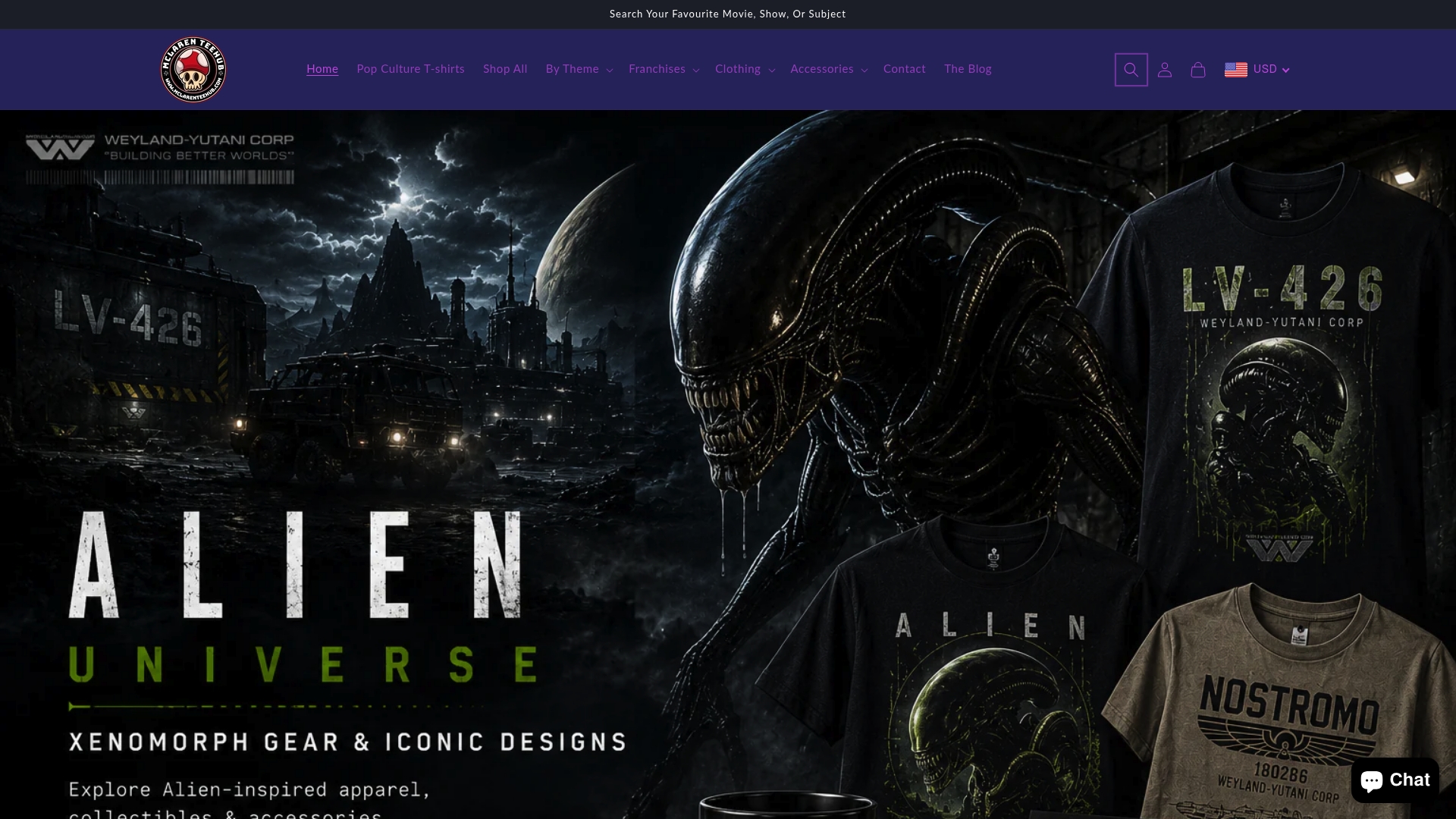
If you want something that shows your taste without the $200 price tag or the storage anxiety, browse the full range at Mclarenteehub. New designs drop regularly, and the pop culture coverage runs deep.
Useful sources for further research
These are the sources worth bookmarking if you want to go deeper on collector’s edition terminology, market behavior, and resale tracking.
- Special edition
- Collector’s edition
- Collector’s Editions: The Ultimate Guide
- collector’s edition — Wiktionary
- Exclusive assortment
- What makes something a collector’s edition?
- Comic Book Resale Value Factors: A 2026 Collector’s Guide