

How to Judge Print on Demand Quality Before You Buy
Mclarenteehub’s print-on-demand merch meets reasonable buyer expectations when you do three things before checkout: confirm that real customer photos are posted (not just mockups), check that fabric specs list material and weight in oz or gsm, and verify the return or replacement policy is clearly stated. Sellers who treat print quality control as an ongoing system rather than a reactive fix consistently produce fewer defects and fewer one-star reviews. A useful benchmark: stores that investigate when return rates exceed roughly 2–3 percent are actively monitoring their output, which is a signal worth looking for.
Three rapid pre-purchase checks:
- Photo evidence: At least one real customer or sample photo alongside the product mockup. Mockups can mislead; real photos set accurate expectations.
- Fabric and specs: Material composition, weight (oz or gsm), and stated print method (DTG, sublimation, screen print).
- Return and production times: A visible replacement or refund policy and an honest production window before shipping begins.
Key Takeaways
Print-on-demand product quality is predictable when you verify real photos, fabric specs, print method, and return policy before you order.
| Point | Details |
|---|---|
| Confirm real photos first | Mockups mislead; look for actual customer or sample photos before buying. |
| Check fabric specs and print method | Material, weight (oz/gsm), and DTG vs. sublimation determine care needs and durability. |
| Use the 2–3% return-rate signal | Stores that monitor returns at this threshold are actively managing print quality. |
| Document defects on arrival | Photograph immediately with order ID visible; include a post-wash photo for print defects. |
| Mclarenteehub lists specs and policy | Product pages show fabric details, print method, care instructions, and replacement policy. |
Table of Contents
- What “print on demand quality” actually means for buyers
- Pre-purchase checklist: what to verify on the product page
- How to inspect your order in the first week after it arrives
- Common defects and when to request a replacement or refund
- Simple care rules that keep prints looking sharp
- How Mclarenteehub demonstrates quality to buyers
- Why the “just trust the mockup” mindset costs buyers money
- Pop-culture merch worth ordering from Mclarenteehub
- Sources
What “print on demand quality” actually means for buyers
Print-on-demand product quality breaks down into five dimensions. Understanding each one helps you read a product page correctly instead of guessing.
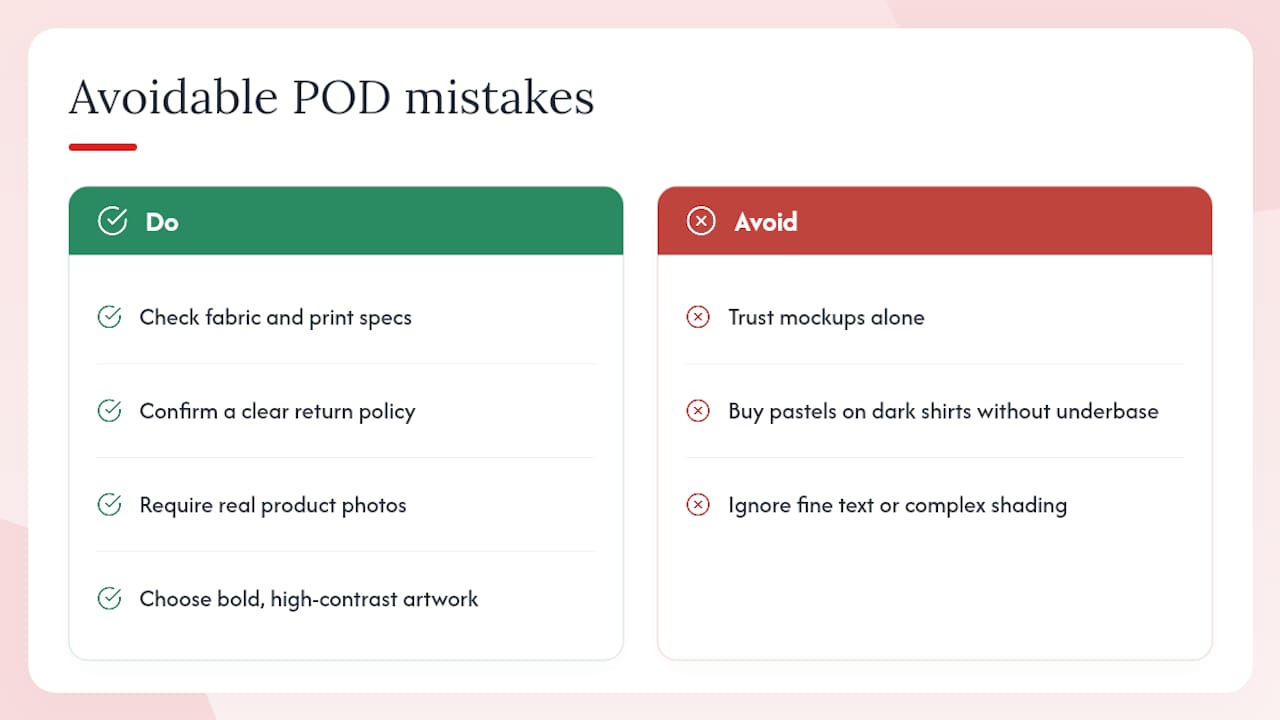
Print fidelity covers color accuracy and placement. A design should look like the preview, with no obvious color shift between panels and no off-center placement. Bold, flat colors and thick outlines hold up far better through the POD process than tiny text, subtle gradients, or pastel-on-pastel combinations.
Material and fabric feel is more nuanced than the weight number alone. Fabric weight does not guarantee handfeel; different mills produce noticeably different textures at the same gsm, and construction details like double-needle stitching affect how a shirt feels after washing.
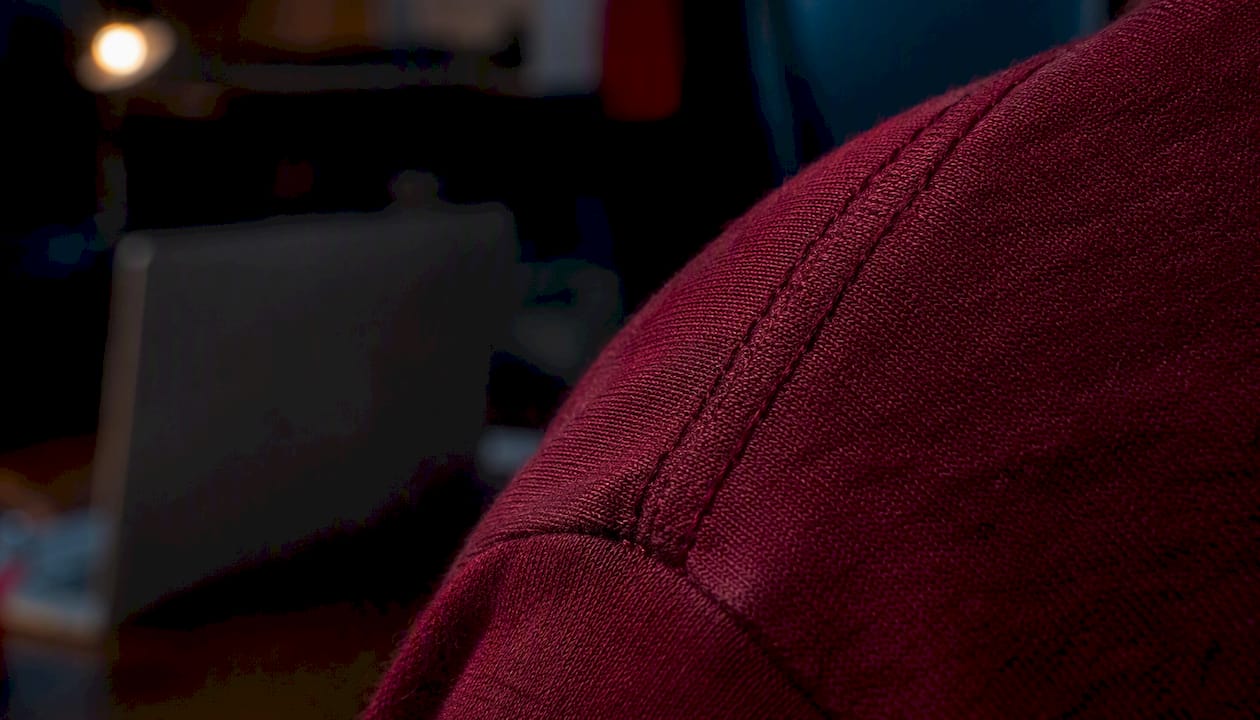
Durability means how well the print survives washing and everyday wear. Sublimation on mugs and polyester goods is more durable but fails with ghosting or banding when time and temperature are off during production.
Fit and construction covers seam alignment, stitching consistency, and tag placement. A well-made shirt has even seams with no puckering and a tag that sits flat.
Finishing and packaging rounds it out. Clean folding, no loose threads, and undamaged packaging matter especially for gifts.
| Print method | Best uses | Fabric compatibility | Common failure modes |
|---|---|---|---|
| DTG | Full-color tees, hoodies | 100% cotton (best), cotton blends | Fading, cracking, color shift on dark fabrics without white underbase |
| Screen print | Simple, bold designs, bulk runs | Most fabrics | Cracking over time, limited color count |
| Sublimation | All-over prints, mugs, hard goods | Polyester or coated substrates only | Ghosting, banding, color shift if temp/time is off |
| Embroidery | Logos, hats, patches | Most fabrics | Puckering on thin fabric, limited detail |
Pre-purchase checklist: what to verify on the product page
Run this in two to five minutes before you add anything to your cart.
- Zoomable real photos: Can you see the actual print texture, not just a flat digital mockup? Mockups alone can mislead buyers; a side-by-side real sample photo is the gold standard.
- Fabric and weight specs: Look for material composition (e.g., 100% ring-spun cotton) and weight in oz or gsm. Vague descriptions like “soft fabric” tell you nothing useful.
- Size chart with fit notes: Does the chart include chest, length, and sleeve measurements? Words like “relaxed fit” or “runs small” should appear somewhere near the chart.
- Stated print method and care instructions: DTG, sublimation, and screen print each have different care needs. If the method is not listed, that is a gap worth flagging.
- Production and shipping times: POD items are made after you order. A realistic production window (often 3–7 business days) should be listed separately from shipping transit time.
- Return and replacement policy: Is it visible without digging? A clear policy covering misprints and defects is a trust signal.
Pro Tip: If the product page shows only computer-generated mockups, check the store’s blog or social media for real sample photos before buying. For expensive gifts, consider ordering a sample yourself first — sampling is quality-control overhead, not waste, and it removes the guesswork entirely.
For pop-culture graphic tees, the buying guide at Mclarenteehub covers what to look for in film-inspired designs specifically.
How to inspect your order in the first week after it arrives
A quick inspection on arrival protects you if you need to file a claim later.
- Open the parcel carefully and note any shipping damage. Photograph the outer packaging before you discard it if anything looks crushed or wet.
- Lay the item flat in good light and photograph it. Capture the full front, full back, and a close-up of the print. Include the packing slip or order ID in at least one shot for timestamp purposes.
- Check print placement and color. Is the design centered? Does the color match the product photo? A slight variation in shade is normal; a dramatic color shift across panels usually points to a production issue.
- Check seams, stitching, and tag placement. Run your fingers along every seam. Puckering, loose threads, or a tag sewn at an angle are construction defects, not normal variance.
- Wear it once before washing. Note the fit against the size chart you checked before ordering. Shrinkage is a separate issue from fit; record both.
- Run one wash test. Turn the item inside out, cold water, gentle cycle. After drying, photograph the print again. Cracking or significant fading after a single wash is a valid defect. Hoodie and heavier apparel samples should go through at least one wash before you conclude the quality is acceptable.
- For mugs: Check the glaze for chips, the print wrap for gaps at the seam, and the handle bond. Run a finger around the rim before the first use.
Observations that suggest a supplier issue rather than normal variance: color shift between the front and back panels of the same garment, ghosting (a faint duplicate image), or print that is visibly off-center by more than a quarter inch.
Common defects and when to request a replacement or refund
Knowing which flaws are worth escalating saves time for everyone.
- Off-center or misaligned print: Photograph against a flat surface with a ruler if possible. Misalignment beyond roughly a quarter inch is a valid claim.
- Color shift or fading after one wash: One wash should not noticeably change a DTG print. Document with a before-and-after photo.
- Ghosting or banding (sublimation): A faint ghost image or horizontal banding on a mug or all-over print is a production defect, not normal variation.
- Cracking or peeling: Early cracking (within the first few washes) is a defect. Cracking after a year of aggressive machine washing is wear.
- Seam failure: A seam that opens on first wear is a manufacturing defect. Photograph it immediately.
- Mug glaze chips: A chip on arrival or after the first gentle handwash is a defect. A chip after being dropped is not.
Pro Tip: When filing a claim, include: at least two clear photos of the defect (one full-item, one close-up), your order number, the date you received it, and one sentence describing when the defect appeared. If the defect showed up after washing, include a post-wash photo. This documentation speeds up every dispute.
For a broader look at common merch mistakes and how to avoid them, Mclarenteehub’s blog covers the most frequent pitfalls gift buyers run into.
Simple care rules that keep prints looking sharp
The right care routine adds months, sometimes years, to a print’s life.
- Wash inside out in cold water on a gentle cycle. Heat and friction are the two fastest ways to crack a DTG print.
- Air dry or tumble dry on low heat. High heat degrades both the print and the fabric, especially on cotton/polyester blends.
- Never iron directly on a print. Iron inside out or place a thin cloth between the iron and the design.
- No bleach, ever. Even color-safe bleach accelerates fading on DTG and screen-printed designs.
- For mugs: handwash when possible. Dishwasher heat and detergent gradually dull sublimation prints and can lift the coating on glossy mugs over time. The Facehugger mug and similar glossy hard goods last noticeably longer with handwashing.
- Polyester/sublimation apparel: Avoid fabric softener, which coats fibers and dulls the print over repeated washes.
For deeper care guidance on specialty tees, the vintage film t-shirt care guide at Mclarenteehub is worth bookmarking.
How Mclarenteehub demonstrates quality to buyers
Mclarenteehub publishes the evidence buyers need to make a confident decision before ordering.
- Zoomable product photos and real customer images on product pages, not just digital renders.
- Fabric specs including material composition and weight listed per product.
- Stated print method (DTG for apparel, sublimation for mugs and hard goods) so buyers know what care routine applies.
- Care instructions on product pages and in the store’s blog guides.
- Production and shipping timelines stated clearly so gift buyers can plan around delivery windows.
- Visible return and replacement policy covering misprints and defects.
One concrete example: the Goonies ‘Never Say Die’ t-shirt on Mclarenteehub’s product page documents a misprint case transparently, showing what the defect looked like, what buyers received as a resolution, and how the replacement process worked. That kind of documented case is exactly what separates a store that handles quality proactively from one that hopes nobody notices.
Mclarenteehub’s POD best practices blog and individual product pages are the fastest places to verify print method, fabric specs, and real customer photos before you order.
Why the “just trust the mockup” mindset costs buyers money
Most print-on-demand disappointments are predictable. The buyer saw a clean digital mockup, skipped the fabric specs, and ordered without checking the return policy. The shirt arrived with a color that looked nothing like the preview, and by the time they washed it once, the print had already started to crack.
The fix is not complicated. Real photos, stated specs, and a clear return policy are table stakes for any store worth buying from. What most buyers underestimate is how much the design itself affects the outcome. A pastel gradient on a dark shirt, printed without a proper white underbase, will almost always disappoint. That is a design and production decision, not bad luck.
Mclarenteehub’s pop-culture designs lean toward bold, high-contrast artwork precisely because those designs survive the POD process reliably. The film quotes on clothing guide explains why certain design choices hold up better than others, and it is worth reading before you order anything with fine text or complex shading.
Pop-culture merch worth ordering from Mclarenteehub
Mclarenteehub stocks pop-culture tees, hoodies, mugs, and gifts built around bold fan-art designs that hold up through the DTG and sublimation processes. Every product page lists fabric specs, print method, care instructions, and production times so you can check the boxes from this guide before you buy.
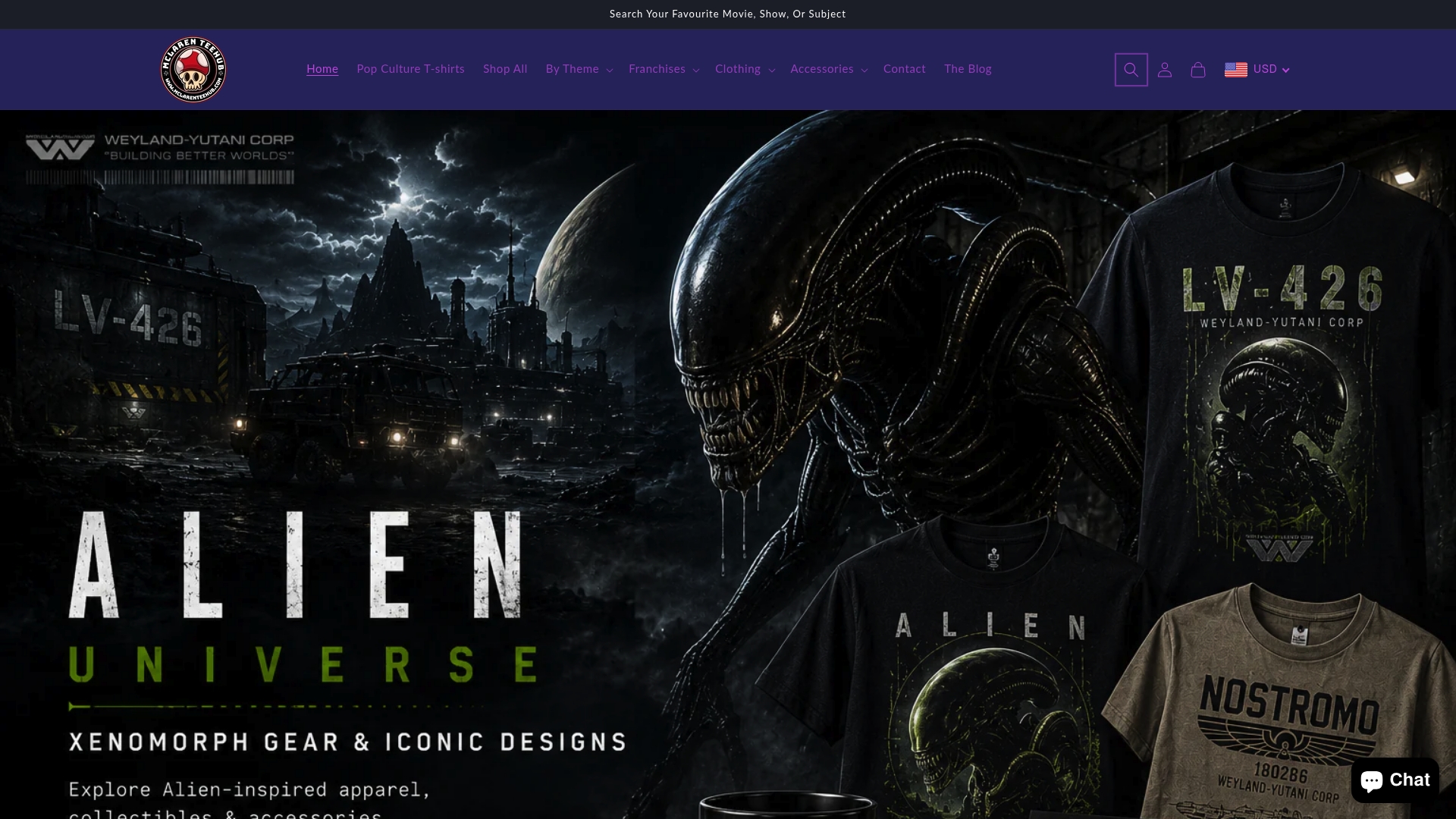
The Pulp Fiction-style morning tee is a good starting point for apparel: bold graphic, real product photos, and specs listed. For hard goods, the Brainwashed retro mug shows the kind of high-contrast sublimation print that ages well with proper care. Check the photos, confirm the return policy, and order with confidence. Browse the full store at Mclarenteehub.
Sources
- Print on Demand Quality Control: A Practical Guide - Bootstrapping Ecommerce
- Is Print-on-Demand Quality Really That Bad? - Liz Kohler Brown
Recommended
- Shop Limited Edition Film Merch: Collector-Approved Guide – McLaren Tee Hub
- Best Teepublic.com Alternatives for POD Artists in 2026 – McLaren Tee Hub
- Pop Culture Graphic Tees: The High-Octane Buying Guide for 2026 – McLaren Tee Hub
- Common Movie Merchandise Mistakes and How to Fix Them – McLaren Tee Hub